

Uche Cecil Izuora
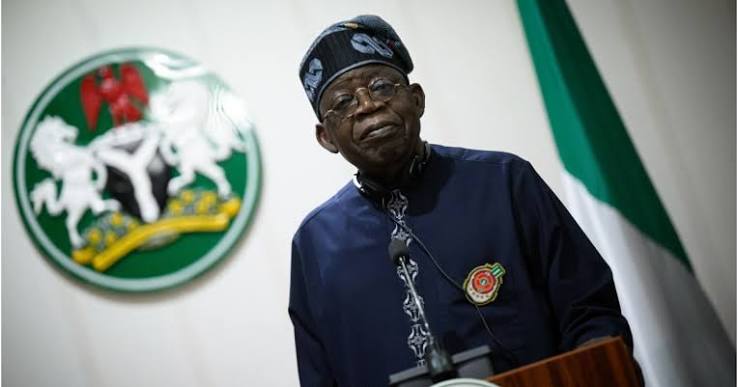
Though Nigeria is pressing forward after its 2026 oil and gas licensing round, with President Bola Tinubu approving the process and the country awarded 37 blocks to 31 companies in the 2025 round.
Following the successful process as authorities seek to revive upstream investment despite persistent questions over frontier acreage demand and oil-price volatility.
According to the Nigerian Upstream Petroleum Regulatory Commission (NUPRC) 13 blocks from the 2025 licensing round are returning to the bidding basket after they failed to attract offers. That outcome points to a split in investor appetite, with stronger demand for more established producing regions and limited interest in frontier basins.
Speaking in a CNBC Africa interview, Ayo Deleon, partner at Bloomfield Law Practice, said the central issue is no longer whether the government is willing to hold auctions, but whether the structure of the round can pull in capital across the full range of Nigeria’s petroleum basins.
“There was competition for Niger Delta onshore and shallow-water acreages and blocks and near-zero appetite for frontier basins,” Deleon said.
He said Nigeria’s longer-term success would depend on whether policymakers can create enough incentives to attract capital beyond the most commercially proven areas. While investors continue to focus on the Niger Delta, he said other basins still require additional policy support and commercial “sweeteners” if they are to secure meaningful bidding interest.
Nigeria has several sedimentary basins, including Anambra, Benue, Chad, Bida, Sokoto and Dahomey, in addition to the Niger Delta. Deleon said most of these are still viewed by the market as frontier plays, making them harder to finance and less attractive to risk-conscious bidders.
The 2025 auction results suggest that reforms under the Petroleum Industry Act and subsequent executive actions have improved sentiment, but not enough to eliminate uneven investor interest. Deleon said policy steps introduced by the administration have been constructive, and pointed to recent fiscal incentives for major operators as part of that effort.
“The policies, presidential executive orders have been fantastic,” he said, adding that Nigeria is seeing renewed interest in its upstream sector.
Still, he said investor confidence is not yet fully restored. Asked to assess transparency and confidence in the latest bidding round, Deleon said he would score Nigeria “maybe 70%,” noting that feedback had been more positive than negative even though some concerns remain.
He said the commercial bid process appeared clearer than in earlier rounds, with rules and scoring parameters better explained to participants. In cases where bids were closely matched, top-up provisions helped determine winners, which he said made the process appear more orderly than auctions held two or three rounds ago.
That relative improvement in transparency may help Nigeria position the 2026 round more effectively with both international and indigenous investors. But the country is also launching its next auction against a backdrop of heightened oil-price volatility, which Deleon said should temper expectations.
Brent crude was trading at around $94 a barrel during the interview, and Deleon said geopolitical tensions remain the main short-term driver of oil prices. He said prices tend to rise when adverse geopolitical events intensify and fall when tensions ease.
He cautioned, however, against assuming that current price levels will hold over the medium term. “Short term, maybe, not medium term,” he said, pointing to uncertainty around the Strait of Hormuz and the risk that today’s price spike could fade quickly if hostilities ease.
Deleon said Nigeria’s oil sector has seen this cycle before. He recalled that periods of elevated crude prices have previously encouraged upstream companies to borrow aggressively, only for subsequent price declines to damage balance sheets and strain loan performance.
“You need to be more conservative,” he said, warning that companies bidding for acreage or raising debt based on crude prices near $94 or $95 a barrel could face financial stress if prices retreat within months.
That caution extends beyond upstream licensing to Nigeria’s domestic fuel market. Retail petrol prices have moved higher, with pump prices at some outlets reaching about 1,300 naira per liter. Deleon said further increases are likely if international crude prices remain elevated, because refiners ultimately pass through the cost of more expensive feedstock.
He said he does not expect major supply disruptions in the local market outside of isolated regulatory action, such as the temporary shutdown of filling stations by regulators over suspected hoarding or compliance concerns. In his view, the larger issue for consumers is pricing rather than broad-based scarcity.
As fuel costs rise, Deleon said the pressure could also strengthen the case for cleaner alternatives. He pointed to electric vehicles and compressed natural gas initiatives as areas Nigeria could do more to promote, especially if high fuel prices persist.
“Maybe this is the time to push the EV narrative,” he said, referring to the government’s broader energy-transition and transport initiatives.
On the longer-term outlook for investment, Deleon said Nigeria still has a substantial window to monetize its hydrocarbon resources despite the global energy transition. He argued that energy transition debates often overlook Africa’s development realities, where many economies still lack reliable energy access and continue to depend heavily on oil and gas.
He said natural gas in particular should remain commercially relevant for decades, both within Africa and internationally. Europe, he noted, continues to seek alternatives to Russian gas supplies, while many African countries are still building out basic energy systems.
“Gas has got a great future,” Deleon said, adding that oil and gas are likely to remain part of the energy mix for at least the next 30 to 50 years, even if their relative influence gradually declines.
That view may support Nigeria’s effort to market future acreage to a broader mix of investors, including indigenous producers, technical partners and financing-backed consortiums. Deleon said some unsuccessful bidders from the 2025 round could still re-enter projects later through farm-in structures, consortium arrangements, or financial and technical services agreements.
Those structures could become more important if some winning bidders struggle to fund their commitments on their own. That would allow capital providers and technical operators to participate even where they did not initially secure a block outright.
For Nigeria, the next test will be whether the 2026 licensing round can build on the momentum of consecutive auctions while narrowing the gap between strong demand for Niger Delta assets and weak appetite elsewhere. The outcome will depend not only on the availability of acreage, but also on pricing discipline, transparent execution and whether Abuja can make frontier basins commercially harder to ignore.