

Uche Cecil Izuora
The Nigeria Customs Service (NCS) has commenced a new capacity‑building initiative focused on harnessing Artificial Intelligence (AI) to improve revenue generation, remittances, and reconciliation within the Service.
The training programme, held at the Ladi Kwali Hall of the Abuja Continental Hotel on Monday, 13 April 2026, brought together senior Customs officers, technology specialists, and members of the House and Senate Public Accounts Committees.
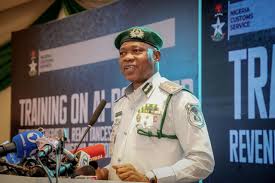
During the opening session, Comptroller‑General of Customs Adewale Adeniyi reaffirmed the Service’s commitment to transparency and modernisation in public financial management. He said AI is now central to understanding trade patterns, strengthening operations, and ensuring that Customs plays its full role within Nigeria’s national and international trade value chain. He urged participants to actively engage facilitators and maximise the training to drive tangible improvements in day‑to‑day processes.
In her welcome remarks, Deputy Comptroller‑General Kikelomo Adeola, who oversees Finance, Administration and Technical Services, described the initiative as timely and strategically aligned with national development goals. She stressed that AI is no longer a distant concept but a practical tool that must be integrated into revenue‑management systems to plug existing gaps and protect public funds. DCG Adeola welcomed the participation of lawmakers, calling the collaboration a sign of shared resolve to deepen accountability and transparency.
The Chairman of the House of Representatives Public Accounts Committee, Bamidele Salam, praised the NCS for its reform‑driven mindset and early adoption of AI in an environment where such technologies are still under‑utilised in public institutions. He emphasised that no system functions effectively without competent, well‑trained operators, underscoring the need for continuous learning and capacity development.
Senate Public Accounts Committee Chairman, Senator Ahmed Aliyu, echoed the call for collective action, urging sustained partnership to build systems that will endure beyond the current administration. He commended the Service’s ongoing reforms and highlighted the importance of embedding technology in structures that can support future generations.
Technology expert Bamidele Oyedeji delivered a key session showing how AI can automate and streamline trade‑related tasks, enhance compliance monitoring, and support faster, more accurate reconciliation of revenue and remittances. Overall, the training signals the NCS’s intent to transform from manual‑heavy processes to a more agile, data‑driven institution capable of ensuring higher revenue assurance, cleaner accounting, and stronger public trust in the nation’s border‑management agency.