

…With Islamic Finance Industry Portfolio Rise To $3.8Bn
Yemisi Izuora
Foreign capital inflow into Nigeria has risen to $6 billion in the first half of 2024 from last year as portfolio investors returned after the Federal Government eased currency controls.
The National Bureau of Statistics (NBS) said inflows rose to $5.98 billion between January and June this year, up from $2.16 billion during the same period in 2023.
The United Kingdom and Netherlands were the biggest sources of capital, with portfolio investors piling into the country’s banking sector.
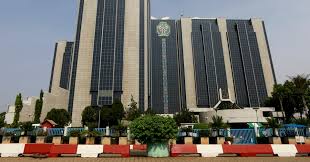
The Central Bank of Nigeria (CBN) has allowed the naira currency to freely trade in a bid to boost forex inflows as part of President Bola Tinubu’s reforms, which also included slashing petrol and electricity subsidies.
The bank plans to automate foreign currency trades from December to enhance transparency and remove market distortions.
The CBN has hiked interest rates five times this year to head off inflation and attract portfolio investors hungry for yields.
Meanwhile, Nigeria’s Islamic finance industry portfolio has risen to $3.8 billion.
This was disclosed at the recent workshop on Islamic banking co-hosted by the International Islamic Trade Finance Corporation (ITFC), a member of the Islamic Development Bank (IsDB) Group, in partnership with the Central Bank of Nigeria (CBN) in Abuja.
The workshop on Non-Interest Banking and Trade Finance in Nigeria, held from 17th to 19th September 2024 in Abuja.
The sessions aimed to enhance capacity and knowledge in Islamic banking principles, trade finance products and services, and how different financial toolkits are applied in Islamic finance from operational and business perspectives.
Despite some challenges such as low public awareness and a smaller capital base compared to conventional banks, Islamic finance has been substantially contributing to reduce financial exclusion and improve access to affordable finance in the country. The three-day workshop was designed to bridge prevailing knowledge gaps focusing on key areas such as Sukuk issuance and main non-interest banking products basics.
Delivered under ITFC’s Integrated Trade Solutions framework, the workshop equipped professionals with the skills to promote Islamic finance in Nigeria while also highlighting ITFC’s wide range of trade financing services.
Participants reported a significant boost in understanding Islamic banking and trade finance, and the workshop showcased ITFC’s contributions to economic development through sustainable financial solutions.
Nasser Al Thakair, ITFC, remarked: “ITFC is committed to supporting Nigeria’s efforts in Islamic finance, tailoring this workshop to address the unique challenges faced. We will continue to provide the expertise and financial backing needed to grow Islamic finance in Nigeria and beyond.”
Over 30 professionals from the Central Bank of Nigeria, non-interest banks, and other financial institutions attended, further advancing Islamic finance in the country.
As Nigeria positions itself as a leading market for Islamic finance in Africa, ITFC said it remains dedicated to advancing trade finance and supporting the growth of the sector for long-term economic impact.