

Uche Cecil Izuora
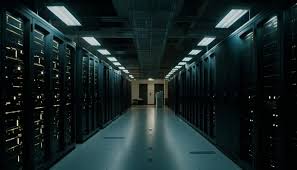
Africa’s data center industry is expanding rapidly to take advantage of growth opportunities which is projected to grow from roughly $2.2 billion in 2026 to over $4.3 billion by 2031, driven by accelerating demand for AI, cloud computing, fintech and expanding mobile connectivity.
Report shows that Africa’s data center is still in its infancy hosting less than 1 percent of global capacity despite a population of over 1.5 billion – but it is rapidly becoming one of the most consequential infrastructure investment frontiers on the continent.
One of the most immediate economic impacts of this expansion lies in electricity demand. Data centers require uninterrupted, high-quality power, making them highly valuable “anchor customers” for utilities and independent power producers.
In markets such as Nigeria, where grid instability and blackouts are frequent, and South Africa, where load shedding continues to disrupt activity, data centers are reshaping how power is generated, financed and delivered.
Developers are increasingly investing in hybrid energy systems combining grid power with solar, battery storage and diesel backup, effectively creating new distributed energy ecosystems around digital infrastructure. In some cases, this anchor demand is helping unlock stalled generation projects by improving long-term revenue certainty and bankability.
In Kenya, the story is slightly different but equally instructive. With a strong renewable energy mix – geothermal, hydro and wind – Nairobi has emerged as a growing East African digital hub. Here, data centers are attracted not despite the energy system but because of it, demonstrating how clean, stable power can become a competitive advantage in the global digital infrastructure race.
The employment effects are equally significant and multi-layered. During construction, data center projects generate thousands of jobs across engineering, construction, logistics and electrical systems. Once operational, they require highly skilled roles in network engineering, cybersecurity, cloud architecture and facilities management, contributing to a new category of digital infrastructure employment in African economies. More broadly, by reducing latency and enabling local data processing, data centers allow African startups in fintech, e-commerce and AI to scale domestically rather than relying on overseas servers, amplifying innovation and job creation potential across the digital economy.
These facilities are also driving upgrades in supporting infrastructure, particularly water and cooling systems. Because cooling can account for up to 30 per cent of a data center’s energy consumption, operators are investing in advanced thermal management systems, including liquid cooling and water recycling, especially in hotter climates.
This creates spillover demand for industrial engineering, construction innovation, and environmental systems management. At the same time, research shows that AI workloads can significantly influence water consumption depending on local electricity generation profiles, underscoring the need for climate-sensitive infrastructure planning.
The ripple effects extend into education and skills development. Universities and technical institutes across Africa are increasingly aligning curricula with cloud computing, AI engineering and digital infrastructure management, often in partnership with hyperscalers and private operators.
Yet access to advanced training and industry-linked learning remains uneven across countries, limiting workforce readiness. Studies highlight persistent gaps in infrastructure, training and applied AI education, raising concerns about whether talent supply can keep pace with demand. This makes data centers not only physical infrastructure assets but also catalysts for broader human capital transformation.
These dynamics will be reflected at African Energy Week 2026, which has introduced a dedicated AI and Data Center track to align energy investment with digital infrastructure demand. The track underscores a growing recognition that Africa’s energy and digital futures are inseparable.
As AI workloads continue to drive global data center electricity demand upward, Africa’s competitiveness will depend on its ability to deliver reliable, scalable, and increasingly low-carbon power systems.
As NJ Ayuk, Executive Chairman of the African Energy Chamber, notes: “Africa must not only produce energy for export, but also power its own digital future.
Data centers represent a new frontier where energy security and economic sovereignty meet.”
Africa’s data center boom is a story of industrial transformation – reshaping power investment, creating new employment ecosystems, accelerating infrastructure innovation and forcing a rethink of skills and education. With coordinated policy and investment, it could become one of the most powerful multipliers of economic growth in Africa’s next decade, anchoring both its digital and energy revolutions simultaneously.