

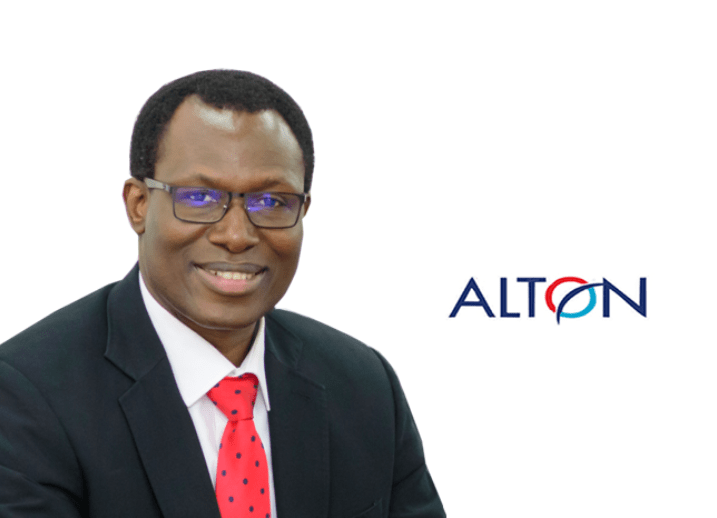
Precious Obogo
The Association of Licensed Telecoms Operators of Nigeria (ALTON) has expressed confidence in the leadership of the Nigerian Communications Commission (NCC) and in particular for enforcing payment of USSD debts by banks and other users of the service.
During a strategic visit to the Chairman of the NCC Board, Dr. Idris Ibikunle Olorunnimbe by a high-powered delegation of ALTON, led by its Chairman, Engr Gbenga Adebayo, ALTON also lauded the Commission for saving telecommunications companies when it took the bold step to enforce upward review of call and data tariffs.
However, the delegation of Senior Executives of ALTON member telecom companies sought end to multiple taxation and avoidable vandalisation of fibre optics, which they said had created a heavy burden in the telecommunications sector.
During the meeting with Olorunnimbe on Thursday, ALTON alluded to the full confidence the telecom industry reposed in the new NCC Board Chairman’s leadership while urging urgent action on regulatory independence, harmonized taxation, and protection of critical infrastructure to secure long‑term sector stability and growth.on Thursday,
Adebayo said: “When Dr. Maida assumed office, he inherited significant industry challenges. One of the most difficult was the USSD debt crisis — a debt burden that grew over four years to nearly ₦300 billion. It had become a systemic risk to our sectore and the digital financial ecosystem.
“Through firm leadership, structured engagement, and decisive coordination, Dr. Maida and his team resolved this issue. Today, there is no outstanding USSD debt. The ecosystem has fully migrated to end-user billing. What was once a looming crisis has been converted into a sustainable framework. We are immensely grateful.”
The ALTON boss noted that for 13 years, the telecoms industry maintained static pricing despite rising inflation, currency volatility, aging infrastructure, and escalating energy costs.
He continued: “Our tariffs fell significantly below cost. Investment slowed. Networks became strained. The sector was approaching a stage where service rationing was becoming a real possibility.
“We made evidence-based representations to Government. The approval granted last year for cost-reflective tariff adjustments was not merely administrative — it saved the industry from collapse.
“Today, we are seeing companies gradually return to profitability. Network stabilization has improved. Capital expenditure planning has resumed.
“We commend the Honourable Minister Dr. Bodun Tijani, the Executive Vice Chairman, and the leadership of Government for presenting the right case and securing approval for tariff review. That decision preserved sector viability.”
The ALTON team also noted the progress made by the Federal Government in the area of foreign exchange and inflation stability, noting that recent major infrastructure investment announcements in the tower segment further demonstrate renewed global confidence in Nigeria’s telecom market.
Adebayo called on NCC to strengthen regulation and help to harmonise taxation in the telecommunications sector, noting that multiple agency regulations and taxation have created scary situations for companies operating in the country’s telecoms industry.
“Operators continue to face excessive sub-national taxes and levies.Enforcement tactics such as site shutdowns directly affect Quality of Service and national connectivity,” Adebayo lamented.
“A harmonized national telecom taxation framework is essential for broadband expansion and digital inclusion,” he insisted.
The ALTON leader told the NCC Borad Chairman that beyond legislation, structured executive advocacy was essential and prayed that proactive engagement by the Board with critical stakeholders such as the Nigeria Governors’ Forum (NGF) toward harmonization of Right of Way and sub-national taxation.
Other critical stakeholders ALTON wants the NCC Board to engage include the National Economic Council (NEC) towards integration of telecom infrastructure into state planning; Federal and State Ministries of Works, for fibre mapping and damage compensation protocols; and Office of the National Security Adviser (ONSA) for CNII enforcement framework, amongst others.