

Ken Okeke
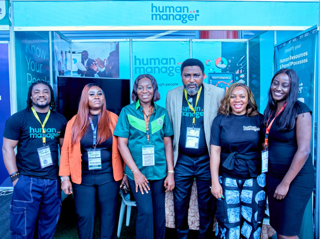
HumanManager Limited has highlighted the growing role of workforce intelligence in helping organisations understand, develop and deploy their people more effectively at the Chartered Institute of Personnel Management of Nigeria’s (CIPM) 58th International Conference and Exhibition (ICE), which held Abuja.
At the four-day experience, HumanManager showcased its Competency Management Module and engaged HR professionals and business leaders on how organisations can move beyond traditional workforce administration to gain deeper insight into employee capabilities, assess workforce strengths and align workforce development with organisational priorities.
Held under the theme, “Repositioning for Value and Impact,” this year’s CIPM conference brought together HR professionals, business leaders, policymakers and other stakeholders to examine issues shaping the future of work and people management. HumanManager’s participation reflected the broader evolution of HR technology from systems focused primarily on employee records and administrative processes towards solutions that help organisations make more informed decisions about their people.
Speaking on this shift, Udy Ngele, Managing Director, HumanManager Limited, said organisations need to increasingly recognise people strategy as an integral part of business strategy.
“People strategy can no longer sit on the margins of business strategy. The organisations that will remain competitive are those that are deliberate about building the capabilities their ambitions require. This means HR must increasingly be equipped to contribute to conversations about growth, transformation and long-term organisational resilience, with technology providing the insight needed to make those conversations more informed and actionable.”
He noted that the growing connection between people capability and business performance is making workforce planning a broader organisational priority.
Translating this priority into practice, Abdulwasiu Issah, Group Head, Business Development & Partnerships, HumanManager Limited, said organisations need greater visibility into workforce capabilities to make more purposeful decisions about talent development and business performance.
organisations need greater visibility into workforce capabilities if they are to make more purposeful decisions about talent development and business performance.
“Organisations cannot effectively develop the workforce they need if they do not have a clear understanding of the capabilities that already exist within the organisation. Competency management gives businesses a more structured way to understand existing strengths, identify development priorities and determine where capabilities need to be strengthened. It helps connect people development with the capabilities the organisation needs to achieve its objectives.”
He noted that as skills requirements continue to change, organisations need to understand not only who is within their workforce, but also what their people are capable of doing and where additional capabilities are required.
This makes workforce data increasingly important to decisions around employee development, talent deployment, succession planning and workforce readiness. HumanManager’s Competency Management Module supports this process by giving organisations greater visibility into workforce capabilities and the areas where development may be required.
Jerry Adeyeri, Lead, Brands & Marketing, HumanManager Limited, said the changing nature of work is also reshaping the role technology plays in human resource management. He said: “HR technology is moving beyond the administration of workforce processes. The opportunity now is to use technology and workforce data to better understand people, support their development and help organisations make more informed decisions about their capabilities. That is an important shift because technology should not simply help organisations manage their workforce; it should help them understand and maximise it.”
HumanManager’s engagement at the conference provided an opportunity for HR practitioners and business leaders to explore the practical application of competency management and how workforce information can support more structured approaches to employee development and workforce planning.
The company’s participation also reinforced its focus on helping organisations gain greater visibility into the people and capabilities that drive organisational performance. As skills requirements evolve and businesses adapt to changing priorities, understanding existing workforce capabilities and identifying areas for development can help organisations make more informed decisions about talent and workforce readiness.