

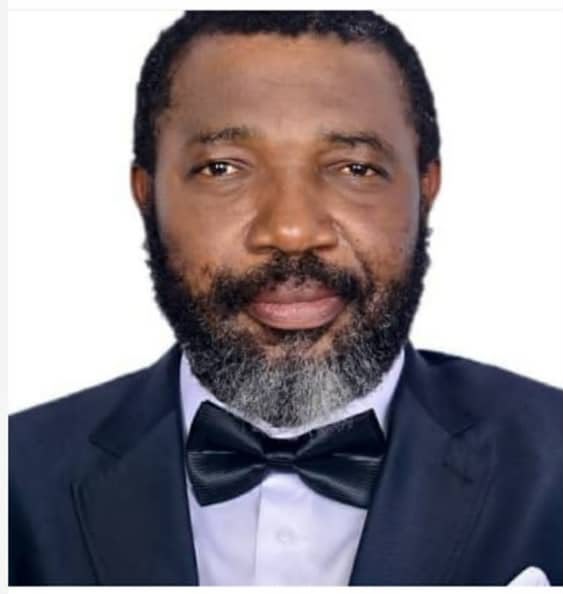
The fight against smuggling in Nigeria’s maritime corridor took center stage at the 2026 Annual General Meeting and Awards Ceremony of the Congress of Maritime Media Practitioners (CONMMEP) in Lagos, where respected maritime expert Dr. Eugene Nweke delivered a keynote lecture on the need for stronger journalism, intelligence sharing, and public accountability.
In a paper titled “Maritime Security, Trade Facilitation and the Media: The Role of the Media in Curbing Smuggling in Nigeria’s Maritime Corridor,” Dr. Nweke said smuggling remains one of the most serious threats to Nigeria’s economy, national security, and legitimate trade. He warned that the maritime corridor has become a major channel for arms trafficking, narcotics, human trafficking, revenue evasion, counterfeit goods, fuel diversion, and other forms of transnational crime.
Dr. Nweke stressed that the fight against smuggling cannot be left to customs and security agencies alone. He said the media must rise to its responsibility as a strategic stakeholder in national security by exposing wrongdoing, promoting awareness, and helping to close the information gaps that smugglers exploit.
He described silence as one of the greatest weapons of smugglers, explaining that crime thrives when people see suspicious activity and say nothing, when institutions know something and fail to act, and when journalists hear important information but do not investigate further. According to him, every successful smuggling operation begins as an information failure before it becomes a security failure.
The SEREC Head of Research challenged maritime journalists to move beyond routine event coverage and embrace hard-hitting investigative reporting. He said the media should probe budget execution, procurement practices, shipping charges, port concession performance, cargo diversion, customs revenue leakages, and the financial networks behind smuggling syndicates.
He also urged journalists to adopt modern digital tools such as data journalism, artificial intelligence, satellite intelligence, and cargo tracking analysis to keep pace with the growing sophistication of smugglers. In his view, the future of anti-smuggling efforts will depend not only on physical enforcement at the ports, but also on how effectively information is gathered, analyzed, and shared.
Dr. Nweke further explained that trade facilitation and security should not be treated as opposing goals. Rather, he said both must be balanced through intelligence-led enforcement, stronger compliance culture, and technology-driven regulation that protects legitimate trade while frustrating criminal activity.
He concluded by calling on the maritime media to see itself not merely as an observer of events, but as an active partner in protecting Nigeria’s economic sovereignty, strengthening national security, and supporting a safer and more competitive maritime sector.