

Yemisi Izuora
Ongoing tax reform in Nigeria should stand the test of time by firmly contributing to a stronger fiscal foundation as well as more predictable business environment that builds confidence and trust through a broader trusting relationship between government and the people.
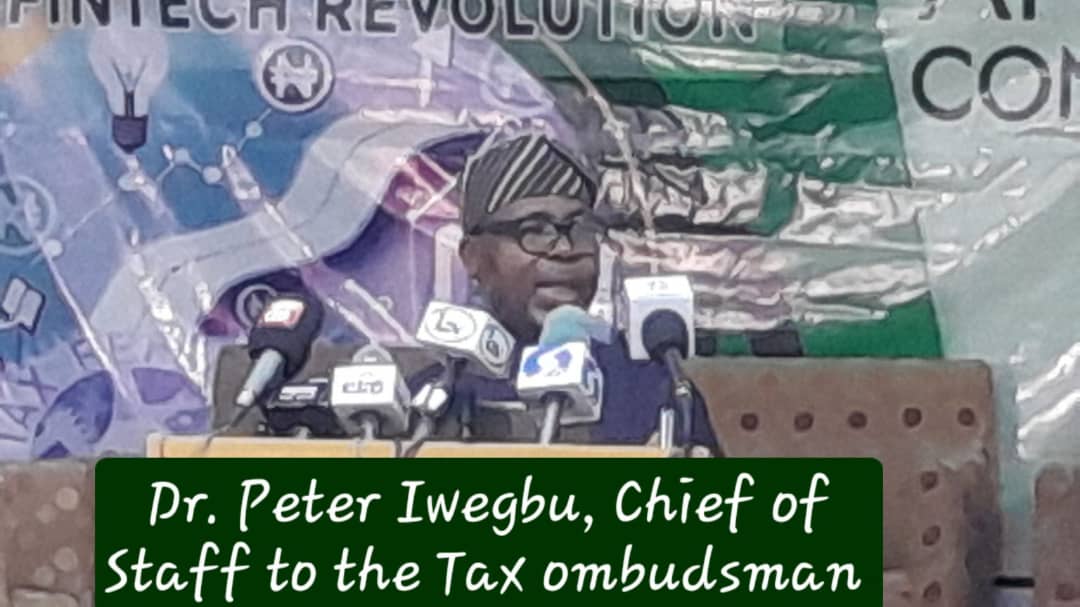
Deployment of public fund transparently increases public trust according to Dr. John C. Nwabueze, Chief Executive of Tax Ombud, Nigeria, while speaking through his Chief of staff, Dr John Iwegbu at the 36th Anniversary Conference of the Finance Correspondents Association of Nigeria (FICAN), in Lagos on Saturday, September 19, 2026.
The Theme of the conference, “Building Taxpayer Confidence and Trust in Nigeria’s Tax Reform Agenda” provided Nwabueze, a greater position to speak to the need to hold authorities accountable.
For proper emphasis, he said the Tax Ombud has a responsibility to provide a credible avenue for legitimate grievances and must continue to promote fairness, accessibility and confidence in the tax system.
According to him, The success of tax reform will ultimately be judged not only by the laws enacted or the revenue collected, but also by the quality of the relationship that develops between the citizen and the state.
Nwabueze, expressed the confidence that the ongoing reforms, led by the Minister of Finance and Coordinating Minister of the Economy, Mr. Taiwo Oyedele, would help to address the challenge of multiple taxation and the cumulative burden of taxes, levies, fees and charges, particularly on micro, small and medium-sized enterprises.
For many businesses, the challenge is not only the amount paid, but also the complexity, duplication and cost associated with multiple demands from different authorities.
He stressed that though the taxpayers have a responsibility to pay their legitimate taxes because it is a civic obligation and an essential source of public revenue, on the other hand tax authorities have a responsibility to administer the system fairly, transparently and accountably.
Nwabueze, further explained that revenue collection must be anchored in lawful and professional administration.
Offering further insight, he added that taxpayer rights and taxpayer responsibilities are inseparable as citizens and businesses have a legitimate obligation to pay their lawful taxes.
He stated however that tax evasion undermines public revenue, places additional pressure on compliant taxpayers and can distort competition.
“A society cannot sustainably finance public services, infrastructure and development when individuals and businesses deliberately avoid their lawful obligations.” he said.
But speaking further he said the responsibility does not rest with taxpayers alone as taxpayers are entitled to administration that is fair, transparent, accountable and consistent with the law.
“They deserve to understand what they are being asked to pay, why they are being asked to pay it, and what avenues are available when they believe they have been treated unfairly.
“This is the reason for the establishment of the Office of the Tax Ombud.
“The Office exists to build a relationship in which the taxpayer understands their responsibilities; the revenue authority administers the law fairly; and, the government demonstrates accountability in the use of public resources.” Nwabueze explained.
He also pointed out that the Tax Ombud is not an institution established to encourage tax resistance, neither is it an alternative to lawful tax administration.
The office he stated is specifically designed to strengthen confidence in the system by ensuring that legitimate grievances have a credible avenue for consideration and resolution.
He stated that a taxpayer who understands their rights is better positioned to fulfill their responsibilities while a tax authority that is accountable strengthens the legitimacy of its administration.
Nwabueze assured that the Office will continue to support public awareness, taxpayer education, stakeholder engagement and accessible complaint-resolution mechanisms.
“We must ensure that the taxpayer does not feel abandoned when confronted with an administrative difficulty. At the same time, we must ensure that the complaint-resolution process remains impartial, evidence-based and consistent with the law. “Trust is not created by promises alone. It is built through institutional conduct and demonstrable outcomes.” he said