

Uche Cecil Izuora
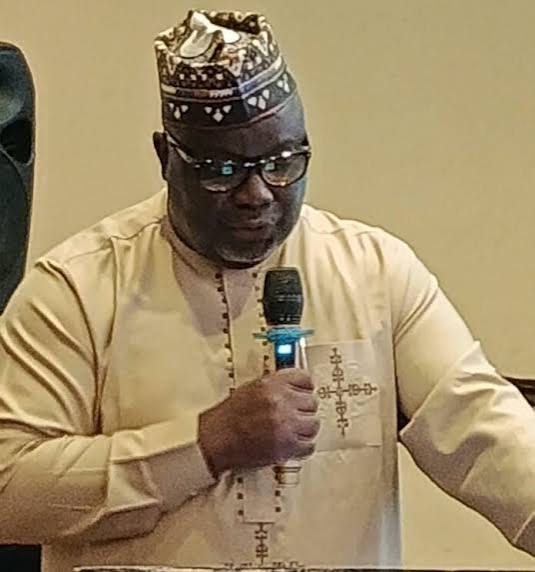
The Managing Director, Ports Operations SBU, Dangote Industries Limited, Simeon Akin Omole, has disclosed that the company’s Single Point Mooring (SPM) complex in Lekki has recorded over 1,100 tanker calls.
He described this as an example of innovation solving a problem that had no precedent in Nigeria.
Omole made the disclosure while delivering a keynote address themed “The Power of Innovation in a Future Maritime Industry,” where he outlined how Dangote Refinery had to operationalise what he described as the busiest SPM complex in the world, comprising five buoys, 15km offshore, handling Very Large Crude Carriers (VLCCs) around the clock.
He explained that there was no existing template for such a project in Nigeria, forcing the company to innovate from the ground up. “We worked with regulators to delineate the Lekki anchorage. We mobilized high-BP tugs where none existed. We built marine safety protocols from scratch,” he said.
Omole also highlighted the role of local capacity in the project’s success, noting that Dangote invested in training indigenous Mooring Masters and crews to global SPM standards. He disclosed that the first crude vessel, MT OTIS, was berthed entirely by Nigerians, describing it as proof that the future maritime workforce must be digital, safety-conscious and commercially aware. “If we don’t build them, we will import them,” he said.
Speaking on the broader future of the maritime industry, Omole painted three pictures of what the sector could look like a decade from now: a “Smart Port” where vessels book berths using AI and cargo clears before arrival; a “Green Fleet” powered by LNG, methanol, ammonia and wind-assist technology; and an “African Gateway” in which Nigeria, leveraging its location and scale under the African Continental Free Trade Area (AfCFTA), becomes the logistics hub for West Africa.
He charged government, terminal operators, shipping lines and academia to regulate for innovation by creating sandboxes for new marine technology and fuels, invest in maritime academies and simulator training at global standards, and collaborate by sharing data, risk and ambition, stressing that no single company can build the future port alone.
“The sea does not care about our history. It only responds to how well we prepare today,” Omole said, closing his address with a call for the industry to choose innovation and lead.