

Ecofinagency Report
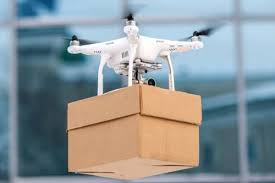
Côte d’Ivoire is expanding drone deliveries for medical supplies, while Zipline is already exploring a shift into commercial parcel delivery with Jumia.
Africa’s drone parcel delivery market could grow from $280 million in 2025 to $1.62 billion by 2031 as e-commerce, congestion and hard-to-reach destinations increase demand for alternative last-mile solutions.
Drones are unlikely to replace trucks and motorcycles, but could become an important complement where speed and accessibility justify the higher cost, provided regulators resolve safety, airspace and data protection concerns.
The Ivorian government recently approved a public-private partnership with U.S. company Zipline to deploy 10 additional storage and distribution centers for medical products. The network is expected to deliver strategic medical supplies and blood products to health facilities in hard-to-reach areas. The U.S. government is supporting infrastructure costs, while the Ivorian government will fund service delivery.
From Blood Products to Commercial Parcels
The Côte d’Ivoire expansion follows a model Zipline has already deployed in several African countries, including Nigeria and Rwanda. The basic proposition is simple: drones can shorten delivery times for small quantities of goods sent to destinations where ground transport is slow, expensive or difficult to organize. But the sector is increasingly looking beyond healthcare. Zipline has also announced a partnership with Jumia to explore parcel deliveries in Côte d’Ivoire, Ghana and Nigeria.
That push into commercial delivery comes after the United States announced in November 2025 a program that could mobilize up to $150 million to support the expansion of Zipline infrastructure in Africa. Zipline is not the only company operating drone delivery services in Africa. In Malawi and Mozambique, Australia’s Swoop Aero also provides drone delivery services for medical products. In Madagascar, AerialMetric carries out similar operations.
The case for drones is not limited to remote rural areas. In major African cities, road congestion can also significantly lengthen delivery times. The opportunity is also drawing companies that already operate large logistics networks. Amazon, through Prime Air, and DHL, through its Parcelcopter program, have explored automated aerial delivery. Their involvement points to broader interest in drone-based last-mile logistics as e-commerce continues to expand.
The Last Mile, a Market Up for Grabs
According to a study by Mobility Foresights, Africa’s drone parcel delivery market could grow from $280 million in 2025 to $1.62 billion in 2031, representing a compound annual growth rate of 33.4%. The study expects growth to be driven by the expansion of e-commerce, urbanization and demand for delivery solutions suited to congested or hard-to-reach areas. The market opportunity reflects a broader logistics problem. In many African markets, last-mile delivery is shaped not only by distance but also by poor infrastructure, congestion, dispersed demand and the cost of maintaining vehicle fleets that can reliably reach difficult locations.
Drones are therefore unlikely to replace trucks or motorcycles. Their main advantage lies in complementing ground transport for shipments where speed, urgency or limited road access justify a more expensive delivery method. Hybrid networks combining warehouses, ground vehicles and drones could consequently become a more common feature of logistics systems across African markets.
A Technology Still Facing Several Constraints
The industry still faces several constraints, beginning with regulation. Integrating large-scale drone flights into airspace requires clear rules governing permits, flight paths, overflight zones and the safety of other airspace users. Payload capacity is another limitation. Drones are particularly suited to light, urgent goods, but become less practical as shipment volumes or weight increase.
Weather conditions can also disrupt operations and create additional challenges for service reliability. Operators also face significant upfront costs for infrastructure, aircraft and maintenance. Finally, the increase in commercial drone flights raises questions about public safety and data protection. For authorities and operators, the challenge will be to allow the market to grow while putting appropriate safeguards in place.