

Dorcus Kamotho- Mureithi, Head of Communication, BasiGo
As geopolitical tensions in the Middle East unsettle global oil markets, their effects are felt far beyond producing regions. In cities such as Nairobi and Johannesburg, the consequences arrive quickly: higher fuel prices, weaker currencies, and rising inflation.
For many African economies, this is not a temporary disruption but a recurring structural problem. Heavy reliance on imported fuel, priced in dollars, means external shocks are rapidly transmitted into domestic economies. Transport systems, which underpin both urban mobility and the movement of goods, sit at the centre of this exposure.
In some markets, transport costs account for as much as 30% of the final retail price of goods. Fuel price increases therefore cascade through entire economies, amplifying inflation and constraining growth. Over time, this has created a persistent vulnerability, one rooted less in energy scarcity than in import dependence.
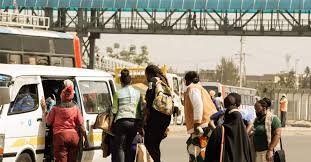
Across Africa, public transport, especially buses, form the backbone of daily mobility, accounting for roughly 40% of passenger journeys. This system is largely private-sector driven, fragmented, and overwhelmingly diesel-powered. As a result, global oil shocks are felt directly by operators, commuters and governments alike.
Recent subsidy reforms have made this exposure more visible. Diesel prices have risen sharply across parts of East Africa, in some cases by as much as 80% in recent years. For bus operators, this has compressed already thin margins. For governments, it has increased pressure on foreign exchange reserves, as billions of dollars are spent annually on fuel imports, $5 billion in Kenya alone.
In effect, African economies are exporting scarce foreign currency to manage volatility generated elsewhere.
What is changing, however, is not the nature of the problem, but the viability of an alternative.In countries such as Kenya, the fundamentals for electrification are already in place. More than 90% of electricity generation comes from renewable sources, including geothermal and hydropower. At the same time, demand fluctuates throughout the day, leaving significant surplus capacity, particularly at night, unused.
This creates an opportunity to shift one of the largest sources of energy demand, transport, onto a domestic, renewable base.
Electric buses are emerging as the most immediate and scalable way to do so. Each vehicle can displace approximately 20,000 litres of diesel annually, replacing imported fuel with domestically generated electricity. With the introduction of time-of-use tariffs for e-mobility, the cost of “fuel” can be up to 75% lower than diesel.For operators, this fundamentally changes the economics of public transport.
For years, the barrier to adoption was not technology, but cost. Electric buses require higher upfront investment than their diesel counterparts, an insurmountable hurdle in a sector dominated by small, independent operators. What is now unlocking the transition is a shift in financing models.
Pay-as-you-drive structures, for example, separate the cost of the battery, the most expensive component, from the vehicle itself, allowing operators to pay for energy as they generate revenue. This aligns costs with daily cash flow, making electric buses viable without subsidies and accessible to the existing transport ecosystem.
In doing so, it mirrors a broader pattern seen across the continent: innovation not just in technology, but in business models that enable adoption at scale.
This is why the transition to electric public transport in Africa may not follow the gradual pathways seen elsewhere. Much like the leap from landlines to mobile money, there is a growing case that African cities can bypass an extended period of fossil fuel dependence altogether.
The implications extend beyond cost savings. Electrifying bus fleets reduces exposure to global oil markets, eases pressure on foreign exchange reserves, and improves urban air quality by eliminating tailpipe emissions, one of the largest sources of pollution in African cities.
In this sense, public transport is no longer just a mobility issue. It is an energy strategy.
Policy is beginning to catch up with this reality. Kenya has introduced tax incentives for electric buses and batteries under its National Electric Mobility Policy, while Rwanda is advancing ambitious targets to become carbon-neutral by 2050. Across the region, governments are increasingly viewing e-mobility not only as a climate priority, but as an economic one.
Further south, South Africa’s evolving electric vehicle strategy points toward a future in which the continent is not just a consumer of clean transport solutions, but a producer as well.
Still, scaling this transition will require coordination. Infrastructure planning, power systems and transport networks remain largely disconnected. A more integrated, corridor-based approach – linking cities, trade routes and energy systems – could accelerate both adoption and economic impact.
Private capital will also play a critical role. While viable projects are emerging, the integration of financing, infrastructure and operations remains incomplete. Bridging these gaps will be essential to move from early deployments to system-wide transformation.
Africa’s energy debate has long focused on how to generate more power. Increasingly, the more important question may be how to use it.
Transport is one of the largest and most volatile consumers of energy on the continent, and one of the most exposed to external shocks. Electrifying it offers a rare convergence of economic, environmental, and strategic benefits.
The fastest path to greater energy security in Africa may therefore not lie in securing a new fuel supply, but in reducing the need for it altogether.
And that transition is likely to begin not in oil fields, but in the bus depots that already keep the continent moving. Culled From Africa.com