

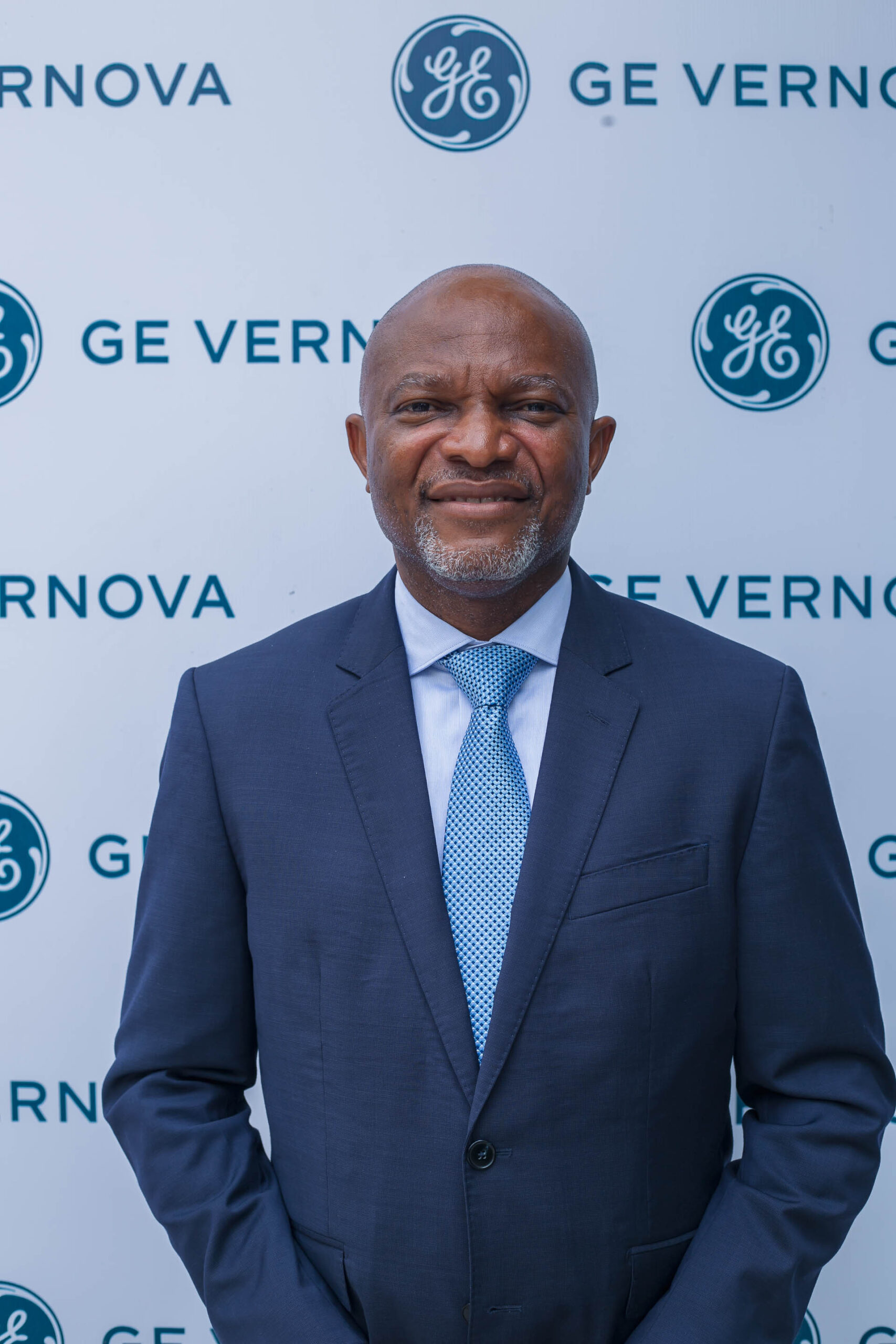
Mr. Kenneth Oyakere, the Managing Executive Officer, GE Venova’s gas power business in sub-Saharan Africa in this interview with the media says the firm is deploying latest technologies that will help drive efficiency in Nigeria’s power sector.
YEMISI IZUORA was there for Oriental News Nigeria
What has been your partnership structure to support Nigeria’s energy transition?
Like you know, we’ve been in Nigeria for over a hundred years. That’s a testament to our doggedity in making sure that we are partners with the various governments that have been through this country, ensuring that we partner with them to deliver reliable, affordable, and sustainable electricity. When you think about that and take a step back, I’m sure through the presentations you saw earlier on, 65% of the thermal power from the Nigerian grid has GE equipment.
That’s huge. And we don’t take it for granted. We have equipment in over 40 sites in Nigeria, spread across Nigeria, we have people seated in various locations in Nigeria. So, when you talk about collaboration and sustainability and looking into the future, first and foremost, we’re well-grounded and we’re here.
Now, if I take it to the next step, how do we partner with the government and with our private sectors going forward? Strategically, what GE Venova is doing, like you’ve seen, is that a big day is coming in the next few weeks, April 2nd. GE Venova will become a standalone, independent business.
The other business, which used to be known as GE Aviation, will become GE Aerospace. And this is very intentional from a GE Venova’s point of view. We want to be focused on what we do best which is power, wind, electrification, and of course accelerators that help us to bring all of what is required, financing, digital, into play, into those three major pillars.
We are more than willing, and we’ve been doing it. You heard Professor Patinandji alluding to it earlier on, partnering with GE over a decade ago, if I remember quite correctly, partnering with the government to do country to company transition for power in Nigeria. So, we are well vested. We have stakeholders in the government space working with the government and the strategy for the power sector going forward.
We’re well vested in the private sector, whether you’re talking about manufacturing, the likes of Dangote, they have equipments, IPPs in Nigeria, the likes of Transcorp, they have equipment. When you talk about oil and gas, the IOCs, you have SPDC, which is now transitioning to MPDC, they also have equipment. Whatever policy that comes out, whatever direction that the government comes out with, we are firmly and solidly positioned to be the leader, supporting and driving the narrative around sustainable electricity, sustainable power, and sustainable energy in the Nigerian space.
Large population of the country is underserved in terms of power supply. Can you talk us through that?
Absolutely, So, I’ve been in the power space for close to 24 years and I’ve seen it all. I dare say, if you allow me, I think when you think about the challenges, it is not common to Nigeria alone, but the differentiator, you would agree with me is that we’ve the resources to turn around that situation to make electricity available, affordable, reliable and sustainable to every household within Nigeria.
Now, how is GE going to partner and make sure these challenges are faced and overcome on a day-to-day basis. We’ve got technologies that we’ve deployed out there across the space. And over these 40 sites that I talked about in Nigeria, we’ve got technologies that are increasing efficiency, increasing power outputs, and also making sure that as we work with our customers, we partner with them in terms of reducing carbon footprints out there.
The technologies are available, they are proven and we will continue to partner with the government to make sure that whatever the challenges are, we’re in front of it and making sure that the technologies that we have, which we have invested so much into, over a billion dollars, they are proven technologies. And over the one century that we’ve been here, that has been proven. It is a well-willed act to continue to collaborate with the government, to continue to collaborate with the private sector, to face this challenge head on.
And with IDSA, we are in the best position to do that. If you think about the landscape in Nigeria, 65% of the power generated here is from our equipment.
So, I think we’re well positioned to help support, to collaborate and coordinate that space and ensure that the challenges are resolved. So, when you think about the three pillars that I talked about, power, we have our equipments in all of these sites. When you think about electrification, we’re pushing our technologies in the grid space that is helping to substantiate and stabilize the grid. When you think about accelerators, we’re bringing investors and other people that are big players into this Nigerian space to make sure that they see that sector as viable and bankable. So, we’re here. We are more than well positioned, and we’re excited about what we see on a day-to-day basis. At the end of it all, what is most important that the average life of every Nigerian improves by making sure that there is light on every street and corner of Nigeria.
So, how are you bringing new technologies making sure those technologies are solving problems, so can you shed more light on that?
So, a huge impact, and without going into too much detail, because these are companies and entities that we must also manage their privacy, if you will.
We have technologies that are out there that we’ve deployed that increased the output of equipment from close to 15, 16 percent, additional 15, 16 megawatts to each of the equipment. We have technologies that have improved efficiency, reducing gas consumption and increasing output.
We have technology out there within the Nigerian space that’s more robust, more rigid, more rugged, that can sustain the grid that we have presently in Nigeria. So, these are proven technologies, and we have testament of customers across the spectrum that have technologies that we can speak to and are very proud about.
So, let’s talk about your role or your relationship with other stakeholders?
Like I said, I’ve been privileged to be in this space for over two decades. And not just me as a person, the entire GE team is super excited because of what we do on a day-to-day basis. Our partnership with the government is stronger than ever, we are pulled into discussions on to strategize, how to improve the energy situation in Nigeria. We’re always more than willing to share.
Just our equipments, just our technologies that are out there, dependable and reliable, are things that this government highly appreciate, and we continue to work with them. In the private space, like I mentioned earlier, we have partners in the IPP space, we have partners in the manufacturing space, we have partners in the IOC space. We’ve worked with them for decades and they’ve seen how valuable and appreciative GE technology is.
That’s why you can see a testament of today’s event, the gathering of stakeholders of this sector who are more than humble and appreciative of the fact that they are always willing to sit with us, engage with us, excited about new technologies that we have, proven technologies that we have, and more than willing to test them out within the Nigerian space.
So, it’s something that we’ll continue to do. It’s something that gets me excited on a day-to-day basis. When I wake up every morning, the one thing that comes to my mind is, how do I become a piece of the solution? I want to look back years from now and say, we did it. We moved Nigeria from point A to point B. I’m heavily vested. I’m heavily vested. I worked for the first IPB in Nigeria, 23 to 24 years ago. The very first that was brought in by the president His Excellency.
Then, he was the governor of Lagos state. Most people might remember, it used to be known as Enron power, which later became AAS power. I was part of the indigenous engineers that were recruited that started that project. So, I have it in my DNA to solve the problem with my team, of course. But we enjoy massive collaboration, and we enjoy massive support and engagement from the government and from the private sector.
So, you talked about solutions earlier. How does GE Venova plan to play along all of this?
GE Venova, like I told you, we are more than ready, and here’s the thing, when it comes to policy, it’s exciting when the government rolls out policies. We review, we read, and give our feedback, and then we collaborate.
I’ve looked at it, it’s exciting, it’s bubbling. I truly believe that with the vested interest that this government has, things will move forward. And from a GE Venova’s point of view, we’re strategically positioned, because who else would you call that has 65% of the power generation in Nigeria, so, we are strategically positioned to make sure that every technology that we have out there is deployed within Nigeria. Our portfolio, the biggest part of it is Nigeria. So, we’re going to continue to work with them. We don’t make policies. We review, we give feedback, and we collaborate.
And the collaboration is the most important thing for GE Venova. We make sure that people are aware of what we’re doing, how much we’re doing. Last week I was in the US. I went to one of our famous places that people would love to go to, the Global Research Center. It’s in Schenectady, upstate New York. And the energy that I drew out of there coming into this event today is the one that says, yes, we can do it. I’m excited about it. I truly believe that the government is in the right direction. I will continue to support, continue to collaborate. I will continue to air our views and make sure that they understand that GE is here to stay. GE Venova is a partner, GE Venova can be relied upon to work with them and move these policies, these new ideas and strategies forward.
Some would argue that your operations are limited to the power sector. Can you confirm that? Or do you have other sectors that you are having operations in as well?
So, I am GE Venova, right? Prior to now, GE conglomerates used to be in multiple businesses. GE healthcare, GE transportation, GE aviation, GE plastics, all of that today has now become two businesses remaining. On the 2nd of April, GE Venova, GE aerospace, all standing as independent entities and focus on what they do best. What we do best is improve the lives of people, pushing out technologies that make the world move forward in a better way.
GE Venova is here to stay, the crystal ball is very clear, we’re going to be leading not following. We’re going to be lead in the energy transition space, we’re going to lead in innovative and new engineering solutions across the energy space. We’ve been doing it, and we’ll continue to do it. Like we said, GE Venova’s focus is going to be innovative and transformative in the power and energy space. So, in the largest scale, that’s what we’re going to be doing deploying and doing within the Nigeria space, leading and driving the narrative.
What are your initiatives and programs to address social and environmental concerns that might be in Nigerian communities where GE is operating?
We are super passionate about reducing the carbon footprint. We’ve invested a lot within the last couple of years to drive technologies that would improve our environment. It’s where we live. We breathe and live in it on a day-to-day basis. So, for GE Venova, this is something that, like I said, we’re leading in terms of technology and in terms of the know-how. Within that space, we’ll continue to drive on a day-to-day basis in our R&D centers, new technologies that will help us to reduce carbon emissions, new technologies that will help us to make sure that the lives of everyone across the globe gets better. If there’s electricity, there is economic growth, there will be employment, there will be sustainability of the economy. It starts with us. And that is why for us in GE Venova, it is something that we live and breathe. So, whether you’re talking social, environmental, or economical, we see it as one
piece.
If we deploy the right technology, and there’s electricity, there will be power for the manufacturing sector to employ more people, people will be more empowered, serves the growth of the country. If we deploy technologies that reduce carbon emission, we’re going to leave a better head space for our children and our children’s children. If we deploy the right technology, the social space will be more than excited and bubbling.
So, for us in GE, it is about doing it right and getting it right and making sure that people see that we’re leading the energy transition space. And it’s not something that we take for granted. Whether it’s how we transition from coal to renewable, making sure that gas remains a pivotal part of that. Right? Because you can’t take out the entire coal space in one night.
So, it has to be a transition. So strategically, that gas space is where we continue to drive and encourage people because it has lesser carbon emission. And as we build on renewable and scale and get to the level where we want renewable to be, GE Venova will be leading all the way.