

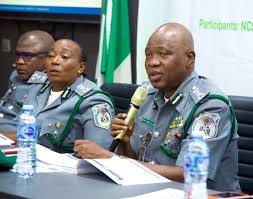
The Nigeria Customs Service (NCS) and the Presidential Enabling Business Environment Council (PEBEC) have launched a focused, action‑oriented reform agenda aimed at making Nigeria’s ports faster, more predictable, and more competitive for trade. The initiative was unveiled at a three‑day operational workshop in Apapa on Tuesday, 7 April 2026, titled *“Customs Leadership in Port Efficiency, Inspection Reform and Clearance Timeline.”*
In his opening remarks, Comptroller‑General of Customs (CGC) Adewale Adeniyi sketched out a five‑point strategy built on joint inspections by border agencies, risk‑based cargo processing, better utilisation of scanning and infrastructure, strict adherence to clearance timelines, and tighter coordination among regulators. He insisted that the priority now is not new policies, but the consistent and disciplined execution of existing ones.
“The challenge is not in knowing what to do; it is in doing it every single day,” Adeniyi said, pressing officers to move from manual habits to a more intelligence‑driven, data‑driven way of working. He argued that every naira spent on digital platforms and scanning systems must bring measurable gains in processing speed, transparency, and trader confidence.
To keep the reforms on track, the CGC revealed that the workshop will produce a concrete reform execution matrix that will be monitored in real time rather than stored away as a paper document. He pledged to personally review progress reports and called on personnel to treat professionalism, integrity, and service delivery as permanent standards, not occasional gestures.
“The matrix must live in the command centre, not in a filing cabinet,” he said. “The qualities this exercise is asking of you are not optional; they are the core of the Service’s future.”
PEBEC’s Director‑General, Zahrah Mustapha‑Audu, called for a shift from inspecting every consignment to targeting only the right ones, using data and risk profiling. She maintained that precise, efficient inspections are key to cutting documentation costs, reducing dwell times, and improving Nigeria’s ranking as a trading destination.
“Efficiency cannot be an afterthought; it must be built into every clearance process,” Mustapha‑Audu said, urging agencies to align their practices with global best standards.
Deputy Comptroller‑General in charge of Tariff and Trade, Caroline Niagwan, underscored that the NCS’s role as a trade‑facilitation agency is now central to the country’s economic growth, and that operational reforms must be replicated across all Commands, not just in Lagos.
Later in the day, the CGC and PEBEC delegation toured the National Single Window facility, where they held consultations with the Chairman of the Nigerian Revenue Service, Zacch Adedeji, and other stakeholders to review implementation, spot bottlenecks, and accelerate integration across the trade ecosystem.