

Tunde Bakare
A new report has revealed that Nigeria could achieve a 1.7 Gigawatts in renewable energy deployment by 2035.
Nigeria’s renewable power capacity is expected to reach 1.7 GW in 2035, registering a compound annual growth rate (CAGR) of 18.9 per cent from 2024 to 2035, according to GlobalData recent report.
The report follows Nigeria’s plan to increase the share of renewable electricity generation to 23 percent in 2025 and 36 percent by 2030.
Under the Renewable Energy Master Plan (REMP), the country planned to increase the cumulative installed capacities of small hydropower, solar photovoltaics (PV), biomass, and wind power to 2GW, 500MW, 400MW, and 40MW by 2025, respectively.
The GlobalData’s latest report, ‘Nigeria Power Market Outlook to 2035, Update 2025 – Market Trends, Regulations, and Competitive Landscape,’ further revealed that annual power generation in Nigeria is expected to increase at a CAGR of 17.5 percent during 2024 – 2035 to reach 1.8 TWh.
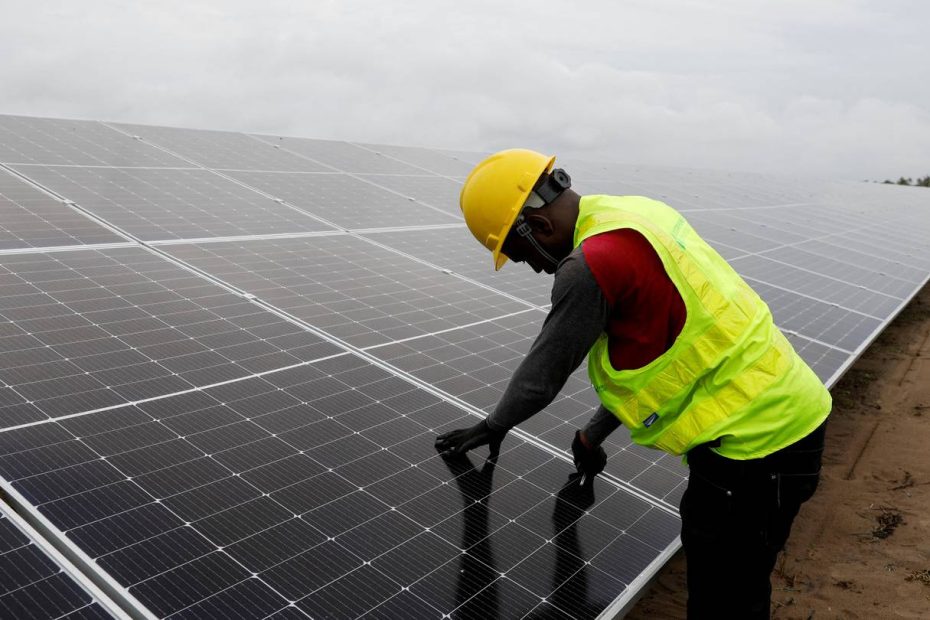
Within the renewable energy sector, solar PV technology stands out as a significant investment prospect. There has been a noticeable increase in solar PV capacity additions in the country over the past few years. A primary catalyst for this surge is the REMP.
Senior Power Analyst at GlobalData, Attaurrahman Ojindaram Saibasan, commented: “Nigeria relies heavily on thermal sources for its power generation. The nation possesses one of the largest natural gas reserves globally and the most extensive in Africa, which has led to the increasing prevalence of thermal power generation within the country.”
However, he said that a significant challenge that power generators encounter is the absence of a guaranteed fuel supply, resulting in the under-utilisation of assets.
Following privatisation, there was a lack of infrastructure to foster an environment conducive to the effective execution of fuel supply agreements, which are essential for establishing bankable power purchase contracts.
To overcome this challenge, the country has placed focus on renewables, especially solar PV, to cater to a part of its electricity requirement.
Nigeria, Africa’s most populous nation, is experiencing rapid urbanisation, which is driving an increase in household electricity demand for lighting, cooking, refrigeration, cooling, entertainment, and various appliances.
Power-intensive industries such as cement, food processing, and textiles are also significant consumers of electricity.
Due to the unreliable supply from the grid, many businesses resort to operating diesel or petrol generators, indicating that the actual energy demand is considerably higher than what grid consumption data suggest. Renewable power capacity with energy storage will help overcome this issue.
He said: “The primary catalyst for the adoption of solar PV technology in Nigeria is the serious issue of energy poverty and the inconsistency of electricity supply. Consumers’ preference for solar PV arises from the demand for dependable power.”
Innovations in solar technology, coupled with novel financing models such as pay-as-you-go (PAYG), have propelled the growth of distributed solar power (DSP). These developments enhance the viability and scalability of solar initiatives, positioning them as compelling investment prospects.
Saibasan added: “DSPs in Nigeria possess considerable potential, bolstered by the nation’s rich solar resources and escalating energy requirements.
The Rural Electrification Agency is actively executing an expansive strategy that incorporates both energy service company-led and utility-led models.
This approach is designed to expedite the electrification process via grid expansion and the deployment of green mini grids.
The primary focus is on electrifying market clusters, manufacturing centres, educational institutions – including schools and universities – and healthcare facilities, utilising solar PV and hybrid solar PV-diesel systems.”