

Uche Cecil Izuora
The President of the International Energy Agency (IEA), Fatih Birol, has expressed excitement after Nigeria joined the Agency as an Association country on Thursday, deepening ties between the Paris-based energy watchdog and Africa’s largest oil producer.
The IEA’s Governing Board unanimously approved Nigeria’s accession to the Association program, the agency said in a statement.
Home to more than 240 million people and one of Africa’s largest economies, Nigeria is a major producer of oil and natural gas while also emerging as one of Africa’s fastest-growing renewable energy markets. At the same time, millions of people in the country still lack access to reliable electricity and clean cooking.
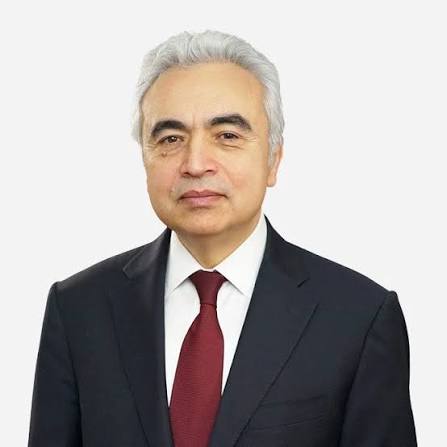
Commenting on that, IEA’s President Fatih Birol said: “I am thrilled that Nigeria is joining the IEA – it is Africa’s most populous country and a major international energy player.”
“Nigeria becoming part of the world’s energy authority marks a milestone for global energy governance. I am very thankful to President Tinubu and Minister Ekpo for their trust in the IEA,” said Birol.
“As Nigeria works to strengthen energy security, support economic growth and expand energy access, deeper cooperation with the IEA will bring important benefits for both sides,” he added. “We look forward to building on our already strong partnership and welcoming Nigeria to the IEA.”
Nigeria’s Minister of State for Petroleum Resources (Gas) Ekperikpe Ekpo said: “It is an honour for Nigeria to join this leading energy agency and I will take this opportunity to encourage the African continent to embrace the IEA, as we all work together to achieve key development goals including universal energy access and industrialisation.”
The IEA said Nigeria has become an increasingly important player in international energy markets. During recent periods of market disruption, higher fuel exports from the country’s refining sector helped support supplies in African and global markets.
Nigeria has also emerged as one of the world’s fastest-growing markets for decentralized solar energy and is stepping up efforts to improve access to electricity and clean cooking.
As an Association country, Nigeria will expand cooperation with the IEA across a broad range of energy issues, including the agency’s work in sub-Saharan Africa.
Launched in 2015, the IEA Association program brings together major energy-producing and energy-consuming countries.
Nigeria becomes its 14th member, raising the share of global energy demand represented by the IEA family from about 40% in 2015 to more than 80% today