

Uche Cecil Izuora
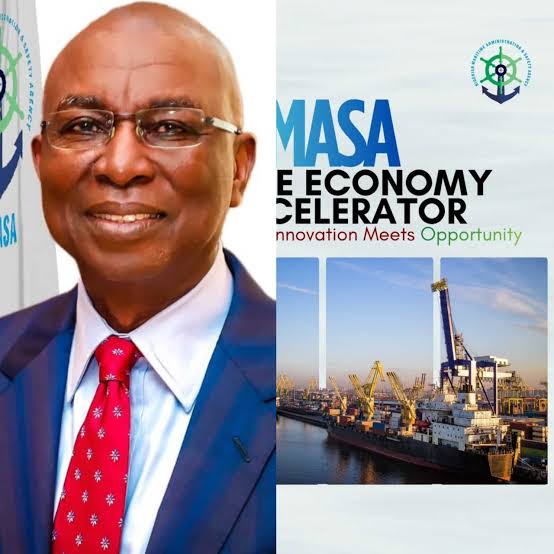
A fresh opportunity is awaiting young entrepreneurs in the maritime sector as the Nigerian Maritime Administration and Safety Agency (NIMASA) unveils a program to develop young businesses and technology solutions for the country’s blue economy, while seeking private-sector participation to help turn those ventures into investable businesses.
The NIMASA Blue Economy Accelerator Programme (NIMASA-BEAP) and a National Innovation Hackathon opened in Lagos on September 16, 2026.
The program is intended to give young Nigerians and innovative enterprises a structured path from developing ideas to building businesses that address challenges across the maritime and blue-economy value chain.
The initiative will include an application and selection process, a national hackathon in December and a 12-week accelerator program in the first quarter of 2027. Participants are expected to present their solutions to investors, industry stakeholders and potential partners during a National Demo Day in the second quarter of 2027.
Applications will open on October 5 and close on November 13. NIMASA will conduct evaluations and due diligence from November 16 to December 2, before the National Innovation Hackathon runs from December 8 to 10. The program is open to Nigerians aged 18 to 28.
NIMASA is also seeking participation from commercial banks, development finance institutions and maritime companies through investment, mentorship and partnerships. Representatives of banks, shipowners and other maritime-sector businesses participated in the September 16 launch discussions, according to the Federal Ministry of Information and National Orientation.
NIMASA has not disclosed any direct funding allocation for participating ventures. Instead, the program is structured around developing businesses and connecting them with potential sources of private capital and industry support.
The initiative focuses on a sector that handles a large share of Nigeria’s international trade. Minister of Marine and Blue Economy Adegboyega Oyetola said in February that ports, shipping, inland waterways, fisheries and aquaculture collectively account for more than 90% of Nigeria’s international trade by volume.
At the September 16 launch, NIMASA Director-General Dayo Mobereola argued that Nigerian businesses capture only a small share of the economic activity associated with the country’s maritime sector. He said Nigeria captures “less than three percent of the value moving through our own waters,” presenting that gap as an opportunity for greater domestic participation.
The accelerator is aimed at areas such as maritime technology, logistics, shipping services and other businesses linked to the wider maritime value chain. NIMASA had already announced the accelerator earlier in 2026 as a program to identify and develop startups capable of addressing challenges and opportunities in Nigeria’s maritime ecosystem.
The program comes as the federal government seeks to develop the marine and blue economy as part of its broader economic diversification strategy. The sector spans ports and shipping as well as inland waterways, fisheries, aquaculture and other activities connected to Nigeria’s marine resources.
The program is also part of a wider push to increase the role of young businesses in Africa’s blue economy. A July 2026 UNDP program for youth- and women-led blue-economy enterprises similarly identified access to finance, investment readiness, market access and business development as constraints on greater participation in higher-value activities.