

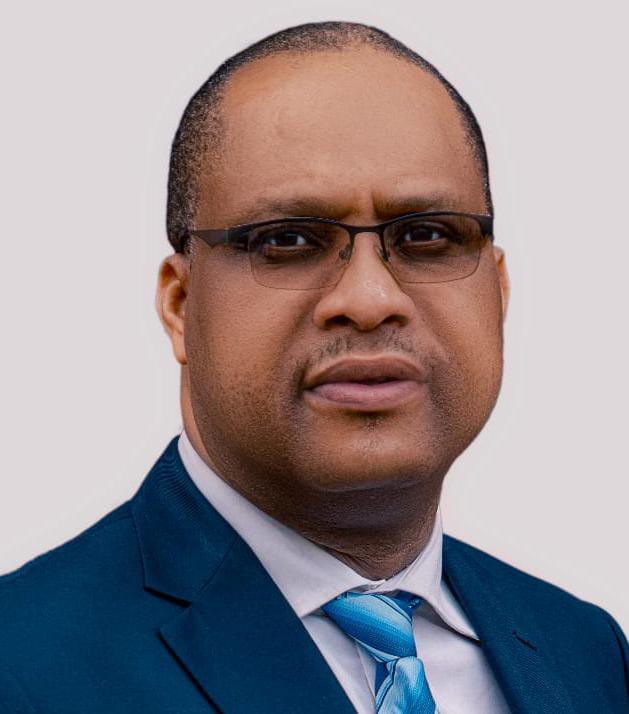
In this interview the Managing Director of Oilserv Limited, Engr. Dr. Kenechukwu Nwangwu, the company is consolidating its position as a trusted partner in the delivery of strategic gas infrastructure projects that are central to Nigeria’s energy security and Africa’s broader energy transition agenda.
Yemisi Izuora was there for Oriental News Nigeria
Can you tell us Oilserv contributions towards Nigeria’s gas development initiative?
Oilserv has grown beyond being simply a pipeline construction company. Today, we are an integrated Engineering, Procurement, Construction, Installation and Commissioning organization providing comprehensive solutions across the oil, gas and energy value chain. Through our subsidiaries and specialized business units, we execute complex engineering designs, pipeline infrastructure, topside facilities, river crossings, mechanical installations and other critical energy projects that support both upstream and midstream operations.
Our philosophy has always been straightforward: execute projects safely, efficiently and to the highest international standards while consistently exceeding our clients’ expectations. That commitment has earned Oilserv the confidence of major international and indigenous energy companies operating within Nigeria.
At the moment, we are executing several strategically important projects across the country. One of them is the Ubeta Project for TotalEnergies, which is a significant development aimed at enhancing upstream gas production and supporting Nigeria’s domestic gas aspirations. We are also nearing completion of the ANOH Renaissance Project, which is another critical gas infrastructure project designed to strengthen domestic gas supply. Closely related to this is the ANOH-NNPC project, where commissioning activities are progressing steadily. These projects collectively contribute to improving gas availability for industries, power generation and economic growth.
Another exciting project currently underway is our participation in the NLNG Gas Transmission System (GTS-1) expansion. This project introduces another level of engineering complexity, particularly because it involves shallow-water pipeline installation and specialized marine construction activities. It demonstrates our ability to deliver challenging infrastructure solutions across diverse terrains.
Of course, perhaps the project most Nigerians are familiar with is the Ajaokuta-Kaduna-Kano (AKK) Gas Pipeline Project, which remains one of the country’s most ambitious gas infrastructure developments. We have successfully completed the mainline welding activities, and our teams are presently focused on pre-commissioning and commissioning operations. Every member of our project team understands the national importance of this project, and we are working collaboratively with the Nigerian National Petroleum Company Limited (NNPC Limited), government stakeholders and our partners to ensure that the pipeline is ready for first gas within the government’s targeted timeline.
The AKK project is far more than another pipeline. It represents one of the foundations upon which Nigeria’s Decade of Gas initiative is being built. Once operational, it will significantly improve domestic gas transportation, stimulate industrial development across Northern Nigeria, support power generation, encourage manufacturing and create new economic opportunities along its corridor. Being entrusted with delivering such a nationally significant asset is a responsibility that Oilserv takes very seriously.
How is Oilserv leveraging innovation to improve project delivery and solve operational challenges?
Technology has become one of the strongest competitive differentiators in modern engineering, and Oilserv recognized that reality quite early. We are proud to be among the first indigenous companies in Nigeria to introduce automatic welding technology and semi-automatic welding systems into large-scale pipeline construction. These technologies have significantly improved productivity, enhanced weld quality, reduced construction timelines and strengthened safety performance across our projects. They have been successfully deployed on major projects including the AKK Gas Pipeline and the Ubeta Project.
Beyond field construction, technology now drives virtually every aspect of our operations. Through Frazimex Engineering Limited, our specialized engineering subsidiary, we utilize advanced engineering software for detailed design, field engineering, structural analysis, pipeline integrity planning and project optimization. Digital engineering tools allow us to model complex infrastructure before physical construction begins, enabling us to anticipate challenges, optimize resources and improve execution efficiency.
Artificial Intelligence is another area where we are deliberately investing. While AI cannot replace engineering judgement or field experience, it has become a valuable decision-support tool. We are increasingly integrating AI into engineering design reviews, document management, project analytics and internal knowledge systems to improve decision-making and enhance overall productivity.
Digital transformation is no longer optional for engineering companies operating in today’s environment. Clients expect faster execution, higher quality, greater transparency and more predictable project outcomes. Meeting those expectations requires organizations to embrace technology across the entire project lifecycle, from conceptual engineering and procurement planning to construction, commissioning and asset documentation.
Equally important is the role technology plays in improving safety. Automated systems minimize human exposure to high-risk activities, improve inspection accuracy and enable real-time monitoring of construction activities. This contributes significantly to our commitment to maintaining world-class health, safety and environmental standards.
Ultimately, technology is not simply about acquiring sophisticated equipment. It is about building a smarter organization capable of delivering better outcomes for clients while continuously improving operational efficiency. That remains one of our strategic priorities as we position Oilserv for the future.
Let us talk about the AKK Pipeline Project. Nigerians are eager to know when commissioning will commence. How close are you to that milestone?
The AKK project has reached a very important stage, and there is understandable excitement surrounding its progress because of what it represents for Nigeria’s economy. It is important to understand that the AKK project comprises several interconnected components. Beyond the main pipeline itself, there are terminal gas stations, block valve stations and other auxiliary facilities designed to ensure efficient gas transportation under the required pressure and operating conditions.
The mainline construction has progressed substantially, and our immediate focus is on completing pre-commissioning activities to prepare the pipeline for safe hydrocarbon transportation. This involves extensive testing, cleaning, integrity verification and systems validation before gas can begin flowing. Simultaneously, work continues on associated facilities, including terminal gas stations and multiple block valve stations distributed along the pipeline corridor. These installations play a critical role in maintaining operational reliability, ensuring pressure management and supporting long-term pipeline integrity. Different contractors are executing various aspects of these supporting facilities in collaboration with NNPC Limited, and there is strong coordination across all project stakeholders to ensure alignment with the government’s implementation schedule.
For us at Oilserv, this project goes beyond engineering achievement. It represents a national development initiative capable of transforming Nigeria’s energy landscape. By improving domestic gas transportation infrastructure, the AKK pipeline will unlock significant opportunities for manufacturing, fertilizer production, power generation, commercial enterprises and industrial development across multiple states. That is why our teams remain fully committed to delivering every outstanding activity safely, efficiently and in accordance with international engineering standards. Every milestone achieved brings Nigeria one step closer to maximizing the enormous economic potential of its natural gas resources.
Beyond the AKK project, Oilserv recently secured another strategic project with Nigeria LNG Limited. Could you tell us more about the NLNG Gas Transmission System (GTS-1) project and what it means for Nigeria’s gas value chain?
Certainly. The NLNG Gas Transmission System (GTS-1) project is another significant milestone, not just for Oilserv but for Nigeria’s gas industry as a whole. It demonstrates the confidence that major industry players continue to place in indigenous engineering companies with proven technical competence and execution capability.
The project forms part of NLNG’s broader strategy to expand and strengthen its gas transmission infrastructure. Essentially, the Gas Transmission System serves as the network through which natural gas from various upstream producers is transported to the NLNG processing facility on Bonny Island. As Nigeria continues to increase gas production and prepares for higher processing capacity, particularly with the addition of Train 7, there is an urgent need to expand the supporting infrastructure that feeds the liquefaction plant.
Our role on the project is particularly exciting because it introduces a specialized aspect of engineering execution. Oilserv is responsible for the shallow-water crossing section of the pipeline installation, a technically demanding operation that requires sophisticated marine construction techniques, specialized equipment and meticulous project planning.
We are laying approximately six kilometers of offshore pipeline across shallow waters, utilizing heavy marine assets including barges and specialized installation equipment. The project demands precision at every stage, from logistics and marine transportation to welding, installation, testing and eventual tie-ins with the broader transmission network.
Already, we have commenced transporting thousands of pipeline joints from Port Harcourt to Bonny Island, where installation activities will continue. It is a massive logistical undertaking that reflects the scale and complexity of modern energy infrastructure development.
Projects such as these reinforce Oilserv’s ability to execute both onshore and offshore pipeline systems while continuously expanding our technical capabilities.
Perhaps more importantly, this project contributes directly to Nigeria’s long-term gas ambitions. As additional gas processing capacity comes on stream through Train 7, adequate transmission infrastructure becomes indispensable. Without pipelines, gas remains stranded beneath the ground regardless of the country’s reserves. Infrastructure is what converts natural resources into economic value. For us, every kilometer of pipeline installed represents more than steel in the ground; it represents increased energy security, industrial growth, foreign exchange earnings and new opportunities for national development.
There is often a debate around Nigeria exporting gas while many communities still struggle with domestic energy access. How do you view that conversation?
It is a very important conversation, and I believe it requires a balanced perspective. The first thing we must appreciate is that Nigeria operates within a global energy market. Companies such as NLNG have long-term contractual obligations with international buyers, and those commitments are essential because they generate significant foreign exchange earnings for the country, strengthen investor confidence and support future investments within the sector. However, domestic utilization remains equally important.
One of the encouraging developments in recent years is NLNG’s deliberate policy of increasing domestic availability of Liquefied Petroleum Gas (LPG). Today, virtually all the LPG produced through NLNG’s operations is supplied into the Nigerian market. That is a significant policy shift which has contributed positively to improving domestic cooking gas availability and supporting cleaner household energy consumption. Nevertheless, domestic supply is only one part of the equation.
The larger challenge is infrastructure. You may have abundant gas reserves and adequate production, but without transmission pipelines, distribution networks, processing facilities and supporting infrastructure, those resources cannot effectively reach industries, power plants, commercial users or households. That is precisely where companies like Oilserv come in. Our responsibility is to build the infrastructure that connects gas production to consumption. Every pipeline we install expands Nigeria’s capacity to move energy efficiently from producing fields to processing plants, industrial clusters and distribution networks.
As Nigeria continues implementing the Decade of Gas initiative, infrastructure development will become even more critical. Gas has enormous potential to transform our manufacturing sector, reduce energy costs, improve electricity generation and support cleaner industrial development.
Our contribution is therefore straightforward; we build the infrastructure that makes these opportunities possible. Without infrastructure, resources remain potential. With infrastructure, they become prosperity.
Looking ahead over the next two or three years, what would you like Oilserv to become under your leadership?
That is perhaps the most exciting question because leadership is ultimately about defining the future. At Oilserv, our purpose extends beyond constructing pipelines or executing engineering contracts. We are building infrastructure that improves lives, enables economic growth and accelerates Africa’s energy transition.
Our corporate vision is centered on accelerating energy transition while improving African lives, and that vision continues to guide every strategic decision we make.
Over the next few years, I want to see Oilserv evolve into Africa’s most respected indigenous energy infrastructure company not merely because of our size, but because of our reputation for consistent performance, technical excellence, innovation and integrity. Nigeria has developed exceptional engineering talent over the years. Through projects like AKK, OB3, ANOH, Ubeta and numerous others, indigenous companies have demonstrated that they can successfully execute projects that were once considered the exclusive preserve of international contractors.
The next logical step is to export that expertise across Africa. The continent is experiencing significant investment in gas infrastructure, power projects, transportation systems and industrial development. These opportunities require companies with proven experience in executing large-scale engineering projects under complex operating conditions.
Oilserv possesses those capabilities. Our ambition is therefore to position ourselves as a preferred engineering partner for governments, international energy companies and private investors across Africa.
But expansion alone is not enough. What will distinguish Oilserv is our commitment to execution excellence. When a client entrusts us with a project, our objective is simple: deliver safely, deliver efficiently and deliver exactly as promised.
Performance is not something we aspire to occasionally; it must become our identity.
I want Oilserv to be recognized as the company that consistently delivers complex infrastructure on schedule, within specification and with uncompromising attention to quality. That reputation will ultimately become our greatest competitive advantage—not only within Nigeria but across the African continent.
Can you please tell us a little bit about yourself?
Thank you very much. My name is Engr. Dr. Kenechukwu Nwangwu, and I serve as the Managing Director of Oilserv Limited. It is indeed a privilege to lead an organization that has consistently demonstrated excellence in engineering and infrastructure delivery over the last three decades. Although I joined Oilserv relatively recently, I came into an organization with an impressive legacy of delivering some of Nigeria’s most strategic energy infrastructure projects. My responsibility today is not only to sustain that legacy but also to position the company for even greater relevance in an energy industry that is evolving rapidly through technology, innovation and sustainability.