

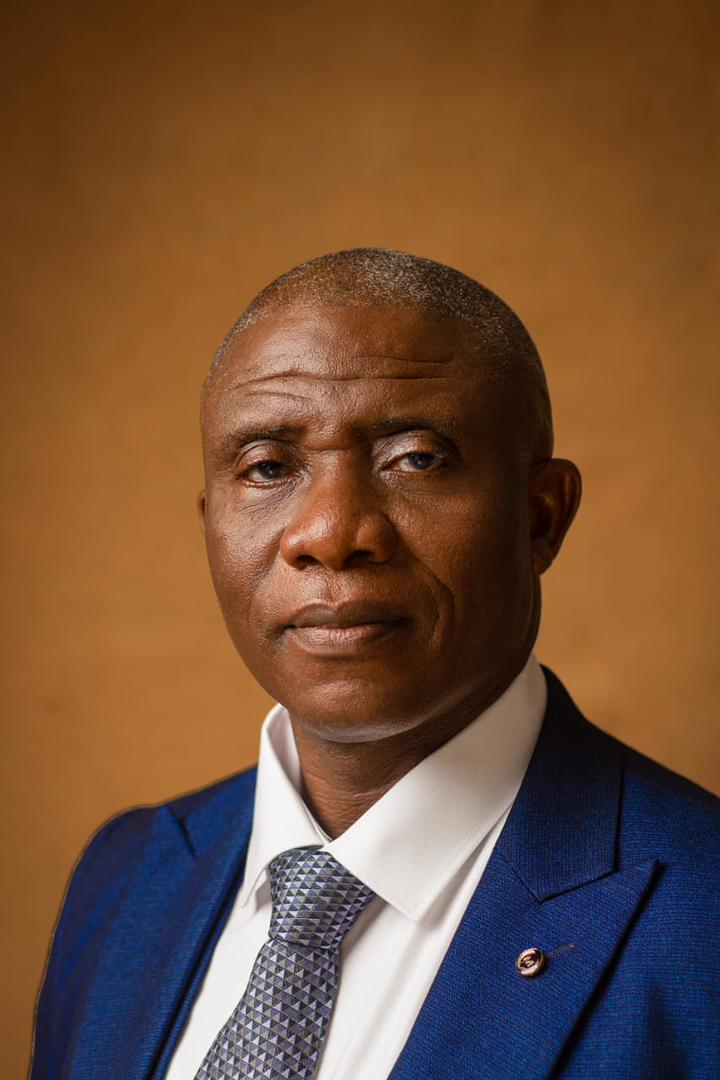
Sir Engr Ucheonwu Prince Henry Hart, a seasoned engineer and management professional, has emerged as a leading contender for the Igbo‑Etiti/Uzo‑Uwani Federal Constituency seat in the National Assembly. With over three decades of experience in the upstream oil and gas industry, Hart brings a project‑oriented, results‑driven background to the contest, positioning himself as a technocrat rather than a conventional politician.
Hart was born 56 years ago into the family of the late Sir and Lady Ucheonwu Peter Chetuya Brown (PCB), a household known for its emphasis on education, public service, and community engagement. His father, a respected educationist and founding figure in St. Peter’s Anglican Church, Igga, instilled in him a strong sense of discipline, integrity, and responsibility. Hart’s early life and family background have informed his consistent focus on transparency, accountability, and service to the public.
Academically, Hart has pursued a multidisciplinary trajectory that spans engineering, safety management, and public administration. He holds a Bachelor’s degree in Mechanical Engineering from Ambrose Alli University, a Master’s in Mechanical Engineering from Delta State University, Abraka, and an M.Sc. in Occupational Safety and Health Management from Loughborough University, UK. He also earned a Master’s in Project Management from Rome Business School and a NEBOSH International Diploma in Health, Safety, and Environmental Management. In addition, he has several qualifications in Public Administration from Obafemi Awolowo University and the National Open University system.
Professionally, Hart has spent more than 30 years in the upstream oil and gas sector, serving in senior Quality, Health, Safety, Security, and Environmental (QHSSE) roles for major international energy operators. His work has involved overseeing risk assessment frameworks, engineering, procurement, and construction (EPC) projects, and large‑scale infrastructure installations, always with an eye on regulatory compliance and environmental, social, and governance (ESG) standards. This experience has equipped him with the technical and managerial skills to critically evaluate projects, budgets, and policy proposals at the legislative level.
Hart’s decision to seek a seat in the National Assembly is anchored on three core principles: compassion, selflessness, and a sense of duty. He cites the persistent infrastructure deficit, high unemployment, and limited economic diversification in Igbo‑Etiti/Uzo‑Uwani as key drivers of his legislative ambition. He also highlights the paradox of Uzo‑Uwani, a region with proven mineral potential yet marked by widespread poverty and underdevelopment. His stated objective is to use legislative oversight and principled advocacy to attract transparent investments, strengthen local content, and ensure that development projects deliver visible benefits to constituents.
On governance, Hart emphasises accountability and process‑driven decision‑making. He regularly underscores transparency, adherence to rules, and the need to move beyond populist rhetoric to measurable outcomes. His participation in over 45 professional courses and his membership in more than 13 technical and management bodies reflect a commitment to continuous learning and professional standards.
As the political landscape in Igbo‑Etiti/Uzo‑Uwani evolves, Hart’s profile offers an alternative narrative centred on technical expertise, project‑based planning, and long‑term development thinking. His candidacy invites scrutiny of how technocratic experience may translate into legislative performance, and whether the constituency will reward a candidate whose appeal is more grounded in policy and execution than in symbolic politics.