

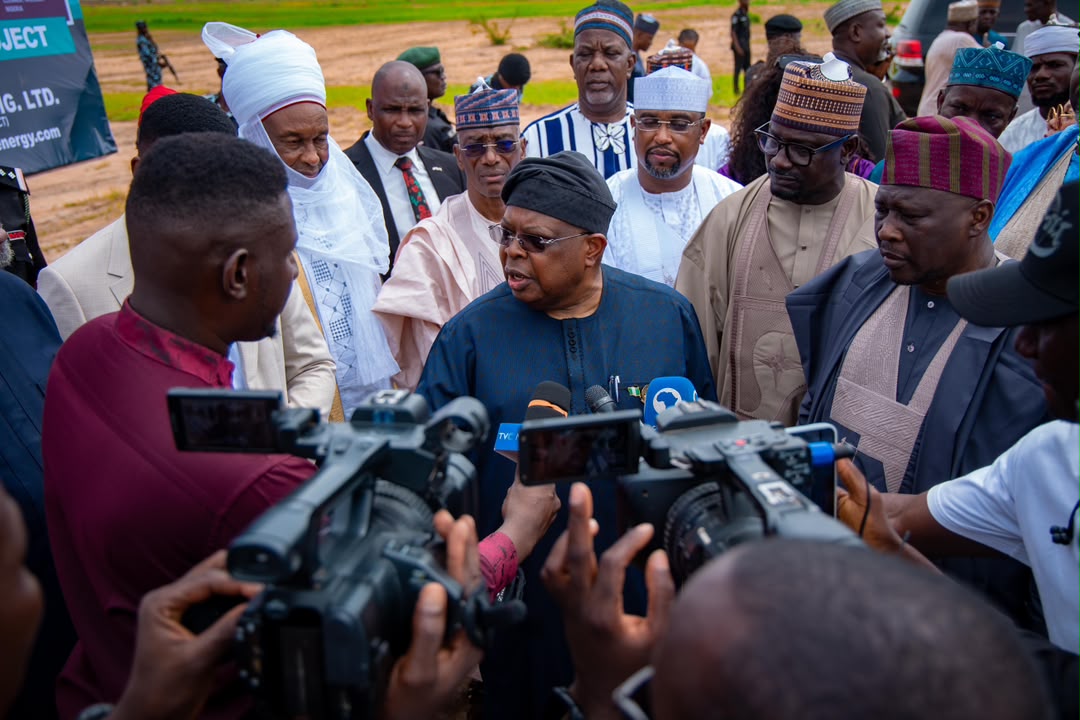
Adamawa State has flagged off construction of 39 mini-grid projects, three interconnected mini-grids and 36 isolated mini-grids, expected to inject nearly 27 megawatts of electricity into communities across the state. The ceremony, attended by the state’s Executive Governor, Nigeria’s Minister of Power, and Rural Electrification Agency (REA) Managing Director/CEO Dr. Abba Aliyu, marks what organisers describe as one of the largest single-state distributed renewable energy rollouts under the federal Distributed Access through Renewable Energy Scale-up (DARES) Programme.
Speaking at the ceremony, Dr. Aliyu thanked the Minister of Power for his role in making rural electrification a national priority under President Bola Ahmed Tinubu’s Renewed Hope Agenda, and credited Adamawa’s state government for its collaboration with federal authorities and development partners in getting the project to this stage.
The projects span communities including Kofare and Saminaka in Yola South, Mbamba to the north, Gulak in Madagali, and Michika, Shuwa, Bazza, Belel, Ganye, Song, Hong, Mubi and Guyuk, with an estimated 40,000 households and businesses expected to gain electricity access as a result. Dr. Aliyu said the rollout is designed to extend beyond household connections: the mini-grids are expected to power roughly 6,000 micro, small and medium enterprises, including welders, tailors, grain millers, cold-room operators and agro-processors, as well as more than 100 public institutions such as schools, healthcare facilities and water systems.
Dr. Aliyu thanked private-sector developers and investors for backing the projects, and said continued collaboration between the federal and Adamawa State governments would aim to maintain the policy stability needed to protect those investments over the long term. Addressing beneficiary communities directly, he said the responsibility for maintaining the new infrastructure would fall partly on residents themselves, urging communities to protect the assets, support system operators and pay for services to ensure the projects remain functional for future generations.
The ceremony was framed as an early step rather than a finished outcome, with Dr. Aliyu saying the rollout’s success would ultimately be measured by the businesses, jobs and improved services it enables over time, rather than by the megawatt figures announced at launch.