

Yemisi Izuora
Airtel Africa and UNICEF are accelerating deployment of Internet services to meet their target of connecting 5,000 schools in Africa by 2027.
The partners have connected 3,296 schools to the Internet across 13 African countries over the past five years, benefiting more than two million students and about 40,000 teachers.
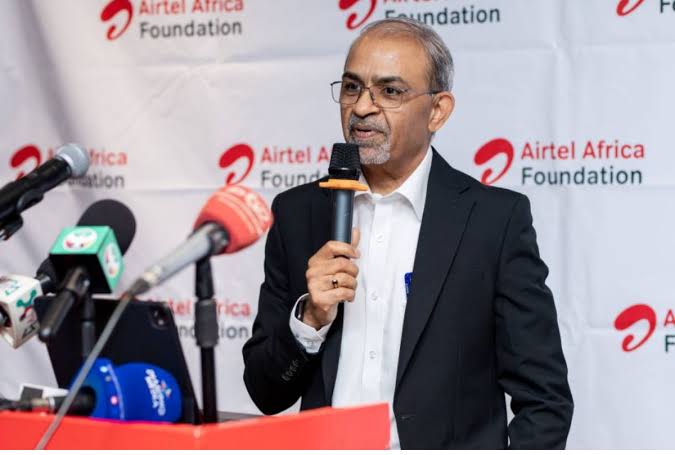
The milestone was announced on July 10 during a visit to St. Monica Girls’ School in Lusaka, Zambia, by Airtel Africa CEO Sunil Taldar. The target is part of a partnership launched in 2021 between Airtel Africa and the United Nations Children’s Fund (UNICEF).
On average, the initiative has connected nearly 660 schools a year. The partners have also zero-rated 64 digital learning platforms, allowing more than 11 million users to access educational content without incurring data charges.
According to the International Telecommunication Union’s (ITU) State of Digital Development in Africareport, published in April 2025, only 38 per cent of Africa’s population used the Internet in 2024, compared with a global average of 74 per cent.
The digital gap is even wider in schools.
In Malawi, one of the 13 countries covered by the Airtel program, an Education Ministry study published in April 2026 found that 85.8 per cent of schools lack Internet access and 46.9 per cent have no electricity.
Those figures highlight the scale of the challenge. According to UNESCO, the 3,296 schools connected so far account for less than 1 per cent of the continent’s roughly 620,000 schools.
Even so, the program has already delivered tangible benefits for participating schools. “Our children can now benefit from hybrid learning through teachers who also use digital devices. The learners also told us they can access the learning portal from home, which is a positive development because it allows them to continue learning from the comfort of their homes,” said Yvonne Mwemba Chuulu, Director of Secondary Education at Zambia’s Ministry of Education.
To reach its goal of 5,000 connected schools by 2027, Airtel will need to connect about 1,700 additional schools over the next 18 months roughly two and a half times the pace achieved during the program’s first five years.