Lead With: Strategic Fraternization By Banks, Fintech To Help Achieve Nigeria’s $1trn Economy- NDIC
Strategic Fraternization By Banks, Fintech To Help Achieve Nigeria’s $1trn Economy- NDIC
Yemisi Izuora
Key stakeholders and financial experts in the country have called for strong partnerships to strengthen the financial system and help Nigeria achieve its economic potential.
The Nigeria Deposit Insurance Corporation (NDIC), among other stakeholders in particular notes that for Nigeria to achieve the $1trillion Gross Domestic Product (GDP) by 2026, there is the need for banks and Fintech companies to collaborate and drive the real sector growth.
Delivering a keynote address at the 2024 annual conference of the Finance Correspondents Association of Nigeria (FICAN) in Lagos over the weekend with the theme, “Nigeria’s Journey Towards $1 trillion Economy: Impact of Banks’ Re-capitalisation, Opportunities for Fintechs and Real Sector” the Managing Director/Chief Executive, NDIC, Mr. Bello Hassan stated that the current recapitalization initiative of the Central Bank of Nigeria (CBN) must be effectively implemented. According to him, this is necessary towards enhancing the resilience, solvency and capacity of Nigerian banks to absorb shocks and continue to support economic development of the nation by efficiently performing their function as the fulcrum of financial intermediation.
He noted the role of strong and well capitalized banks in supporting the current administration’s bold vision of growing Nigeria’s economy to a $1 trillion must be appreciated by the relevant players in the financial sector.
“The opportunities and potentials for growth of the real sector depend, among others, on the availability and affordability of financing the economy. To achieve the desired level of financing required by the real sector, the window offered by banks in partnership with Fintechs, must be adequately harnessed,” he said.
He, however, stressed on the need for supervisors to understand the interconnection among the various financial services providers and how their policies and actions can affect the efficiency and optimality of the overall financial system.
He noted that many Nigerian banks have focused almost exclusively on large corporations, underserving small and medium enterprises as well as the financially excluded active poor unlike the Fintechs that have the potential of closing this gap through deployment of innovative financial services, using new technology and reduction of bottlenecks associated with traditional financial institutions.
“Notwithstanding the opportunities for growth and the benefit that the system stands to gain through the exploration of Fintechs in the financial services ecosystem, we must, as stakeholders, be conscious of the additional risks and complexities that the system may be further exposed, particularly in the area of privacy, personal information, customer protection, transparency, and cyber-security.
“This no doubt has made regulatory oversight increasingly more complex. Financial regulators must evaluate existing rules and consider adoption of new regulations to better address the opportunities and challenges presented by these new technologies,” Hassan said.
On the role of stakeholders, he emphasized that the vision of growing Nigeria’s economy initiated by President Bola Tinubu, is the starting point for the national policy rethink, stakeholder engagement and realignments of efforts and policies toward achieving the objective.
He stated that the CBN and NDIC have collectively through their respective mandates repositioned the banking industry to better serve its intermediation role for the benefits of real sector and in fact all other sectors of the economy.
He said the CBN foreign exchange rate unification and banks recapitalization are some of the key initiatives necessary for propelling national economic growth.
Hassan highlighted that the foreign exchange rate unification policy has the potential for promoting foreign direct investment, foreign portfolio inflows, increased investor confidence, reduction of budget deficit, and improved sovereign credit ratings.
“The objective of the CBN and NDIC is to promote safe, sound and stable banking system that is capable of providing the required financing to our productive sectors of the economy. This is crucial in Nigeria’s journey towards the $1 trillion economy that we all aspire to attain,” he added.
While giving his guest speaker address, the Group Managing Director, United Bank for Africa Plc (UBA), Mr. Oliver Alawuba said Nigeria’s journey to a $1 trillion economy is not just a vision but also a shared responsibility.
Alawuba, who was represented by the Executive Director, Finance and Risk Management, UBA, Ugo Nwaghodoh, however, called on the banking sector, fintech innovators, the real sector, and regulatory institutions to work hand-in-hand to drive this transformation.
“We are on the cusp of a new era, one that will be defined by innovation, resilience, and sustainable growth. Let us take this opportunity to collectively shape the future, ensuring that the Nigeria of tomorrow is one where prosperity is shared, opportunities abound, and our economy stands as a beacon of growth on the global stage,” he said.
According to him, Nigeria has the largest fintech market in Africa, populated by a rapidly growing number of start-ups offering solutions that address the inefficiencies of the traditional banking sector.
“Fintech has already transformed how Nigerians access financial services – from mobile payments to lending platforms, the scope is vast.
“As we march towards a $1 trillion economy, the Fintech Sector is poised to play a crucial role in expanding financial access, driving innovation, and stimulating competition within the broader financial system,” he said.
In his welcome address, the National Chairman, FICAN, Mr. Chima Nwokoji, however, raised concerns on fluctuations in exchange rates, and regulatory pronouncements of which one is the exclusion of retained earnings from capital calculations.
He explained further that, “There is evidence of global best practices that show that a robust banking system is vital for economic growth. Singapore’s banking sector, for instance, has facilitated its rise as a financial hub and supporting economic growth.”
He highlighted that the banking sector recapitalisation would increase lending to MSMEs, driving entrepreneurship. According to him, this will boost job creation and support fintechs through strategic partnerships. This, in turn, will improve financial inclusion; enhance credit facilities for agriculture, manufacturing, and infrastructure development and boost investor confidence, thereby attracting foreign direct investment.
Nigeria Should Buoy Up Production Capacity To Achieve $1trn Economy-BoI
Yemisi Izuora
The Bank of Industry (BoI) has said Nigeria must give more energy and crank up its production capacity towards attaining a one trillion-dollar economy by 2026.
The divisional head, Services, Bank of Industry, Dr. Isa Omagu made this known at the annual workshop of Finance Correspondents Association of Nigeria (FICAN) held at the weekend in Lagos with the theme, ‘Nigeria’s Journey Towards $1 Trillion Economy: Impact of Banks’ Re-Capitalization, Opportunities for Fintechs, Real Sector’.
Speaking as one of the panelists at the event, Omagu said that “the economy stands on both the monetary and fiscal sides, we need both sides to work together. While the monetary side is trying to stabilize prices which is their primary mandate, we also need the fiscal side on the issue of governance to come in.”
He noted that lack of production has been the challenge, saying “we are not producing enough, and we cannot continue to consume imported goods and expect the economy to be robust.”
He called for support in the productive sector of the economy, saying “if we continue to invest in agriculture, infrastructure and services to a reasonable extent, this will drive production that will minimize importation into the country, and the pressure on our forex will go down.”
On government intervention in the last six months, Omagu said that “from BoI as a government institution, one of the things we are doing in boosting production is by supporting Small and Medium-Scale Enterprises.”
According to him, if we continue to support them in production, it will reduce pressure on importation as this will boost backward integration and there will be reduction in the importion of some of the raw materials used for production.
Omagu added that the only thing the country may be importing is equipment, but any raw material going into the production should be sourced locally.
He pointed out that “we cannot achieve a $1 trillion economy without focusing or boosting our production capacity.”
Omagu added that “there is a N200 billion Naira integration fund, N50 billion grant for SMEs in the rural areas and currently, we have disbursed up to 98 per cent of the money; N50,000 per beneficiary.
“Then there is N5 billion for SMEs, it is a loan payable over a long period of time, and it is at a single rate. This is supposed to help SMEs to access funding, which is always a very key condition that you have when they are trying to do business.”
He noted that “there is a fund for one million SMEs and another one for large enterprises who are into manufacturing. The Funds are given at a single digit rate, up to seven years period, which will enable them to bring in equipment to be able to do their business.
“Hopefully, all these initiatives will grow employment, minimize import dependency and we will be able to produce for export. This will also help in having Non-Oil FX coming into the country.”
The FICAN 2024 annual conference, which gathered key players in the financial sector, provided an opportunity for in-depth discussions on the future of Nigeria’s economy, the role of banks, and the opportuniti cc mm qes for fintechs to drive inclusive growth.
EFCC Seeks More Commitment to AML/CFT Implementation
Joseph Bakare
The Executive Chairman of the Economic and Financial Crimes Commission (EFCC) Ola Olukoyede has described Designated Non-financial Businesses and Professionals, (DNFBPs) as all-comers ground and most vulnerable to abuse by criminals and called for more commitment to the implementation of Anti-Money Laundering/Countering Financing of Terrorism (AML/CFT) regime in the country.
He made the call in Abuja on Wednesday, September 25, 2024, at a public-private dialogue forum, organised for DNFBPs by the Special Control Unit against Money Laundering, SCUML, in collaboration with the Nigerian Financial Intelligence Unit, NFIU.
Speaking through the Director, Fraud Risk Assessment and Control, FRAC, Commander of the EFCC, CE Francis Usani, Olukoyede stated that “DNFBPs are most important and relevant sector of any economy, but the sector unfortunately is considered as the most vulnerable to abuse by criminals, this is more so because DNFBPS are almost like an all comers’ game where everybody can enter and exit at will. Because of their vulnerability, the Financial Action Task Force, FATF, places a high focus on them in ensuring that they are properly and effectively regulated.”
Issues related to risk-based supervision, implementation of the full range of AML/CFT market entry control, including detection of unlicensed DNFBPs, implementation of Targeted Financial Sanction, verification of beneficial ownership, conduct of Politically Exposed Persons due diligence and rendition of suspicious transaction reports, have been at the centre stage of International Country Review Group, ICRG, process.
According to the EFCC boss, “We must strive to fix them collectively to avoid the heavier hammer on Nigeria. I am aware that Nigeria has made tremendous efforts and shown commitment to implement the action plan it presented to the FATF at the wake of the grey listing of Nigeria, but in spite of the laudable progress we have recorded at the ICRG process, a lot is yet to be done. We must not rest on our oars, but must continue to push to address the remaining deficiencies.”
Nigeria is currently under the enhanced monitoring process of the International Cooperation Review Group, ICRG, of the Financial Action Task Force, FATF, resulting from the deficiencies observed in the country’s second round of Mutual Evaluation Report. These deficiencies include critical gaps observed in the Anti-Money Laundering/Countering Financing of Terrorism , AML/CFT, supervisions and compliance across all the DNFBPs subsectors.
He assured that the EFCC would do all that is required of it in the implementation of AML/CFT regime towards Nigeria’s exit of FATF grey list. “On our part at EFCC, we are steadfast to our mandate to support the achievement of an effective, comprehensive and balanced implementation of AML/CFT regime in Nigeria by providing the enabling environment, the needed support and guidance through capacity building, dissemination of informed risk assessment studies and facilitating the needed cooperation and collaboration among all relevant stakeholders,” he said.
Director, SCUML, Commander of the EFCC,CE Daniel Isei said that the aim of the forum was to strengthen the compliance culture of rules and regulations amongst the DNFBPs through the proper implementation of the Money Laundering Prevention and Prohibition Act, 2022.
President, Nigerian Bar Association, (NBA), Mazi Afam Osigwe, SAN, who was represented by Dr. Mobalaji Ojibara, applauded the EFCC for driving compliance to AML/CFT regime across Nigeria and pledged the support of lawyers to the cause of AML/CFT regime implementation. “As lawyers, our roles stretch beyond offering legal counsel or defending cases in court. We are also guardians of ethical practice, ensuring that businesses, especially DNFBPs, operate within the framework of national and international anti-money laundering laws”, he said.
The forum was in furtherance of the partnership between government regulatory agencies and the DNFBPs’ Self-Regulatory Bodies, SRBs, and trade association in the fight against money laundering and terrorist financing , ML/TF, in Nigeria.
CBN Governor Cardoso Champions Africa’s Voice At Bretton Woods 80th
Forum
Yemisi Izuora
The Governor of the Central Bank of Nigeria (CBN), Olayemi Cardoso, has concluded his participation in the high-level Bretton Woods at 80 Forum, where he represented Africa’s interests on the global financial stage.
The forum, organised by the International Monetary Fund (IMF) and World Bank Group (WBG), brought together a select group of global leaders at the historic Bretton Woods, New Hampshire, to mark the 80th anniversary of the original conference that established the post-war global financial system.
Governor Cardoso’s participation highlights Nigeria’s and Africa’s growing influence in international economic dialogue. The event addressed issues such as investment, inclusive growth, climate resilience, and the evolving role of multilateral financial institutions in a rapidly changing world. It offered a critical platform for reshaping the international financial architecture to meet the needs of emerging markets and developing economies.
Governor Cardoso joined this distinguished group of renowned global leaders and experts recognized for their influence in international finance, economic policy, sustainability, and global governance. The exclusive gathering included former executives of major global institutions and key figures shaping the future of markets, climate action, and social development, who came together to tackle the most pressing challenges in the global economy.
The group engaged in deep-dive sessions critically examining real-world successes and challenges for the IMF and World Bank, brainstorming and developing actionable strategies, and focusing on how these institutions can evolve to tackle pressing issues like sustainable development, financial inclusion, and climate resilience to ensure they are equipped to meet the demands of today and the future.
Governor Cardoso’s selection reflects his leadership in central banking and his experience as the former head of Citibank Nigeria and Commissioner for Economic Planning and Budget in Lagos State. His expertise and background in policymaking were invaluable in advocating for solutions that address the unique financial challenges faced by African nations in advancing financial inclusion, driving economic reforms, and building resilient financial systems.
As the Bretton Woods institutions face calls for reform in the face of global challenges, Governor Cardoso’s role in the landmark forum ensured that African perspectives were strongly represented. The governor’s involvement was particularly crucial as developing economies, especially in Africa, seek greater participation and representation in the governance and decision-making processes of global financial institutions.
The Bretton Woods at 80 Forum concluded with key recommendations for the future
role of the IMF and World Bank in addressing global challenges. Governor Cardoso’s contributions were central to ensuring that these institutions remain responsive to the diverse needs of regions around the world, as they work towards more inclusive and sustainable global financial systems that address the economic priorities of both emerging and advanced economies.
13 Suspected Internet Fraudsters In Sokoto
Joseph Bakare
Operatives of the Sokoto Zonal Directorate of the Economic and Financial Crimes Commission, EFCC, have arrested thirteen(13) suspected internet fraudsters in Sokoto, Sokoto State.
They were arrested on Saturday, September 28, 2024 at Gidan Yaro and Dandima areas of Sokoto based on actionable intelligence on their suspected involvement in internet-related offences.
All the suspects claimed to be students of Usmanu Danfodio University Sokoto .
They will be charged to Court upon conclusion of investigations, said the EFCC.
NCS Demonstrates Exceptional Integrity At ECOWAS Cybersecurity Hackathon
Tunde Bakare
The Nigeria Customs Service (NCS) demonstrated exceptional performance at the ECOWAS Cybersecurity Hackathon 2024, emerging as a top contender in the competition.
The event, organised by ECOWAS in partnership with the Federal Ministry of Communications, Innovation and Digital Economy, and the National Information Technology Development Agency (NITDA), brought together cybersecurity professionals across West Africa.
According to DCG, ICT/Modernization Kikelomo Adeola, the event is being held in two phases. The competition, she explained, aims to identify the top cybersecurity teams in the region. In Phase 1, participants engaged in an online Capture the Flag (CTF) competition via the Sec-Dojo platform, with labs released from August 6 to August 31, 2024. Phase 2, scheduled for October 14-16, 2024, will take place in Abuja, Nigeria, featuring an in-person CTF competition designed to foster cross-border collaboration and assess advanced cybersecurity skills.
“The NCS teams’ performance reflects their strategic thinking and resilience in tackling complex cybersecurity challenges,” she stated.
CSC Abubakar Mustapha Jauro, who led the NCS team competing against 340 teams from ECOWAS member states, added that the NCS secured an impressive 1,100 points, displaying notable expertise in cryptography, steganography, reverse engineering, web exploitation, and binary analysis.
Despite using lower-spec hardware, such as Intel Core i5 processors with 8GB RAM, the NCS teams excelled with tools like Kali Linux, BurpSuite, and Metasploit. Their success underscores the need for better resources to further enhance their technical capabilities.
“The ECOWAS Cybersecurity Hackathon has not only sharpened the skills of NCS officers but also emphasized the importance of regional collaboration in strengthening our cybersecurity framework,” Jauro noted. With continued investment and support, the NCS is poised to play a crucial role in protecting Nigeria’s cyberspace.
As the second phase approaches, anticipation builds for the final leg of the competition, where the best teams will be identified and recognized for their cybersecurity prowess.
COWA National President Offers Scholarships, Support Families Of Dead Officers Fallen Heroes
Joyce Onwuka
The National President of the Customs Officers Wives Association (COWA), Mrs Kikelomo Adeniyi, visited the Ogun 1 Area Command in Idiroko, Ogun State, on Friday, 27 September 2024, to extend aid to the families of customs officers and honour the sacrifices of fallen heroes.
Mrs Adeniyi highlighted the vital role of unity, capacity building, and compassion in supporting the families of customs officers, especially those serving in challenging border regions like Idiroko. She acknowledged the difficulties faced by these families as their loved ones work on the front lines in the fight against smuggling, trafficking, and other illegal activities.
“The battle against smugglers and criminals comes with immense risks, not only to our officers but also to their families. As wives and mothers, we understand the fears and sacrifices associated with this duty. We aim to ensure that these families feel supported and recognised,” Mrs Adeniyi stated.
During the visit, Mrs Adeniyi awarded scholarships to the children of customs officers who had performed exceptionally in their academic activities. Additionally, she provided support to widows of fallen customs officers, reinforcing COWA’s commitment to standing by those who have lost their loved ones in the line of duty.
“These scholarships symbolise our belief in the transformative power of education, while the assistance given to widows underscores our dedication to ensuring that no family is forgotten,” she added.
Princess Folu-Ojo, Chairperson of COWA for Ogun 1 Area Command, expressed heartfelt appreciation for the National President’s visit and her dedication to the welfare of the customs community.
“Your presence here today, Madam President, is a testament to your unwavering commitment to the families of customs officers. We are deeply grateful for your efforts and stand united with the vision of COWA to foster a stronger, more supportive community,” Princess Folu-Ojo said.
The visit served as a reminder of COWA’s dedication to uplifting the lives of customs families and honouring the sacrifices made by officers in service to the nation.
ACG Dangaladima Seeks Discipline, Teamwork Among Officers In Kano/Jigawa Command
Joseph Bakare
The Assistant Comptroller General of Customs (ACG), Sambo Dangaladima, Zonal Coordinator for Zone B, has stated the importance of discipline, teamwork, and stakeholder collaboration among officers of the Nigeria Customs Service (NCS).
This was highlighted during his official working visit to the Kano/Jigawa Area Command on 25 September 2024.
According to a press statement signed by the Command’s Public Relations Officer, Superintendent of Customs Saidu Nuruddeen, on 26 September 2024, the ACG emphasised the critical role that discipline and teamwork play in the success of the NCS.
“Discipline and teamwork are the cornerstones of any successful operation. As officers of the Nigeria Customs Service, we must remain committed to these principles to ensure we continue to protect our nation’s borders while facilitating legitimate trade.”
As part of his visit, ACG Dangaladima inspected the Habbas Bonded Terminal, assessing its operational efficiency and compliance with customs regulations.
He expressed satisfaction with the ongoing efforts to align the terminal with federal government policies, stressing the importance of maintaining high standards for seamless trade facilitation.
In addition, Dangaladima met with key stakeholders, including representatives from the Manufacturers Association of Nigeria, the business community, Customs-licensed agents, and terminal operators. The discussions centred on addressing challenges within the trade ecosystem, enhancing collaboration, and fostering a more conducive environment for business operations.
During the visit, the ACG also toured the Customs Training College in Kano, where he inspected ongoing projects to improve training facilities for customs officers.
He commended the college’s leadership for its commitment to enhancing the professional capacity of NCS personnel, which he described as vital to the service’s success.
Dangaladima reaffirmed the Nigeria Customs Service’s dedication to border security, enforcing government policies, and facilitating seamless trade.
He also acknowledged the leadership of Comptroller General of Customs, Adewale Adeniyi, praising his management team for steering the service toward greater efficiency.
The Zonal Coordinator was accompanied on the visit by the Customs Area Controller (CAC) of Kaduna Command, Comptroller Ahmed Abe and other senior officials from the Zonal office. They were received by the Customs Area Controller of Kano/Jigawa Command, Comptroller Dauda Ibrahim Chana.
Nigeria Customs Participates In 74th World Customs Organization Harmonised System Committee Meeting
Joseph Bakare
The Nigeria Customs Service (NCS) delegates led by Assistant Comptroller Abubakar Hardo, Chief Superintendent of Customs (CSC) Ekay Asuquo and CSC Lauretta Utubor (Team Lead Advance Rulings) participated in the World Customs Organization (WCO) 74th Harmonised System Committee (HSC) Meeting, held from 16 to 27 September 2024, at the WCO Headquarters in Brussels, Belgium.
According to reports, the Harmonised System Committee (HSC) plays a crucial role in managing the Harmonised System Nomenclature (HSN), which serves as a vital tool for facilitating global trade by providing a standardised system for the classification of goods.
As a Contracting Party, Nigeria’s participation in the HSC is pivotal considering the nation’s large market index in Africa leading to high volumes of imports from across the globe. The impact of these policies, particularly on customs formalities, has far-reaching economic consequences, making Nigeria’s contributions to such discussions critical.
The HSC focuses primarily on the tariff classification of goods, ensuring that products are correctly categorised under the Harmonised System Nomenclature. This involves detailed discussions on goods descriptions and the appropriate tariff codes or headings that align with legal provisions and explanatory notes. The HSC ensures that global trade remains efficient, transparent, and standardised through this process.
Additionally, the opportunity to raise tariff classification issues that may have caused prolonged disputes between customs and economic operators allows for an objective resolution aided by input from other Contracting Parties.
Similarly, a delegate from Nigeria who happens to be a beneficiary of the WCO 88th fellowship programme, CSC Lauretta Utubor, the Team Lead for Advance Rulings in Nigeria, made a presentation at the Leadership Management Development workshop on Friday, 20 September 2024. The presentation, which also took place at the Headquarters of WCO in Brussels, emphasised the role of essential tools such as self-awareness, strategic communication, political will, intentionality, people management, and change management played towards the successful implementation of Advance Rulings in Nigeria.
She also underscored Nigeria’s dedication to adopting global best practices and the Comptroller General Customs, Adewale Adeniyi’s commitment towards promoting trade facilitation and customs modernisation.
This high-level engagement with technical experts from customs administrations worldwide enables Nigeria to enhance its decision-making capacity when issuing legally binding advice to economic operators. Furthermore, the insights gained from the 74th HSC meeting are expected to strengthen Nigeria’s customs processes and contribute to the nation’s continued leadership in trade facilitation on the African continent.
CGC Adeniyi Pledges to Improve Investment In Education
Tunde Bakare
The Comptroller-General of Customs, Adewale Adeniyi, on Thursday, 26 September 2024, reaffirmed the Nigeria Customs Service’s unwavering commitment to advancing education by investing additional resources into the Service’s schools nationwide.
CGC Adeniyi made this declaration while serving as the Chairman of the occasion during the official launch of the book Business Geek: Innovative Incubator From Concept to Reality, authored by the wife of one of a high-ranking officer of NCS, Asma’u Isah Maibasirah, at the NAF Conference Centre, Abuja.
In his address, CGC Adeniyi emphasised that providing quality education remains a top priority for the Nigeria Customs Service, as it plays a critical role in the nation’s development—by building and renovating primary and secondary schools in various states.
He highlighted the importance of ensuring that every child, regardless of background, has access to an excellent educational experience. He added that the Nigeria Customs Service will continue to deploy resources to address this issue.
The Comptroller-General, who pointed out that the book offers valuable insights into entrepreneurship and innovation, which are critical for addressing the country’s unemployment challenges, also stated, “There must be something in this book that we must pay serious attention to.”
He added, “It is a very timely intervention because we have a high unemployment rate, especially among the youth, and I believe this is the time we must all grab this book.
“The Business Geek book, authored by Asma’u, aims to foster a culture of creativity and business acumen among Nigerians, particularly the youth, by providing practical guidance on transforming innovative concepts into viable enterprises.”
The CGC commended the author’s initiative and noted that the book aligns with President Bola Ahmed Tinubu’s agenda of empowering small-scale businesses to revitalise the economy.
CGC Adeniyi, however, pledged the support of the Nigeria Customs Service in collaborating with the author to ensure the book reaches a wider audience, adding, “We are committed to supporting the author in providing adequate printed copies whenever the need arises.”
In his review of the book, Professor Muhammad Aliyu Paiko, Vice-Chancellor of Abdulkadir Kure University, Minna, Niger State, described the publication as insightful and robust research material for intellectuals and students alike.
He lauded the author for her thorough research and compelling presentation of ideas relevant to academic and professional audiences.
Addressing the gathering, the author of the book, Dr Maibasirah, expressed her profound gratitude to Mrs Kikelomo Adewale Adeniyi, who represented the First Lady of the Federal Republic of Nigeria, Senator Oluremi Tinubu, for her unwavering support towards the success of the publication.
Dr Maibasirah acknowledged the critical role the First Lady played in providing encouragement and assistance that ensured the book’s successful launch.
She also appreciated the Comptroller-General and his team for their immense support, which she noted had a positive impact on the entire process of publishing and launching the book.
Additionally, she extended her sincere thanks to the former Governor of Zamfara State, Senator Abdulaziz Yari, who served as the Chief Launcher at the ceremony, and other distinguished guests for their presence and contributions to the event.
According to her, the Business Geek book contributes to the discourse on entrepreneurship and highlights efforts to promote small and medium-sized enterprises (SMEs) as a pathway to economic prosperity.
The event drew participants from various sectors and served as a platform for discussing strategies for enhancing entrepreneurial skills and leveraging innovative solutions for national development.
Helpster Conducts Medical Outreach In Ajegunle, Lagos
Francesca Odimgbe
Helpster Charity US Inc, an international nonprofit organisation based in the US, has conducted a medical outreach in Nigeria in furtherance of its humanitarian mission of providing healthcare access to underserved communities across Africa and Asia.
The medical outreach, which was the 7th outing in Nigeria, was held on September 28, 2024, in Ajegunle, one of the largest slums in Lagos, harbouring over 500,000 people and sandwiched between Apapa Port and Tin Can Island Port. The medical team, made up of two doctors, two nurses and two laboratory specialists, engaged in health sensitisation, screening and treatment of common diseases, and deworming.
Helpster Country Manager, Dr Perpetua Mbanefo, who led the medical outreach team, stated that the nonprofit organises these outreaches regularly to provide healthcare to remote communities where healthcare access is a challenge because of the economic situation of the people there.
She emphasised that the challenge of limited healthcare access is still prevalent in Nigeria and some other African and Asian countries where the poverty index is high, adding that this makes it difficult for underprivileged children to get the medicare they need.
“In addition to facilitating access to essential medicare for those that need it, especially children, pregnant women and young adults, through a crowdfunding technology, Helpster, through these outreaches, takes medicare to the remote communities where healthcare is critically needed.
“The turnout today was great. About 200 children and adults got screened and treated for malaria, malnutrition, skin infections, high blood pressure, diabetes, upper respiratory tract infections, and other common diseases. We sensitised them on key health topics and counselled them on living healthy.
“We thank all the volunteers that came out to support us in achieving our programme objective. We also appreciate Pastor David Moses for allowing us use the church for the programme. It’s good to see that well-meaning individuals are joining forces with Helpster in making a difference in the lives of the residents of poor communities”, Dr Mbanefo stressed.
A medical volunteer, Benjamin Ekishi, commended Helpster for the impactful programme and explained that he keyed into it because of the mision of the organisation, which is to ensure no child suffers or dies due to lack of access to vital medicare.
A parent, whose child was a beneficiary of the programme, Mrs Beatrice Nwaka, expressed gratitude to Helpster for organising the outreach in Ajegunle, and called on other organisations to follow suit, as the community is in need of such healthcare outreaches.
Helpster started its medical outreach programme in 2023, and has impacted over 4000 children across Nigeria. In February 2024, it partnered with Tunde Onakoya’s Chess in Slums Africa for its 6th medical outreach in Makoko, a slummy area of Lagos, where over 400 children were treated.
Helpster Charity US Inc, founded by a team of heart-driven IT specialists, is a non-governmental organisation that is bridging the gap in healthcare access by connecting vulnerable children in need of vital medicare to those willing to fund their treatment through an app and a website.
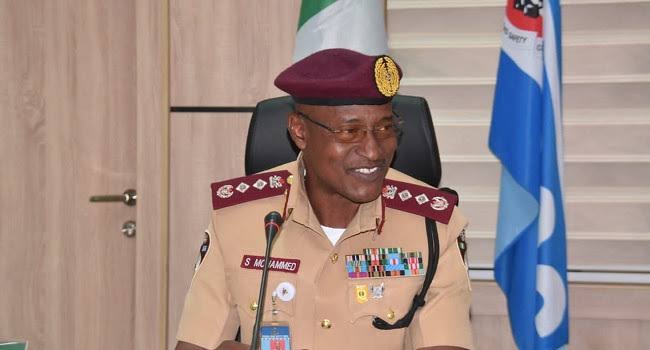
Analysing Shehu Mohammed’s sagacity and how FRSC emerged best in Website performance barely 4 months as Corps Marshal
By Bisi Kazeem
Nigeria is one of the few African countries that has leveraged on some road safety principles and have recorded remarkable progress in road safety administration and management despite a ‘gloomy’ beginning. The road safety situation in Nigeria was so deplorable that the World Health Organisation once described the country as ‘worst in the world to travel on’ only next to Ethiopia.
That narrative changed through government’s efforts by establishing the Federal Road Safety Commission as the Lead Agency to guarantee safety on every centimetre of Nigeria’s expansive road network of 204,000km. This establishment was done ten years prior to United Nations recommendation for all member states to establish agencies directly situated under the central government for ease of unfretted operation.
In its three decades of unbroken services to humanity as a lead agency in traffic and safety management, FRSC has recorded tremendous achievements in the area of Traffic Engineering, Road Safety Administration, Traffic Management and Crash reduction.
The Corps has now come of age after going through good times and tides. Through the use of state of the art Information Technology facilities, the Corps has been able to enhance its operational capacity aimed at promoting public safety and security. Having been propelled by the imperatives of entrenching ease of doing business as well as align with international standards in all fronts, the Corps has successfully designed and operated over 30 web applications for its operational activities so as to create an accessible platform for the general public.
Some of these applications cover, the Uniform Licensing scheme, under which is the ONE DRIVER ONE RECORD which enables FRSC track and match records of drivers with their drivers licence, vehicle number plate, traffic offences and others in a single view.
Introduction of the toll free 122 emergency number and a 24 hours call center established to reduce response time for crash victims; a single step that has reduced emergency response time from 50 minutes to 15 minutes thereby decreasing the number of fatalities in crash situations. More so, the introduction of Verification Portal for drivers licence and number plates, the introduction of the Road Transport Safety Standardisation Scheme (RTSSS) for uniformity and harmonization of fleet operators in the country, the Driving School Standardisation Scheme (DSSP), the introduction of the speed limiting device whose enforcement began on 1st February, 2017, introduction of vehicle and body worn cameras to monitor patrol operations, and the vehicle tracking system among others, are policies formulated and implemented to fight road traffic crash in the country to extinction.
The Corps led that foundation for itself, knowing that the road transportation sector in Nigeria accounts for over 90% of passengers and freight movement, and this exerts undue pressure on the FRSC in discharging its cardinal responsibilities. In view of the growing need to surmount these visible and invisible challenges, the Corps embarked on several reforms which include but not limited to the following: Development of a national road safety strategy roadmap, improved operational efficiency, enhanced regulatory environment, and accelerated response capability to situations that needed immediate actions, amongst others.
Added to the aforementioned, the Corps took a step further, defined it’s path in tandem with UN decade of action as well as the mantra of functional 21st century organization by chatting a path to meet the Accra declaration of 50% reduction in fatality by 2015. That aside, it went all the way to institute modalities to achieve UN decade of action on road Safety of 50% fatality reduction by 2020, and place Nigerian roads within the league of 20 global safest roads by 2020, as well as UN Decade of Action 2021-2030 which aims at having a society where crashes result in no deaths.
To achieve the stated targets, the Corps developed transformational initiatives focused on People, Processes and Technology (PPT). That is why today, not only does its staff pride as the most disciplined, but the Corps stands as the best Information Technology (IT) driven organization in Nigeria with its robust data base and over 95 percentage digitalized administrative and operational procedures. Mm
Having given that background, it is noteworthy to look at how the Corps, under the leadership of the present Corps Marshal, Shehu Mohammed who of course, was amongst members of the group who blazed the trail to set up what is now known as a technology driven organization, emerged the best amongst over 315 MDAs in Website performance and ranking.
It may interest you to know that the 2023-2024 Federal Government Scorecard for ranking Websites of Ministries, Departments and Agencies is an essential benchmark for evaluating the current state of government websites in Nigeria. FRSC’s Website was selected as the best following a very meticulous, highly diligent and extremely objective review of the Websites of 315 MDAs which were subjected to evaluation for the period under consideration.
The Bureau of Public Service Reforms, a Federal Government agency under the Presidency that organised and issued the award on behalf of President Bola Ahmed Tinubu GCFR justified the relevance of the ranking. According to them, the effectiveness and functionality of government websites have become a critical component of Nigeria’s public service reform agenda as the nation increasingly adopts digital platforms as the primary means of communication, service delivery and information dissemination. As such, FRSC’s Website was found to host a huge collection of information about all products and services of the Corps for the consumption of the general public. This feat placed the Corps ahead of its contemporaries in public service.
That said, to unravel the mystery behind how FRSC made it to the top in information technology and eventually emerged best amongst peers, it is important to look at the direction of leadership and policy focus of the administration of Corps Marshal Shehu Mohammed.
The trajectory of his career as a road safety professional from the day he joined the services of the Agency till date are the very factors that have shaped him as an all-rounder in road safety management and administration with a firm and fair handling of goal-oriented affairs as the Corps Marshal.
Upon assumption of office, Shehu Mohammed alongside his team of management, designed and implemented programmes of action, as well as a proactive template to advance the growth of the Corps in all ramifications, with the aim of trending down road crashes and fatality rate.
Being a believer of technology, the Corps Marshal made the digitisation of FRSC operations a cardinal part of his policy thrust. To that end, he took a bold step that was the first of its kind since the establishment of the Corps, by appointing a Technical Adviser who will mount the wheels that would eventually bring FRSC to speed in the deployment of information technology in the work place. This placement of round pegs in round holes was the catalyst, the propellant force, as well as the icing on the cake that catapulted the Corps to more enviable heights and achievements in digitisation.
Retrospectively, Corps Marshal Shehu Mohammed has been an integral part of the digitalization process and has driven the technology feat of this noble organization for years now, beginning from Corps Marshal Osita Chidoka who started the revolution to the erstwhile Corps Marshal, Dr. Boboye Oyeyemi who sustained the expertise, through to the immediate past Corps Marshal, Dauda Ali Biu who kept the momentum.
To say the least, his experience has seen the Corps measure to billing as he is already on the glorious path of unravelling the mystery that would finally bring about the overall digitisation of FRSC operations.
Additionally, just as stated in my last piece, part of the major initiatives introduced by Corps Marshal Shehu Mohammed that brought about the needed result for the Corps, is the ongoing digital revolution.
The introduction of Electronic Document Management System ( Paperless) in the workplace would surely make FRSC the first Federal Government Agency to go paperless. This initiative, apart from the speed it will bring to the workplace, will also enhance ease of doing business and bring down the cost of governance. In the same vein, adequate progress is being recorded on the operational front too, he, Shehu Mohammed has gone a step further by initiating and launching the first FRSC Mobile Application, a one-stop shop for all FRSC products and services, for quality service delivery. The FRSC Mobile App was introduced to generate and analyse real-time data on operations, Traffic Crashes data management, and road conditions, and provide customers with feedback on the Corps’ products.
The introduction of the National Crash Information Recording System portal (NACRIS) is another ground breaking robust data collation initiative that will help in policy formulation, planning, and education. With this portal, Nigerians could easily report cases of crashes from the point of crash. This initiative will boost data legitimacy and change global perception of FRSC crash data reports for good.
The Corps under his purposeful leadership, has proven to be right on track to allay the menace of road traffic crashes on Nigerian roads and usher in a season where there would be no crashes; where even if crashes will occur, it would not result in the death of any Nigerian. Achievements of such would be recorded based on many pillars and strict implementation of his policy thrust fused in the Corporate Strategic goals of the Corps.
To this end, suffice it to state that as a performance driven organization, with clearly set measurable Key performance Indicators, FRSC is today, the only law enforcement organization in Nigeria certified by the International Standard Organization.
Bisi Kazeem, a veteran road safety professional and a public relations expert, writes from Lagos, Nigeria.