

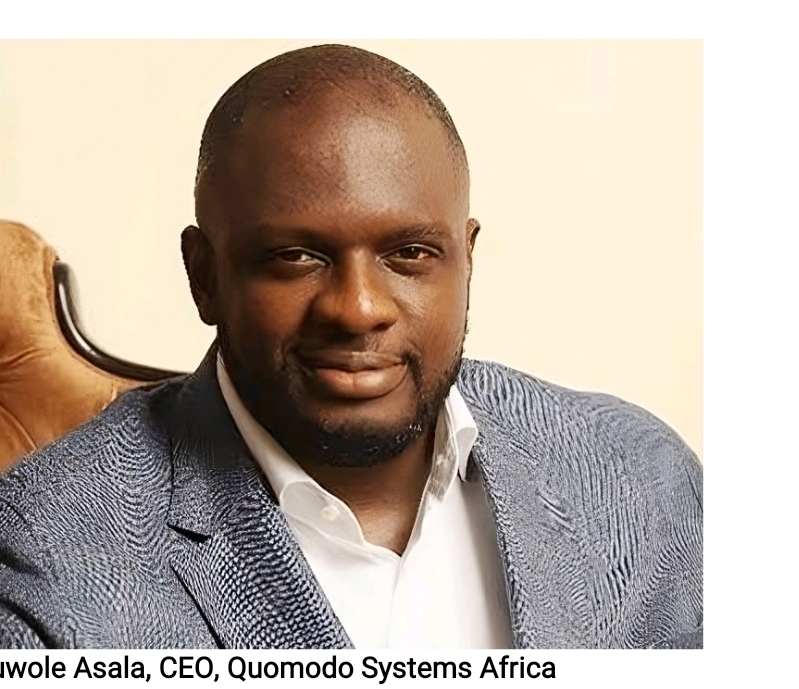
By Oluwole Asalu
On any single day in Lagos, thousands of payments flow smoothly across mobile phones-from a vendor in Balogun Market to a freelancer in Yaba, from transport operators in Ikeja to an online shopper in Abuja. Across the continent, this story repeats itself. In Nairobi, Accra, and Kigali, mobile payments have become as common as cash once was.
This is the power of Africa’s fintech revolution: in just over a decade, it has reshaped how people save, spend, and transact, unlocking opportunities for millions previously excluded from formal financial systems. But as transformative as this progress has been, it represents only the first chapter of Africa’s digital story. The question now is: what comes next?
Fintech helped us move money. The next challenge will be to move value through data, trust, and digital infrastructure that power entire industries. In building the Africa of tomorrow, we need to look beyond payments and start building those systems that will sustain a productive, inclusive digital economy.
The past decade has seen fintech emerge as the beating heart of Africa’s digital economy, with more than 830 billion dollars annually processed across the continent through mobile money platforms. Further, Nigeria alone accounts for nearly a third of Africa’s fintech startups. That growth has engendered the interest of investors around the world while creating new jobs, further solidifying Africa’s status as the hub of digital innovation.
Yet beneath the surface lies a critical gap. Most of this progress has been concentrated in consumer payments such as transferring funds, paying bills, or topping up airtime. Beyond this lies an underdeveloped layer of systems that connect finance to the real economy, like agriculture, healthcare, logistics, education, and manufacturing.
The success of fintech has exposed what many now term the “missing middle”-the infrastructure that is needed to make digital inclusion economically productive. True prosperity will not come from just the payment apps but from the invisible architecture of data, identity, and trust that allows whole sectors to thrive.
We must now build digital foundations that are robust enough to support millions of small enterprises, efficient enough to power industries, and secure enough to earn global confidence.
Building the Foundations of Trust
At the heart of this transformation is a basic fact: no digital economy will work without trust. And trust in this new world is created by data integrity, identity verification, and secure systems.
Africa’s digital boom has outpaced its foundational infrastructure. More than 500 million Africans still lack formal identification, severing them from access to credit, insurance, and government services. Without verifiable identities, even the most advanced fintech platforms struggle to scale inclusively. The promise of a cashless society cannot be fully realised until every citizen can be uniquely identified within it.
Equally important is data. Less than ten per cent of people have digital footprints that lenders can assess, so credit penetration across sub-Saharan Africa remains below ten per cent. Building cross-sector data frameworks in which financial, utility, and mobile usage records can inform credit scoring will transform the continent’s lending landscape.
Another powerful opportunity is open banking. Allowing users to share financial data across platforms securely can drive competition, innovation, and consumer empowerment, but such systems must be underpinned by robust governance and cybersecurity.
Indeed, cybersecurity can be the defining challenge of our digital times. As transactions go online, so do threats. In the last couple of years, there has been a sharp rise in cyberattacks against financial institutions and individuals. That’s why companies like Quomodo Systems Africa have invested heavily in localised cybersecurity solutions that reflect the unique risks and realities facing African users.
As I say often, we cannot construct skyscrapers of digital innovation on a foundation of sand. Payments are the door, but infrastructure is the building.
Collaboration and the Role of Policy
No single company or government can build Africa’s digital infrastructure alone. What is required is an ecosystem approach: bringing policymakers, innovators, investors, and academia together around a shared vision.
Policy will be pivotal. The continent’s regulatory landscape remains fragmented, with different rules governing financial services, telecommunications, and digital identity. Harmonising these frameworks is essential if we are going to create a seamless, pan-continent-wide digital market.
The AfCFTA can play a game-changing role at the continental level. At the heart of its agenda is digital trade, and integrating payment systems, data frameworks, and e-commerce standards could unlock trillions in intra-African commerce. But to do this, governments need to view technology not as a sector but rather as infrastructure-a foundation that every other sector relies on.
The private sector also holds the key to deepening Africa’s digital foundations. Fintech proved what is possible when African ingenuity meets necessity. Now, local firms must take the lead to build the next layer of systems comprising credit and identity platforms, cybersecurity networks, and digital public infrastructure.
We see this both as a responsibility and an opportunity at Quomodo Systems Africa. Our mission is not just to provide technology solutions; it is ultimately about allowing trust, transparency, and productivity across the digital ecosystem in Nigeria. Working in collaboration with partners in finance, telecoms, and government, we aspire to assist in laying the digital rails that future innovation will run on.
If the first digital wave for Africa was about inclusion, the next needs to be about integration. Imagine an Africa where a farmer in Kano can access instant microloans because farming history and mobile transactions are recorded in a secure data framework. Or where a health worker in Nairobi can update patient records on an interoperable system shared across hospitals. An SME in Accra can obtain instant trade financing because the customs data, bank records, and logistics information are synchronised.
These examples are not futuristic dreams. They represent the next logical step when proper infrastructure is laid. The digital economy should enable more than just payments; it should engender productivity, efficiency, and opportunity in all facets of life.
Countries like India show what is possible. Its Aadhaar digital identity system and UPI have revolutionised access to services and finance. The results are instructive: inclusion, transparency, and rapid growth. Africa is free to adopt these models, but on its own terms, designing the systems for its realities, languages, and needs.
Africa still holds immense promise. By 2050, the continent will be home to one in four of the world’s population, a majority young and digitally connected. Nigeria alone could be the continent’s digital hub, exporting services, skills, and software to the rest of the world.
But this future will not be realised through apps and fintech alone. It will be secured through investment in the less visible, more enduring systems that bind economies together – things like identity networks, data infrastructures, secure platforms, and the policies which govern them.
This is the work that lies ahead, and it must begin now. Trust will be the foundation for Africa’s digital future, not transactions. A time has come when the question is no longer if technology can change Africa, but if Africa can build systems to sustain such change.
Oluwole Asalu is the CEO of Quomodo Systems Africa and a leading advocate for digital transformation and AI-readiness across Africa.