

Uche Cecil Izuora
Africa’s off-grid energy market is receiving financing support following a €2 million investment support from CEI Africa to help Spark widen access to off-grid solar solutions across Africa.
Africa’s decentralized systems are expected to play a major role in bringing electricity to communities beyond the reach of national grids.
Announced on August 20, the funding will support new financing mechanisms and the early stages of the Spark Catalyse and Spark Connect initiatives.
Nigeria has made significant progress in mini-grid expansion and has forged partnerships to support its growth potential.
The Rural Electrification Agency (REA) is already expanding off-grid electricity across Nigeria through major financing, local manufacturing targets, and regional partnerships.
The $750 million World Bank-backed Distributed Access through Renewable Energy Scale-Up (DARES) project aims to deploy 1,350 mini-grids and reach 17.5 million Nigerians.
The REA plans to build 3.7 gigawatts (GW) of local solar PV panel manufacturing capacity by the end of 2027 to lower equipment costs and cut import reliance.
Also, an MoU with ECOWAS provides a $700,000 grant to electrify 15 public health and education facilities, alongside co-financing deals with states like Niger and Kaduna.
The agency recently disbursed ₦9 billion to fast-track rural mini-solar grid installations for small businesses and households
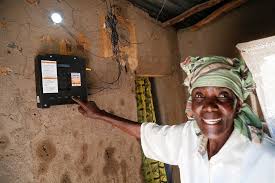
Spark specializes in modular home solar systems and other off-grid energy solutions.
The company works through local distributors rather than selling directly to users. Its Spark Invest program helps these partners finance equipment purchases and repay the funding based on revenue collected from customers.
CEI Africa says Spark has already provided energy solutions to about 2 million people in more than 23 African countries.
Steven Evers, managing director of Triple Jump, which manages CEI Africa, said Spark’s modular model has shown that it can make energy solutions more accessible to underserved customers.
The deal comes a few weeks after Spark entered Tanzania. There, the company is working with Ariya Finergy on a 1.5 MWp solar plant with 2 MWh of battery storage for a new poultry feed factory owned by Irvine’s.
Tanzania is the eighth African market where Spark is active in commercial solar. The investment comes as decentralized power is expected to play a growing role in expanding electricity access across sub-Saharan Africa. These systems are particularly important for communities located far from existing power grids.
The International Energy Agency (IEA) estimates that decentralized systems could provide about 55 per cent of the new connections required to achieve universal electricity access in sub-Saharan Africa by 2035.
By backing Spark, CEI Africa is providing capital for financing tools designed to help local distributors deploy more off-grid energy systems. The investment targets a segment expected to account for more than half of the new connections needed to close the region’s electricity access gap.