

Uche Cecil Izuora
A survey has shown that about
85.2 per cent used an estimated billing system out of the total households connected to the national grid.
Also, an estimated 14.8 per cent of electricity consumers in Nigeria have been reported using a pre-paid billing system.
This has shown the huge gap in deployment of meters by Electricity Distribution Companies (DisCos) despite various Government interventions.
Also, 86.6 per cent of households had electricity supply, and over 58 per cent of them are connected to the national grid.
In addition, the average monthly expenditure of households on electricity was estimated at ₦4,155.8.
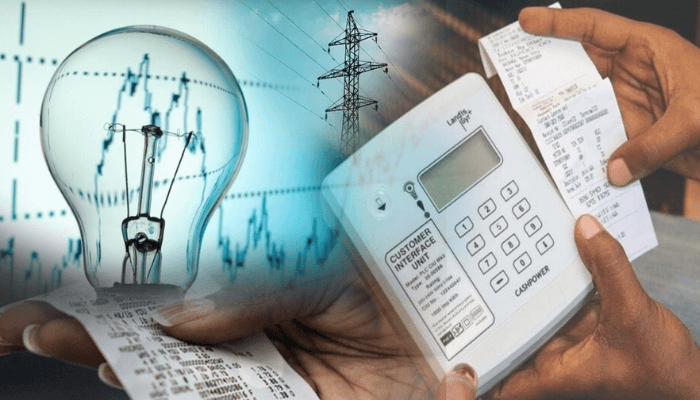
It would be recalled that the Federal Government recently unveiled an ambitious plan to address the yawning metering gap in the country’s power sector.
The plan involves the procurement of 3.5 million electricity metres by the end of the year, a move aimed at improving revenue collection for the cash-strapped sector, where more than half of the customers are currently billed by estimates. According to the Minister of Power, Bayo Adelabu, between 7 and 8 million customers are unmetered.
To deal with the situation, the Government has outlined a procurement strategy to acquire and install 3.5 million metres within the year.
This includes 2 million metres funded by the Government and an additional 1.5 million metres procured with support from the World Bank.
Competitive bidding for the first batch of 1.5 million metres has been completed, with deliveries expected within months.
Moreover, the Government has allocated N20 billion to DisCos to procure meters specifically for large users, whose tariffs were recently raised.
This initiative aims to ensure all large users are metered by September, thereby improving billing accuracy and customer satisfaction.
Nevertheless, the magnitude of the challenge is substantial.
A report compiled by PricewaterhouseCoopers (PwC) posits that the number of unmetered customers could potentially reach 38.91 million.
The report emphasises that approximately 50 per cent of Nigeria’s installed metres are either outmoded or malfunctioning, impacting roughly 1.7 million customers.
Furthermore, it identifies 4.09 million unmetered customers and 33.1 million unconnected potential customers, underscoring the vastness of the task at hand.
Data from the Nigerian Electricity Regulatory Commission (NERC) in 2023 reveals that the overall metering rate across all DisCos was 44.51 percent.
Ikeja DisCo boasted the highest metering rate at 72.0 percent, while Yola DisCo had the lowest at 18 percent.
Out of 12.82 million customers, approximately 5.70 million were metered, leaving 7.11 million consumers unmetered, translating to a significant metering gap of 55.49 percent as of September 30, 2023.
The consequences of this metering gap are severe. Customers without metres are required to pay a fixed, estimated charge, which often does not reflect actual usage and has led to widespread dissatisfaction and disputes.
According to NERC, 57 per cent of all complaints received last year were about disputed bills, highlighting the urgent need for accurate metering.
Recently, Hexing Nigeria, a subsidiary of the global energy management company, unveiled a suite of solutions aimed at tackling the persistent metering gap and fostering the adoption of green energy sources.
Nigeria has long grappled with a significant metering gap, leading to estimated revenue losses for electricity distribution companies and hindering accurate billing for consumers.
Hexing Nigeria’s solutions leverage Internet of Things (IoT) technology to provide smart meters and advanced metering infrastructure (AMI).
Meanwhile, according to the survey, 19.4 per cent of households are reported to be using liquefied petroleum gas (LPG), indicating that about one in every five households use LPG, while their average monthly expenditure on LPG stood at N10,239.7, across the surveyed states.
This is contained in the Nigeria Residential Energy Demand-Side Survey (NREDSS), 2024 Report conducted by the National Bureau of Statistics (NBS), in collaboration with the Federal Ministry of Power (FMP), the Energy Commission of Nigeria (ECN), the International Energy Agency (IEA), and the European Union (EU).
The NBS said the survey was commissioned to assess and estimate the energy demand in the residential sector of nine states as a pilot case study for the 2024 reference period.
The Statistician-General of the Federation and Chief Executive Officer, National Bureau of Statistics, Prince Adeyemi Adeniran said the main objective for the conduct of the survey is borne out of the need to have a comprehensive understanding of energy consumption patterns among Nigerian households.
The NBS stated that an estimated 67.8 per cent of households in Nigeria use fuelwood either for domestic, agricultural, commercial, cultural, or religious purposes.
“About 41 per cent of households reported purchasing fuelwood, closely followed by cutting/collection (39.0 per cent), and only 18.9 per cent of households used other means such as barter, gift, borrowing etc.
“More than half of the fuelwood cut/collected by households, 55.3 per cent were branches, stems, and trees. An estimated 67.8 per cent of households used the fuelwood either for domestic, agricultural, commercial, cultural, or religious purposes,” the NBS stated.
The survey also found that one in every five households, 22.0 per cent, used charcoal during the reference period, and among the households using charcoal, 21.6 per cent purchased the product, and only 0.3 and 0.6 per cent acquired it through their own production, and other means respectively.
Prince Adeniran said the insights contained in the report provide sound evidence for policymakers, operators, and the general public to apply, even as the government seeks better outcomes for the energy sector as a whole.