

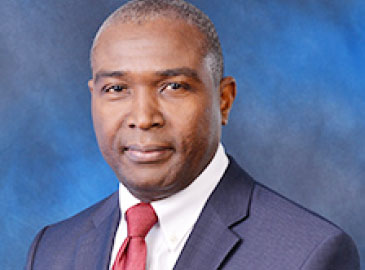
The Secretary General of the Gas Exporting Countries Forum (GECF), Philip Mshelbila, has estimated that a full global gas recovery would take six months to a year if the supply-sapping US-Israeli war in Iran stopped tomorrow.
He however points that shifts could be more structural if the conflict endures for six months or longer, reducing necessary upstream investment.
Addressing an Africa-focused energy conference in Paris, Mshelbila, who was immediate past Managing Director of the Nigeria LNG, said the Iran war which has slashed flows of LNG through the Strait of Hormuz and seen direct hits on energy infrastructure had roiled gas markets in the short and medium term.
Among gas and LNG infrastructure attacked in Saudi Arabia, Kuwait, the UAE and Qatar was the latter’s Ras Laffan complex the largest gas liquefaction facility in the world.
In the short term, that has “triggered a massive spike in price, returning the market to volatility seen in 2022,” following Russia’s invasion of Ukraine, Mshelbila said.
That has reshaped supply-demand dynamics, with the gas market expected prior to the war to swing into oversupply this year, he added. “Clearly this conflict has done something to that. It’s not clear whether it is simply a delay or whether that glut will never come.”
In the longer term, the full implications will be determined by the severity of the damage and the duration, Mshelbila said, noting that further attacks on Gulf infrastructure or even the closure of the Bab el-Mandeb Strait, a Red Sea lifeline for Saudi Arabia to export energy, were likely to worsen the outlook.
The armed Houthi group in Yemen has previously struck ships in the Bab el-Mandeb, a critical narrow waterway to the south of the Suez Canal, and has threatened to do so again.
“We believe that if this whole conflict was resolved today the world would probably recover quickly,” Mshelbila said. “Yes, damage has been caused, but given another six months, one year, there will be a recovery.”
“If this continues for six months or longer, we could see more structural changes in energy dynamics.” That could include a switch back to coal or a more rapid shift towards renewable energy, he said.
Already, investment timelines are being reassessed and final investment decisions are being deferred, Mshelbila added, with companies looking to mitigate risk.
The GECF has estimated that $11 trillion-$12 trillion of investment is required over the next 30 years globally to meet projected demand growth in natural gas, 95% of it in the upstream.
As a result, Mshelbila said “kneejerk reactions” to the crisis and rising capital costs could push “the era of natural gas into the future.”