

Uche Cecil Izuora
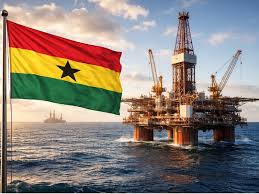
Ghana has prioritized boosting upstream activity, with recent reforms designed to reinvigorate exploration activity and attract fresh capital to offshore blocks struggling with declines.
In early 2026, the government secured a $3.5 billion investment drive involving Jubilee/TEN and Offshore Cape Three Points partners, aimed at revitalizing production and expanding reserves through coordinated upstream development efforts.
On the energy transition front, John Adbulai Jinapor, the country’s Minister for Energy & Green Transition, has been driving support for renewable energy deployment and inclusive energy access. Part of Ghana’s green agenda includes plans to procure 200 MW of battery energy storage systems to stabilize the grid and better integrate renewable generation, helping reduce reliance on thermal power during peak demand and support long‑term energy transition goals, such as achieving near‑universal electrification and increasing renewable generation. These efforts are complemented by initiatives like the Scaling‑Up Renewable Energy Program, launched to electrify off‑grid communities and expand clean access to underserved populations.
In addition to hydrocarbons and renewables, Ghana is advancing long‑term baseload diversification by exploring nuclear power as part of its future energy mix. The country has moved through key early stages of nuclear planning, with the International Atomic Energy Agency completing a safety review in 2025 of Ghana’s site selection process for its first nuclear power station, identifying a candidate and alternative site – a major step toward eventual construction.
Meanwhile, the Group Chief Executive Officer of NNPC Ltd, Mr. Bashir Bayo Ojulari, has disclosed that Nigeria’s upstream oil and gas sector has attracted over $24 billion in capital investment following targeted interventions by the Nigerian Upstream Petroleum Regulatory Commission (NUPRC).
Ojulari stated this in his keynote address at the 2026 Oloibiri Lecture & Energy Forum (OLEF 2026) held in Abuja with the theme “Beyond Three Million Barrels Target: Harmonizing Digitalization, Capital and Policy Frameworks for Intelligent Operations and Asset Optimisation”.
Represented by the Executive Vice President (EVP) Upstream, Mr. Udobong Ntia, Ojulari credited reforms addressing legacy asset disputes and unlocking stalled Final Investment Decisions.
He stressed that achieving the three million barrels per day target will depend on capital, data, and effective regulation, expressing confidence in Nigeria’s capacity to compete globally.
Delivering the keynote address, NUPRC Chief Executive Officer, Oritsemeyiwa Eyesan, emphasised that production growth will require more than drilling, calling for agile regulatory frameworks that attract investment, enable digital oilfields, and drive sustainable value creation.
Despite Nigeria’s vast reserves, she noted that past underperformance underscores the need for disciplined execution and alignment across policy, capital, and technology.
Chief Executive Officer(CEO) of the Nigerian Midstream and Downstream Petroleum Regulatory Authority (NMDPRA), Mr. Saidu Mohammed, stressed that achieving Nigeria’s 3mb/d oil and 22 BCF gas targets will require strong financing, advanced technology, and effective regulation, positioning the country as a resilient energy hub amid shifting global dynamics.
The Chairman, Society of Petroleum Engineers (SPE) Nigeria Council, Mr. Francis Nwaochei, stated that the 2026 Oloibiri Lecture & Energy Forum (OLEF 2026) is a defining moment to reposition the industry’s trajectory toward a future anchored on intelligence, resilience, and shared prosperity.
“OLEF 2026 represents our collective commitment to move beyond dialogue and deliver practical, scalable solutions that strengthen resilience and unlock long-term value for Nigeria,”.
While Nigeria continues to pursue ambitious production targets, he said the focus is expanding toward unlocking deeper value from existing assets through innovation, disciplined financing, and smarter regulation. “The future of our industry will not be determined by the volume of resources we extract, but by the intelligence with which we manage them”, the SPE Chairman said.
The Oloibiri Lecture & Energy Forum (OLEF) is a flagship annual platform of the SPE Nigeria Council, dedicated to advancing dialogue, innovation, and collaboration across Nigeria’s energy industry. The OLEF 2026 brought together an esteemed audience that includes Ministers of Petroleum Resources, Chief Executives of Regulatory Institutions, Leaders of National Oil Companies, and key stakeholders across the value chain.