

YEMISI IZUORA,
in this analysis looks at challenges facing Nigeria’s Energy Transition Plan, ETP, and Nigerian Communications Commission, NCC Adoption of Research strategies to support the plan.
In November 2021, at the United Nations climate change conference (COP26) held in Glasgow, former President Muhammadu Buhari stressed Nigeria’s commitment to achieving net-zero emissions by 2060.
Consequent upon that assurances, the then Vice President Prof. Yemi Osinbajo launched Nigeria’s Energy Transition Plan (ETP) on August 24, 2022, establishing the country’s strategy to reach a net-zero emissions energy system by 2060.
Nigeria’s energy sector accounts for about 65 per cent of the country’s total greenhouse gas emissions (see figure 1 for a breakdown of the energy sector emission profile).
Oriental News Nigeria reports that stakeholders sees the ETP as commendable but Nigeria’s past efforts to make its energy system more sustainable, including the Nigerian Renewable Energy Master Plan, have fallen far short of their goals.
Analysis suggests Nigeria might now have a difficult time realizing the key objectives of the ETP for the same reasons: this policy (like others before it) fails to prioritize economic development coupled with poor planning, and weak institutional and fiscal frameworks.
Analysts are apprehensive on how Nigeria’s ETP can avoid similar setbacks because decarbonization strategies are often far too expensive and detached from the day-to-day reality of low-income populations, Nigeria’s capacity to reach net zero is contingent on raising its population out of poverty, first and foremost.

NCCs Research Strategy
The Nigerian Communications Commission (NCC), is one Government Agency that has remained focused in its growth plan.
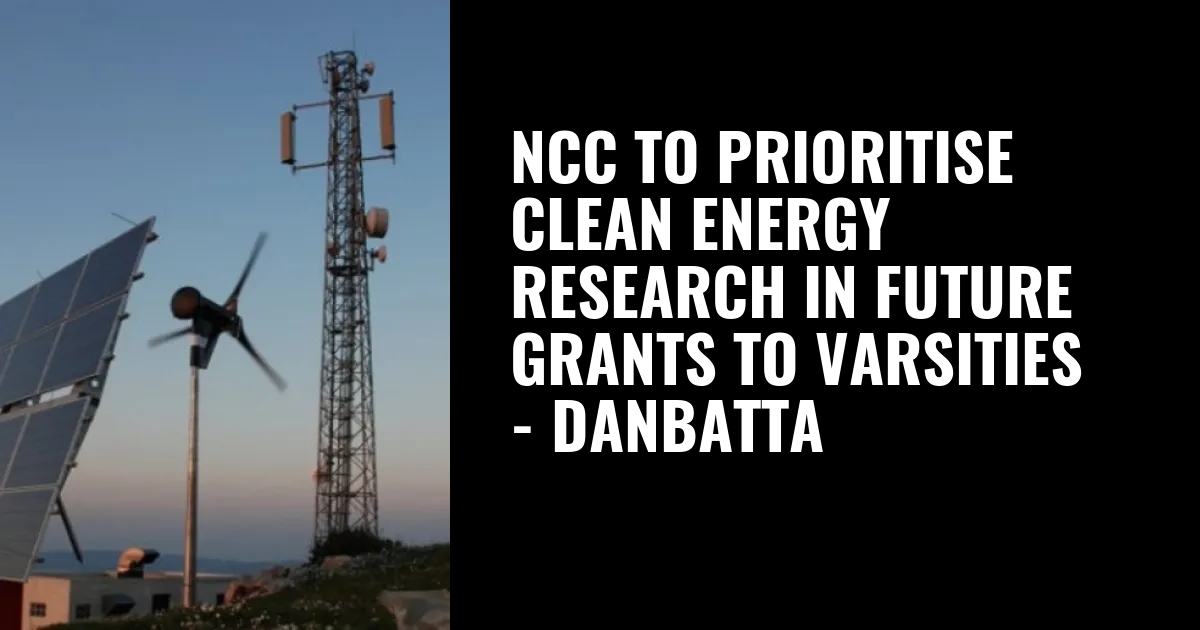
At the moment the Agency aims to refocus future academic research towards feasible alternative sources of clean energy that can be harnessed by the telecom industry.
This is just as the sector is already at the forefront of digital transformation whose potentials would enhance the livelihood of the citizens in harnessing and promoting research in the academia.
Executive Vice Chairman of the Commission, Professor Umar Danbatta, who stated these during the week at a roundtable meeting with the academia, industry chiefs and relevant stakeholders in Kano, also said that the Commission is equally pondering over the idea of introducing a framework to encourage ethical energy sourcing in the telecommunications sector.
Prof Danbatta said that it is essential to identify and explore new technologies, such as solar, wind and biomass that can power the nation’s communications infrastructure efficiently and sustainably.
Speaking on the theme of the event, “Refocusing Academic Research Toward Alternative Clean Energy: Panacea to Paucity of Energy in the Telecommunications Industry,” Danbatta said that the framework would serve as a guide for telecom service providers to adopt clean and sustainable energy sources, reducing their carbon footprints and contributing to greener future.
The NCC boss said that the policy would not only benefit the environment but, drive innovation and create new business opportunities in the industry, adding however, that to achieve the objective, would require collaboration with the academia and other stakeholder, who are encouraged to contribute to the project through research findings.
Danbatta further said that the commission needed the expertise, knowledge and insight of the academia and other stakeholders to guide it in developing feasible alternative sources of clean energy that the industry can leverage for a sustainable energy supply.
In the words of Danbatta; “We need your research to help us understand the potentials of these alternative energy sources, address their challenges and develop strategies for their implementation in the telecom sector”.
Danbatta expressed the confidence that the discussions and ideas shared at the meeting would serve as a catalyst for transformative research and innovation in the sector.
World Bank NEP Intervention
It was close to a hope dashed when the federal government and the German government deal to debottleneck Nigeria’s electricity transmission facilities was said to have faced a half decade delay that is another five years, when Siemens Energy announced it could not deliver on schedule anymore.
This coincided with the visit of the World Bank boss to Nigeria to assess ongoing deployment of solar mini grids to deeply needed communities.
The Government had secured funding from the World Bank $350m and the African Development Bank $200m for the projects which is smoothly being implemented by the Rural Electrification Agency, REA.
Our Correspondent reports that Siemens Energy has initiated a review of its wind business after taking a large hit to earnings and expected full-year revenues and profits due to problems at its unit Siemens Gamesa, one of the largest wind turbine makers in the world.
“Our third-quarter results demonstrate the challenges in turning around Siemens Gamesa,” Christian Bruch, President and CEO of Siemens Energy AG, said in a statement on the company’s results for the third quarter of the fiscal year 2022/2023 that ended on June 30, 2023.
At the end of June, Siemens Energy withdrew the profit guidance for the company due to problems with wind turbines by Siemens Gamesa.
“This is a disappointing and severe setback,” Siemens Gamesa chief executive Jochen Eickholt told reporters on an ad hoc call then.
Former President Muhammadu Buhari about five years ago, met with the then German Chancellor, Angela Merkel and initiated the deal to overhaul and increase the operational transmission and distribution capacity of the power grid.
The agreement was basically meant to include the rehabilitation, upgrade and expansion of transmission and distribution networks and to improve power generation in three phases.
The first phase was to raise power supply to 7,000mw by 2021; and then increase it to 11,000mw in 2023 and thereafter push it to 25,000mw from 2025.
A Bloomberg report said that although Siemens Energy AG expected to complete an overhaul of Nigeria’s dilapidated power infrastructure , it will now happen five years later than originally planned, due to delays caused by the coronavirus pandemic.
The German engineering company, which was contracted by Africa’s most populous nation four years ago to rehabilitate and expand Nigeria’s electricity grid by 2025, will now only conclude the project in 2030, Oladayo Orolu, Head of Business Development and Government relations at Siemens Energy told Bloomberg in an interview.
The three-phase project was set back by delays in starting the first phase, he said.
“When we conceptualised this project in 2018, our plan was within two years we should be done with phase one, but then Covid happened,” disrupting supply chains, which meant getting raw materials took longer than before, Orolu added.
The report said the delay is a blow to Nigeria President Bola Tinubu’s reform agenda. The president, who took office in late-May, pledged to make electricity more accessible and affordable in the nation, where more than 40 per cent of its population lack access to power and face constant blackouts.
In 2020, the World Bank estimated the economic cost of power shortages in Nigeria at around $28 billion – equivalent to 2 per cent of its gross domestic product. The delays are also likely to cause cost overruns.
“Prices are not at the same level they used to be,” Orolu said during the interview. “Some raw material components costs have been doubled, some are still close to where they used to be, some are just marginally higher,” he said. In 2020, phase one was projected to cost about €2 billion.
Orolu said he expects electricity output to increase by an additional 2,000 megawatts at the completion of phase one by 2025.
“The objective of phase one is to do quick fix projects that will free up 2,000 megawatts, we currently have 5,000, we are looking at taking that to 7,000,” he said.
Nigeria has an installed capacity of more than 13,000 megawatts, of which a daily average of about 3,400 megawatts is dispatched to consumers due to a poor transmission and distribution network.
The partnership with Siemens will modernise the existing network before enlarging it until the country can produce and distribute 25,000 megawatts.
Following a groundswell of enquiries recently, the Managing Director of FGN Power Company, the Special Purpose Vehicle (SPV) for the execution of the project, Mr Kenny Anuwe, said that 80 per cent of equipment needed for the pilot project was already available in-country.
Stressing that the project remained on course, Anuwe reiterated that the initiative for Phase 1 was underway and had recorded notable successes.
“FGN power company has received delivery of about 80 per cent of the equipment for the pilot projects, which are being deployed to critical sites across the country to improve power transmission capacity.
“Some of the sites include Apo, Ajah, Okene, Nike Lake, Kwanar Dangora, Maryland, Omouaran, Ojo, Amukpe, Ihovbor, Potiskum, Birnin Kebbi, amongst others,” Anuwe said in a statement.
With approximately 86 per cent of Nigerians still lacking access to electricity, the Federal Government has faced challenges in bridging the gap with solar mini grids. Despite efforts and interventions, Nigeria is still one of the countries with the greatest electricity supply deficit, according to a report tracking progress toward Sustainable Development Goal 7.
The country has been grappling with an unreliable power supply from the grid, which is inadequate for its population of over 200 million. As of August 5, the total grid installed capacity is 13 gigawatts, with a generation capacity of 7,653 megawatts (MWs). However, peak generation has been fluctuating around 3,000-4,000 MWs, according to operational data.
Recognizing the insufficiency, the government has highlighted the need for mini grid solutions to meet the growing demand. Additionally, Nigeria exports power to neighboring countries, but some international customers have failed to pay their invoices, with outstanding debts totaling $16.11 million.
To address the electricity demand in underserved areas, the Nigerian Electrification Project (NEP) was launched, aiming to deploy mini grids, Solar Home Systems (SHS), and captive power plants. The Rural Electrification Agency (REA), the implementing agency of NEP, has secured financing from the World Bank and African Development Bank. The World Bank recently announced plans to fund the construction of 1,000 mini solar power grids in partnership with the Nigerian government and private sector.
While the interventions have reduced the number of people without access to electricity, affordability and technological limitations remain challenges. Alternative energy sources like solar and wind face constraints in meeting high energy demands in industries, cities, and remote areas. The Group Chief Executive Officer of the Nigerian National Petroleum Company Limited (NNPCL) emphasized the need to expand gas development and infrastructure across the country, as natural gas has been adopted as a transition fuel.
Efforts are ongoing to bridge the electricity gap in Nigeria, with the government, international organizations, and private sector working together to improve access and sustainability.
The Lenders Support
The World Bank is aiming to help fund construction of 1,000 mini solar power grids in Nigeria in partnership with the government and private sector, the lender’s president Ajay Banga said.
Nigeria, with a population of more than 200 million people, has installed power generation capacity of 12,500 megawatts (MW) but produces a fraction of that, leaving millions of households and businesses reliant on petrol and diesel generators.
Mini grids, made up of small-scale electricity generating units, typically range in a size from a few kilowatts to up to 10 MW, enough to power some 200 households.
Speaking during a visit to a mini grid site on the outskirts of the capital Abuja, Banga told reporters that nearly 150 mini grids had been built, partly funded by the World Bank, to bring power to communities without access to electricity.
“We are putting another 300 in, but our ambition with the government is to go all the way to 1,000. We’re talking about hundreds of millions of dollars that are being invested,” said Banga, without giving a timeline.

REA’s Innovative Intervention
Managing Director of the REA, Engr. Salihijo Ahmad, provided further explanations and hints on the prospects of the partnership.
According to Ahmad, The nation’s efforts on off-grid electrification through the Nigeria Electrification Project (NEP) continues to reveal the centrality of energy and how it effectively alleviates energy poverty in communities, while empowering individuals, enabling them to do more and “BE” more.
By design, the World Bank-funded Nigeria Electrification Project (NEP) is a private-sector-driven programme aimed at leveraging renewable energy to serve the unserved and the underserved, while catalyzing socio-economic development through productive use.
In line with the FG’s mandate on rural electrification, the Rural Electrification Agency has so far leveraged the NEP to deploy over 7MW of renewable energy, completing over 80 solar hybrid mini-grids, achieving over 1.4 million SHS connections and impacting over 7 million Nigerians.
The NEP model has generated a lot of interest amongst stakeholders across sub-saharan Africa and the World Bank President, Mr. Ajay Banga was equally delighted to tour one of the programme’s beneficiary communities, Petti, FCT to speak with the beneficiaries and assess the NEP impact.
Salihijo went on to say, “With over 7 million people already impacted, a lot has been done by the REA, through the NEP as well as other programmes being implemented by the Agency. However, you will agree with me that for us at the REA – and for any other key stakeholder in this sector – there is still a lot to be done as far as closing the energy access gap.”
“This is why we can’t rest on our oars. To continue to implement FG’s off-grid electrification programmes, it is impossible to solely rely on funding from the FG. This is why we must continue to ensure stability in the business landscape of the energy sector while drawing in investment and private sector participation.
Off-grid electrification is not cheap anywhere in the world. We continue to effectively utilize PPP to scale our efforts. Inter-agency and inter-sectorial collaboration is equally pivotal. With the new Electricity Act, we can equally see how important State Government’s role is.
“We continue to work in lockstep with beneficiary communities as they play a key role in ensuring the sustainability and longevity of off-grid infrastructure. Currently, we are big on PUE – the Productive Use of Energy. Catalyzing the PUE market and proffering cleaner solutions to local problems is already going a long way to transform lives. PU equipment and facilities help to improve economic activities while aiding energy efficiency. ”
He explained that the off-grid sector is government-led and private-sector-driven and he commended the Federal Government for aiding a business environment where PPP thrives.
“Private sector engagement is very important. At the REA, we strategically collaborate with private sector players, opening their minds to our objectives as well as the opportunities in the sector and across the nation. Their buy-in has been impressive.
“For example, we are carrying out a range of pilot projects on productive use equipment across the country and I can tell you that the success we have achieved so far through those pilots happened due to our collaboration with innovators, researchers and energy product developers in the private sector. It is interesting to note that with a healthy relationship between the public and the private sector players, magic can happen. We have seen it play out at the REA over and over again.
Securing the projects is all about sustainability. The Agency has 6 zonal offices across the 6 geo-political zones of the country with team members tasked with the periodic assessment of these projects. On a deeper level, however, community ownership is key. ”
He said the REA would continue to to nurture a strong social framework through the Rural Electricity Users Cooperative Society (REUCS) designed to promote community participation in rural electrification projects through training on ownership, operation, maintenance, and safety of facilities. The REUCS is equally enabling community members to work together to protect electricity equipment against theft and vandalization. We currently have over 140 registered REUCS across the 6 geopolitical zones.
There is a Solar Home Systems (SHS) component on NEP just there is a mini grid component.
The NEP is an innovative initiative of the Federal Government of Nigeria (FGN), conceptualized to catalyze off-grid development in Nigeria, through the provision of grant funding, detailed market data, and technical assistance.
The NEP, seeks to bridge the energy access deficit by providing electricity to households, MSMEs, educational and healthcare facilities in unserved and underserved rural communities through the deployment of mini grid, Solar Home Systems (SHS), captive power plants and productive use appliances to ensure sustainability of these off-grid solutions.
The Nigeria Electrification Project is fully aligned with the Rural Electrification Strategy and Implementation Plan and also supports the Power Sector Recovery Plan (2017-2021) objectives to increase private investment into the energy sector, including implementation of rural energy access and off grid/mini grid energy services.
To support the implementation of the NEP, the Federal Government of Nigeria, through the REA, has successfully secured financing from both the World Bank ($350m) and the African Development Bank ($200m).
The NEP compromises 4 main components which include Solar Hybrid Mini Grid (Component 1).
With a total allocation of $150m, the component aims to support the development of private sector mini-grids in unserved and underserved areas that have high economic growth potential.
The component consists of three funding windows: Performance-Based Grant (PBG) – $48m, PBG aims for the development of mini-grids on a rolling basis.
Grants of US$600/connection are available on a first-come first-served basis, with a minimum total grant request of US$18,000 per mini-grid.
Eligible projects are solar hybrid systems in unserved and underserved areas.
Minimum Subsidy Tender (MST) – $25m, MST aims to electrify pre-selected communities that have high economic growth potential through a competitive tender.
COVID-19 & Beyond – $77m, this initiative aims to provide power supply for equipment (ventilators, cooling systems, etc.), providing sustainable and clean energy power to 100 Isolation/treatment centers and 400 Primary Health Centers.
Standalone Solar Home Systems (SHS) (Component 2) – Total allocation of $75m, SHS aims to significantly increase the market for standalone solar systems and to substitute energy-inefficient supply, tools, and culture for sustainable practices.
The component consists of two funding windows: Market Scale-up Grant (MSCF) – $15m, MSCF offers up-front grants to a small number of the strongest and most capable solar providers.
Output Based Funds (OBF) – $60m, to provide fixed incentive grants up to 20% of the retail cost of the system to the grantees, for each eligible system installed and verified.
Energizing Education Programme (EEP) (Component 3) and will provide sustainable and clean power supply to 7 Federal Universities and 2 associated University Teaching Hospitals across Nigeria, including upgrading existing distribution infrastructure, street lighting to improve security within the universities’ campuses, as well as the development of a world class training centre on renewable energy for each university.
In addition, 20 female students undertaking Science Technology Engineering and Mathematics (STEM) courses will be selected across the beneficiary institutions to gain hands on practical experience in the construction phase of the project, under the EEP STEM Female Internship Programme. A total of $105m was allocated to this component.
Currently, NEP has facilitated the connections of over 1,462,624 thereby impacting the lives of over 7.3 million Nigerians.
Under the Solar Hybrid Mini Grid Component, 83 solar Hybrid mini-grids have been commissioned leading to a total of 29,727 connections achieved.
Through the mini grid component, a total of 7MW of energy has been deployed.
So far, over 7m Nigerians have been impacted through the NEP.
Currently, 93 developers have applied for the programme, and a total of 285 sites are in the pipeline as of July 2023.
Following the outbreak of the COVID-19 pandemic, the REA in response to the lack of reliable electricity in health centers across the country, initiated the deployment of 50Kw solar hybrid power systems to 100 treatment centers.
To date, a total of 58 “COVID-19 & Beyond” projects have been completed. A total of 2.8MW of power has been installed in health centers across the country.
The SHS Component over $51m has been disbursed and a total of 1,432,897 systems have been deployed, surpassing the end-line target of 340,000 by October 2023.
Under the EEP, Contracts have been awarded to EPC contractors and site preparation is currently ongoing across all 7 institutions. To date over $26m has been disbursed under the programme.
An exemplar in sub-saharan off-grid sector ecosystem, the implementation of the NEP has strengthened private sector participation and investment in the nation’s off-grid space, boosting the confidence of key actors in the space.
With the assessment of the impact of the NEP so far, the World Bank is impressed with the implementation model, is committed towards supporting the FG with an additional $750,000 for the continuous implementation of the NEP to alleviate energy poverty in off-grid communities.
The NCCs research effort it is believed would support various energy transition steps by other agencies of Government which at the end will engender the necessary growth by addressing energy poverty in the country.