

Yemisi Izuora
The Industry Consumer Advisory Forum (ICAF), which was established by the Nigerian Communications Commission, NCC, has observed escalation of fraud due to increased digital adoption.
The Forum has also advised that the situation requires that organizations simultaneously combat fraud and provide customers with a seamless digital experience.
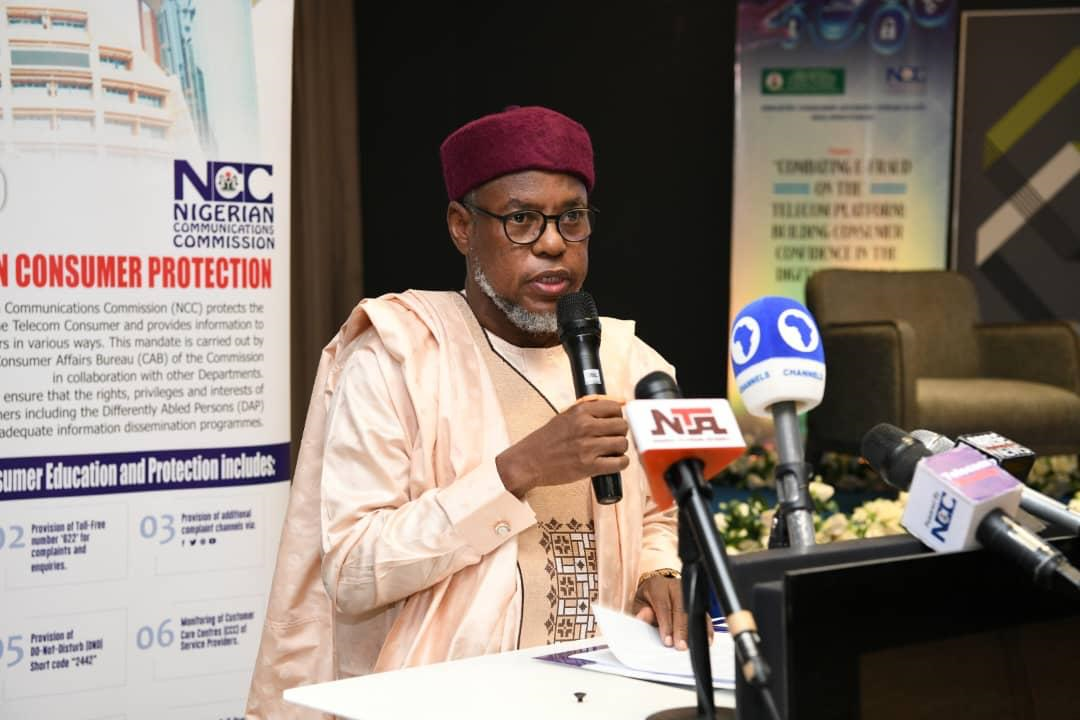
Addressing the Q2, 2023 of Industry Advisory Consumer Forum, with the Theme: Combating E-Fraud on Telecom Platform: Building Consumer Confidence in the Digital Economy, ICAF Chairman Mazi Akpa Emeka, noted that Digital adoption leapfrogged a decade in days during the COVID-19 pandemic, accelerating the shift to digital and multichannel client service that began in the 2010s.
According to him, The pandemic-driven boost to e-commerce is estimated to have exceeded $200 billion in 2020 and 2021.
Emeka, further warned that increased digital adoption has enabled new forms of fraudulent activity and amplified the importance of effective fraud management for promoting growth and meeting customers’ increasing expectations for digital experiences.
Although, he noted that most companies have improved their digital user interface and experience, many have struggled to effectively enhance fraud controls without impairing the client experience.
He said, “Many organizations report that they are being overwhelmed by the sheer volume of fraud attempts. In financial services, for example, many banks are so inundated by fraudsters that they cannot meet online origination targets; they are unable to verify identities and authenticate customers while combating fraud.”
The Chairman, strongly warned that fraud threat vectors have become significantly more sophisticated, which include nation-state actors, organized criminals, cyber terrorists, and insiders, as well as local fraud rings.
He added that , “Advances in technology present challenges as fraud attacks occur with greater frequency, speed, and effectiveness. Commonly used methods include phishing (Phishing occurs when a hacker pose as a trusted figure who uses carefully created emails to trick you into visiting a malicious website, downloading a corrupt file or handing over your password before using that information to gain access to a business network or your personal information), destructive malware, social engineering, deep fakes, and fraud-as-a-service exploit kits.”
Also, he said that faster movement of money usually increases the risk of fraud, and real-time disbursements are set to double within the year and beyond as economic hardship gets tougher and that risk rises further when unsuspecting customers inadvertently share their authentication details with fraudsters targeting their devices and accounts.
Emeka, added that the evolution of fraud threats has undermined the effectiveness of a reactive approach to combating fraud, which essentially focuses on stopping schemes one by one through manual reviews.
“The 2023 2nd quarter open forum of the Industry Consumer Advisory Forum (ICAF) decided to bring this issue to bear as it affects consumers a great deal. In this edition, we intend to propose a new approach on Combatting E-Fraud on the Telecommunication Platforms and ways of Building Consumer Confidence in the Digital Economy and we believe with the retinue of experts here present, we intend to achieve this goal using the current realities of this time to strengthen the core capabilities and improve our abilities to continually identify and address vulnerabilities arising from new fraud methods and patterns.” he said.
Oriental News Nigeria, reports that the Nigerian Communications Act (NCA 2003) generally provides for the protection and promotion of interests of Consumers including Differently Abled Persons and the Elderly.
Pursuant to the NCA 2003, the Commission, driven by its Consumer-centric initiatives to ensure fair treatment as well as an acceptable Quality of Experience for consumers of ICT products and services, established the Industry Consumer Advisory Forum (ICAF).
The ICAF is not completely independent of the Commission but has been established as part of the Commissions strategy to achieve its mandate for protection and promotion of the interests of Consumers against unfair practices; including but not limited to matters relating to tariffs and charges for the availability of quality communications services, equipment and facilities.