

Yemisi Izuora
Ikeja Electric (IE) and Eko Electricity Distribution Company (EKEDC) have remained resilient especially in revenue collection among other Electricity Distribution Companies (DisCos).
This is evident from the In September 2024, report released by the Nigerian Electricity Regulatory Commission (NERC) which showed a revenue shortfall of ₦54.22 billion, across all DisCos.
The regulator attributed the shortfall to inefficiencies in DisCos collection systems.
According to the Commercial Performance Report for Distribution Companies (DisCos) for September 2024, released by the NERC, showed that out of total billings of ₦225.80 billion, the DisCos collectively managed to collect ₦171.58 billion, reflecting a collection efficiency of 75.99 per cent, which marks a 4.92 per cent, decline compared to August 2024.
The revenue recovery efficiency of the DisCos, in the month under review, stood at 73.45 per cent, as actual average collections of ₦85.01 per kilowatt-hour (kWh) fell short of the ₦115.74/kWh allowable tariff.
However, Ikeja Electric emerged the best-performing DisCo, achieving a collection efficiency of 96.75per cent.
Though the Company recorded a drop of 7.26 per cent compared if compared with August performance.
The Company collected ₦35.20 billion out of ₦36.38 billion billed, with a revenue recovery efficiency of 88.55 per cent attaining ₦101.57/kWh against an allowable tariff of ₦114.70/kWh.
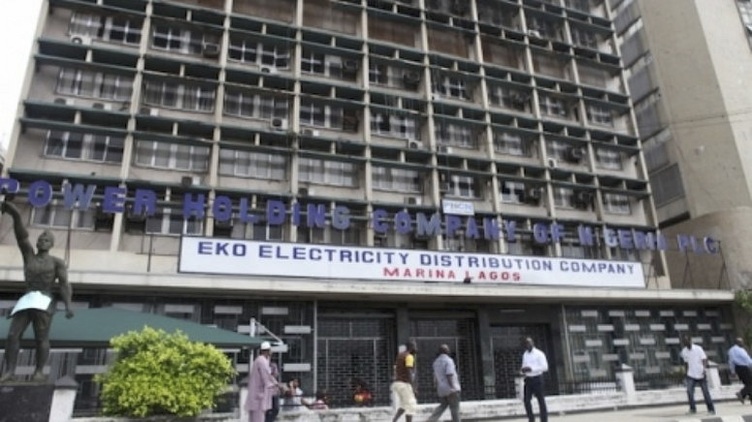
Following IE is Eko DisCo followed with 81.40 per cent collection efficiency, slightly improving by 1.58 per cent compared to the previous month.
The DisCo collected ₦31.16 billion out of ₦35.28 billion billed, achieving a revenue recovery efficiency of 88.36 per cent at ₦104.56/kWh compared to the allowable ₦118.33/kWh.
Abuja DisCo recorded a slight improvement in collection efficiency, achieving 81.35 per cent up by 0.71 per cent from the previous month.
It collected ₦28.28 billion from a total billing of ₦43.77 billion, achieving a revenue recovery efficiency of 83.15 per cent at ₦97.54/kWh, compared to its allowable tariff of ₦117.31/kWh.
On the other hand Ibadan DisCo showed significant improvement, with collection efficiency increasing by 8.06 per cent to 84.24 per cent, as it collected ₦21.99 billion from ₦26.10 billion billed.
However, its recovery efficiency stood at 72.18 per cent with an average collection of ₦84.04/kWh compared to the allowable tariff of ₦116.43/kWh.
Benin DisCo recorded 82.46 per cent collection efficiency, collecting ₦15.22 billion from billings of ₦18.45 billion, but achieved a recovery efficiency of only 67.29 per cent.
Aba DisCo achieved a revenue recovery efficiency of 85.42 per cent having achieved N83.29 per kilo Watts Hour, despite N97.50/kWh of Allowable average tariff for the month in view.
The Company recorded a collection efficiency of 71.57 per cent having collected N1.43 billion revenue out of a total of N1.99billion for the month in view.
However, other DisCos struggled to achieve meaningful collection rates.
While Yola DisCo, which recorded a 36.71 per cent collection efficiency, collected ₦1.48 billion out of ₦4.04 billion billed, and achieved a recovery efficiency of 47.35 per cent, with ₦56.63/kWh collected against ₦119.00/kWh allowable tariff.
Jos DisCo reported a collection efficiency of 43.49 per cent, a drop of 7.20 per cent, collecting just ₦5.06 billion out of ₦11.63 billion billed.
Its recovery efficiency was 42.41 per cent, with an average collection of ₦49.07/kWh against an allowable tariff of ₦115.70/kWh.
Kaduna DisCo fared slightly better, with a collection efficiency of 53.73 per cent down by 3.43 per cent from August.
The DisCo collected ₦4.42 billion out of ₦8.22 billion billed but achieved a low recovery efficiency of 35.28%, with an average collection of ₦39.86/kWh compared to its allowable ₦113.00/kWh.
Unfortunately, Kano DisCo underperformed in the period under review as it collected ₦3.07 billion from billings of ₦14.95 billion, achieving a recovery efficiency of 20.83 per cent with an average collection of ₦24.14/kWh against ₦115.89/
The DisCo recorded one of lowest performances, with a collection efficiency of just 20.56 per cent down by a staggering 37.69 per cent.