

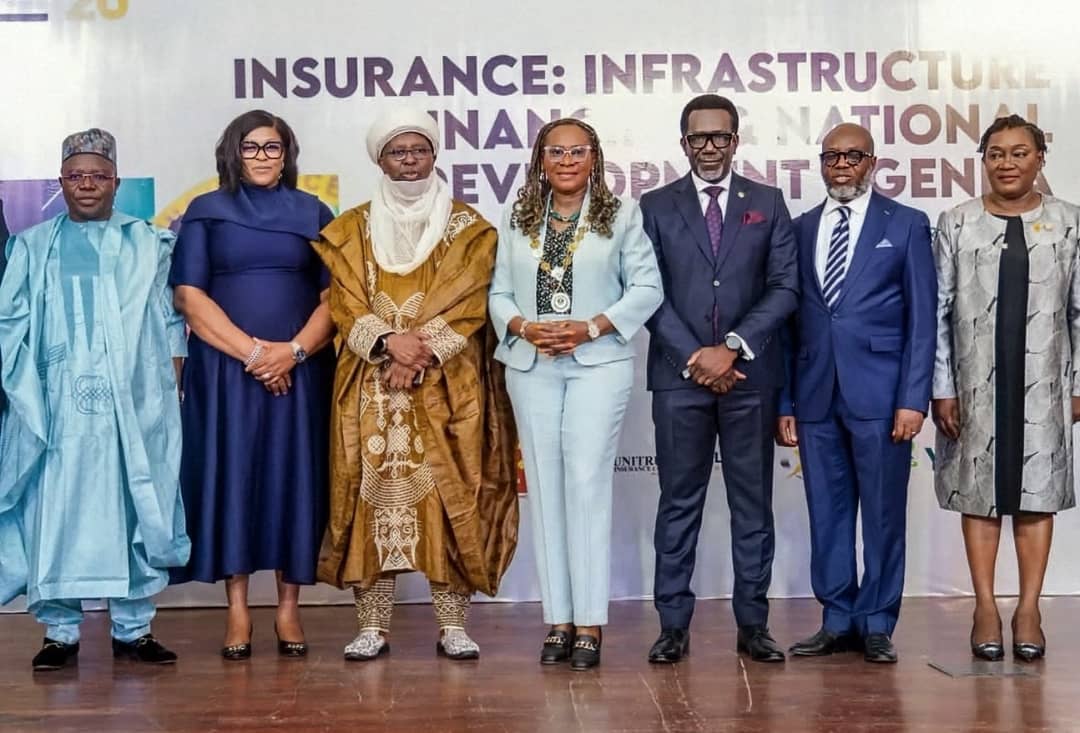
The President of the Nigerian Council of Registered Insurance Brokers (NCRIB), Mrs. Ekeoma Ezeibe has called on the insurance industry to move from the margins to the mainstream of Nigeria’s development agenda by playing a central role in financing, de-risking and sustaining critical infrastructure.
Speaking at the opening of the 2026 National Insurance Brokers Conference and Exhibition held in Abuja, Mrs. Ezeibe said the industry could no longer remain a reactive risk manager.
“It must become a proactive partner in mobilising long-term capital for the roads, rail, power, ports, digital networks and climate-resilient facilities needed to support a $1 trillion economy”, she said.
She noted that the theme of conference, “Insurance: Infrastructure Financing and National Agenda,” was “a call to action” rather than an aspirational slogan.
Mrs. Ezeibe highlighted recent reforms that had strengthened the sector’s capacity through the Nigerian Insurance Industry Reform Act (NIIRA) 2025 which provided a modern legislative foundation.
She also referenced the National Insurance Commission’s (NAICOM) ambitious targets under the Insurance Sector Strengthening Programme (ISSP): raising insurance penetration from the current 0.5 per cent of GDP to 1.5 per cent by 2028 and ultimately to 10 per cent by 2031, while expanding coverage to 25 million Nigerians, with special focus on women, youths and micro, small and medium enterprises.
“Properly structured insurance solutions such as construction all-risks, political risk insurance, delay-in-start-up covers, professional indemnity, performance bonds, surety, climate and catastrophe covers, and innovative parametric products can transform bankable projects into investable ones,” she said.
These instruments, she added, could crowd in private capital, lower financing costs, protect public balance sheets and ensure infrastructure assets are built and maintained sustainably.
Mrs. Ezeibe stressed the unique position of registered insurance brokers as trusted advisers who sit between project sponsors, financiers, contractors, operators and underwriters.
She urged the brokerage community to deepen specialised expertise, retain a greater share of infrastructure risks domestically rather than ceding them offshore, embrace digital platforms and parametric solutions, and advocate for the mandatory embedding of robust insurance requirements in public-private partnership contracts and state and local government projects.
Under the Council’s “One Insurance Industry” agenda, she outlined five interconnected pillars: deepening penetration (beginning with a pilot in Abia State), completing the Olola Olabode Ogunlana House, strengthening partnership with NAICOM and other regulators, building members’ professional capacity, and mentoring the next generation of brokers.
Also speaking at the Conference, Minister of Finance and Coordinating Minister of the Economy, Professor Taiwo Oyedele has called on Nigeria’s insurance industry to play a central role in de-risking infrastructure projects and channelling long-term capital into national development.
According to him, effective de-risking of projects, access to productive capital, and development that improves lives underpins successful economies in any nation.