

Uche Cecil Izuora
The $1.5 billion Lekki Deep Sea Port, is working towards transforming the West African shipping landscape.
Since opening in April 2023 with a capacity of 1.2 million TEUs, the port has steadily ramped up operations, handling 58,000 TEUs in 2023 and soaring to 287,000 TEUs in 2024.
By mid-2025, it had already processed 220,000 TEUs and is ambitiously targeting 500,000 TEUs by year-end, despite economic headwinds such as fuel subsidy removals and currency depreciation.
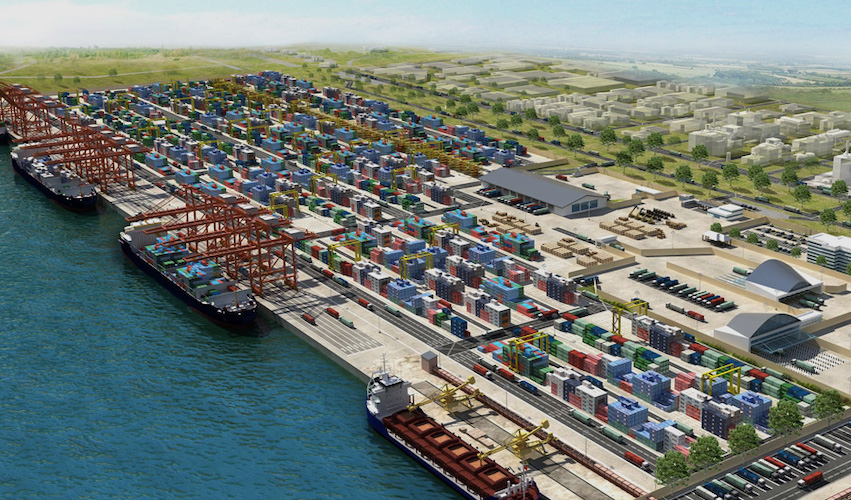
Strategically located on 9 hectares with a 9-kilometer channel and a 2-kilometer breakwater, Lekki Port boasts world-class infrastructure including five ship-to-shore cranes, STS scanners that scan containers in just 33 seconds, and a fully automated system ensuring a vessel turnaround time of 48 hours and truck turnaround of 1 hour 25 minutes. The port accommodates massive vessels up to 366 meters long with a 14,000 TEU capacity, marking it as a game-changer in Nigeria’s maritime industry.
Lekki Port is also emerging as a key transshipment hub for West Africa, facilitating cargo transfers to Ghana, Benin Republic, Ivory Coast, and internally to Onne Port in Rivers State. This reversal of previous transshipment trends is expanding Nigeria’s maritime influence regionally. Currently, about 20% of cargoes are evacuated via barges, with plans underway to integrate rail transport to further streamline logistics.
Beyond operations, Lekki Deep Sea Port is committed to corporate social responsibility, employing around 30% of its workforce from local communities and investing in environmental and educational projects.
With ongoing government support, including channel dredging to increase depth beyond 16.5 meters to 19 meters, Lekki Port is poised to boost Nigeria’s export competitiveness and foreign exchange inflows, further cementing its role as a catalyst for economic growth in the region.
In essence, Lekki Deep Sea Port is not just a port—it’s a transformative gateway propelling Nigeria and West Africa into a new era of maritime trade and economic development.