

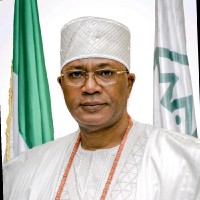
Yemisi Izuora
The Manufacturers Association of Nigeria (MAN) has expressed confidence that its advocacy for well coordinated policy and review of anti-progressive policies would be effectively addressed in 2026.
In 2025, the manufacturing sector continued to grapple with familiar macroeconomic constraints, including persistent infrastructural deficits, multiple taxation, onerous regulatory requirements, weak policy coordination, elevated energy costs, and other deep-seated structural bottlenecks.
These challenges once again underscored the fragility of the operating environment for manufacturers.
Manufacturers entered the year with cautious optimism and a renewed commitment to proactive advocacy on issues affecting members’ operations and competitiveness.
Nevertheless, prevailing macroeconomic pressures weighed heavily on business sentiment.
Above were concerns and optimism raised by Otunba Francis Meshioye, President of the MAN, as he opened his speech during the 2026 Edition of the MAN Media Personality of the Year Award and Presidential Media Luncheon Wednesday, January 28, 2026, in Lagos.
Meshioye, continued his remarks with the Manufacturers CEOs’ Confidence report.
According to him, the index, which tracks manufacturers’ expectations and operating impulse, declined to 53.2% in Q1 2025 from 56.0% in Q4 2024, before further easing to 50.3 % in Q2 and only marginally recovering to 50.7% in Q3.
This subdued confidence trajectory reflected the unfriendly macroeconomic environment during the period. Interest rates remained elevated at 27.5% through much of the year, significantly increasing borrowing costs and constraining access to credit.
He said the situation was further exacerbated by erratic public power supply, compelling manufacturers to rely heavily on alternative energy sources, with an estimated N676.6 billion expended on energy cost in the first half of 2025 alone.
While the broader economy recorded disinflation in 2025, with headline inflation moderating from 27.61% in January to 15.15% in December, price levels remained elevated.
The disinflation was supported in part by relative exchange-rate stability, as the Naira appreciated by 6.4% to close the year at N1,443 per US dollar in December from N1,541 per US dollar in January, marking the first annual appreciation in seven years.
However, the MAN President noted that persistent double-digit inflation continued to erode consumers’ purchasing power, thereby dampening demand for manufactured goods.
Despite these headwinds, the manufacturing sector demonstrated notable resilience. Capacity utilisation improved to 61.3%, up from 57.6% in the second half of 2024. Export performance strengthened, with the sector’s export value rising to N978.53 billion in Q3 2025 from N803.8 billion in Q2 2025. Similarly, the sector’s contribution to GDP averaged 8.36% in Q3 2025, compared with 8.24% in 2024. Sectoral growth also remained in positive territory, with output expanding by 1.69%, 1.60%, and 1.25% in Q1, Q2, and Q3 2025 respectively, reflecting the underlying resilience of manufacturers despite a challenging operating environment.
In 2025, the Association sustained its advocacy with the support of your platforms. We spoke with one voice, clear and coherent on policies affecting manufacturers. We thank the government for its listening ear.
Without the suspension of the 4% Free-On-Board (FOB) charge by the Nigeria Customs Service, the 15% increase in port charges by the Nigerian Ports Authority, and the discontinued levy by the Financial Reporting Council of Nigeria, manufacturers would have faced even greater burdens, he reported.
He also, pointed out that global geopolitics in 2025 introduced new dimensions, with tariff wars and rising tensions and in response the Association continued to urge government to prioritise manufacturing and give critical attention to the Nigeria First policy. It is a national imperative, and we hope for better implementation this year.
Meshioye, argues that Manufacturing thrives when Government and industry players work in close collaboration, both in policy formulation and implementation, adding, “We urge stakeholders in government not to treat this as an afterthought, but to ensure all relevant players are consulted before decisions are made and decisions made should reflect the imperatives for growth, innovation and competitiveness. Government agencies should be enablers of ease of doing business, not obstacles.”