

Joseph Bakare
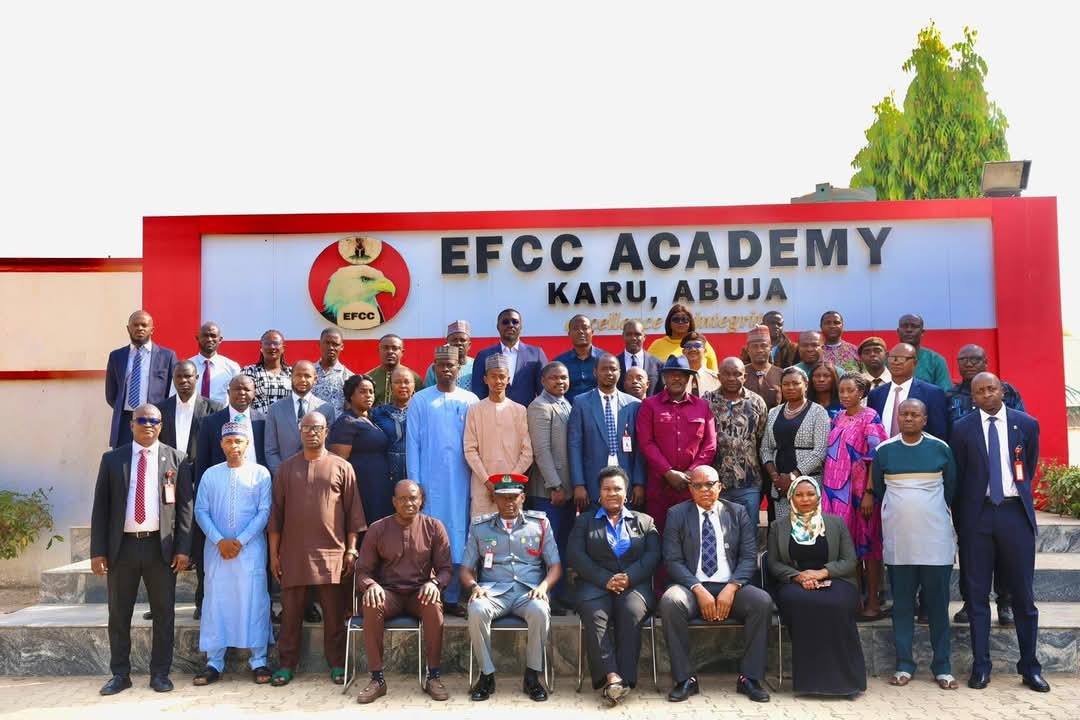
The Nigeria Customs Service (NCS) has reaffirmed its commitment to combating financial crimes at a high-level anti-money laundering workshop held at the EFCC Academy on Tuesday, 28 January 2025.
The event brought together key security agencies to enhance strategies for detecting and preventing illicit financial activities. Participants included representatives from the NCS, Nigerian Financial Intelligence Unit (NFIU), Department of State Services (DSS), National Drug Law Enforcement Agency (NDLEA), and other financial crime prevention stakeholders.
Representing the Comptroller-General of Customs, Comptroller Sani Yahaya highlighted the proactive measures the NCS Anti-Money Laundering Unit took. He stressed the Service’s crucial role in fighting financial crimes and its collaboration with both domestic and international agencies.
“The Nigeria Customs Service remains a key pillar in this fight, working closely with other agencies and adhering to FATF guidelines. Our currency declaration policies at borders are critical in detecting suspicious financial transactions,” Yahaya stated.
He further emphasised that the NCS enforces financial regulations while ensuring compliance with international anti-money laundering standards. The Anti-Money Laundering Unit, operating under the NCS, enhances the Service’s capacity to track suspicious transactions, disrupt criminal networks, and prevent illicit funds from circulating in Nigeria’s economy.
Commandant of the EFCC Academy, Chinwe Chinenye Ndubeze, acknowledged the pivotal role of border security agencies, particularly the NCS, in preventing illicit fund flows. She stressed the complexity of money laundering and the need for increased vigilance.
“Money laundering enables illicit funds to appear legitimate, fueling other criminal activities. Effective border monitoring and strengthened reporting mechanisms are essential for proactive detection,” she stated.
She also noted that illicit funds often infiltrate the luxury goods market, making them harder to trace. Given the NCS’s position as the first line of defence at Nigeria’s borders, its role in detecting, reporting, and preventing financial crimes is crucial.
Throughout the workshop, participants discussed the increasing sophistication of money laundering schemes and the importance of inter-agency collaboration. Key topics included the evolving nature of cross-border financial crimes, the integration of advanced technology in monitoring transactions and the strengthening of intelligence-sharing mechanisms
The workshop reinforced the NCS’s frontline role in securing Nigeria’s borders against illicit financial activities, as the Service said it will continue to implement advanced surveillance and investigative techniques to combat money laundering.
Discussions also highlighted the need for ongoing training and capacity building to equip customs officers with the skills to effectively identify and intercept suspicious financial activities.