

Uchenna Cecil izuora
A single regulatory adjustment may be doing more to unlock Nigeria’s mini-grid sector than any funding announcement to date.
Nigeria’s Rural Electrification Agency says a decision to raise the mini-grid capacity ceiling, from 1 megawatt to 5 megawatts for isolated systems, and up to 10 megawatts for interconnected ones, has removed a structural constraint that long kept mini-grid projects too small to attract serious institutional capital. REA Managing Director/CEO Dr. Abba Aliyu points to the change as one of three pillars behind the sector’s recent acceleration, alongside the $750 million DARES program and a construction pipeline now numbering more than 1,000 sites nationwide.
The change matters more than its technical description suggests. Under the old 1-megawatt ceiling, mini-grid developers were effectively capped at serving small clusters of homes and businesses, projects too modest to attract the kind of institutional financing that makes large-scale rollout possible. Lifting that ceiling to 5 and 10 megawatts allows developers to design projects at a scale that can plug directly into existing distribution infrastructure, serve entire commercial districts, and generate the revenue base that makes a project bankable in the eyes of investors and distribution companies alike.
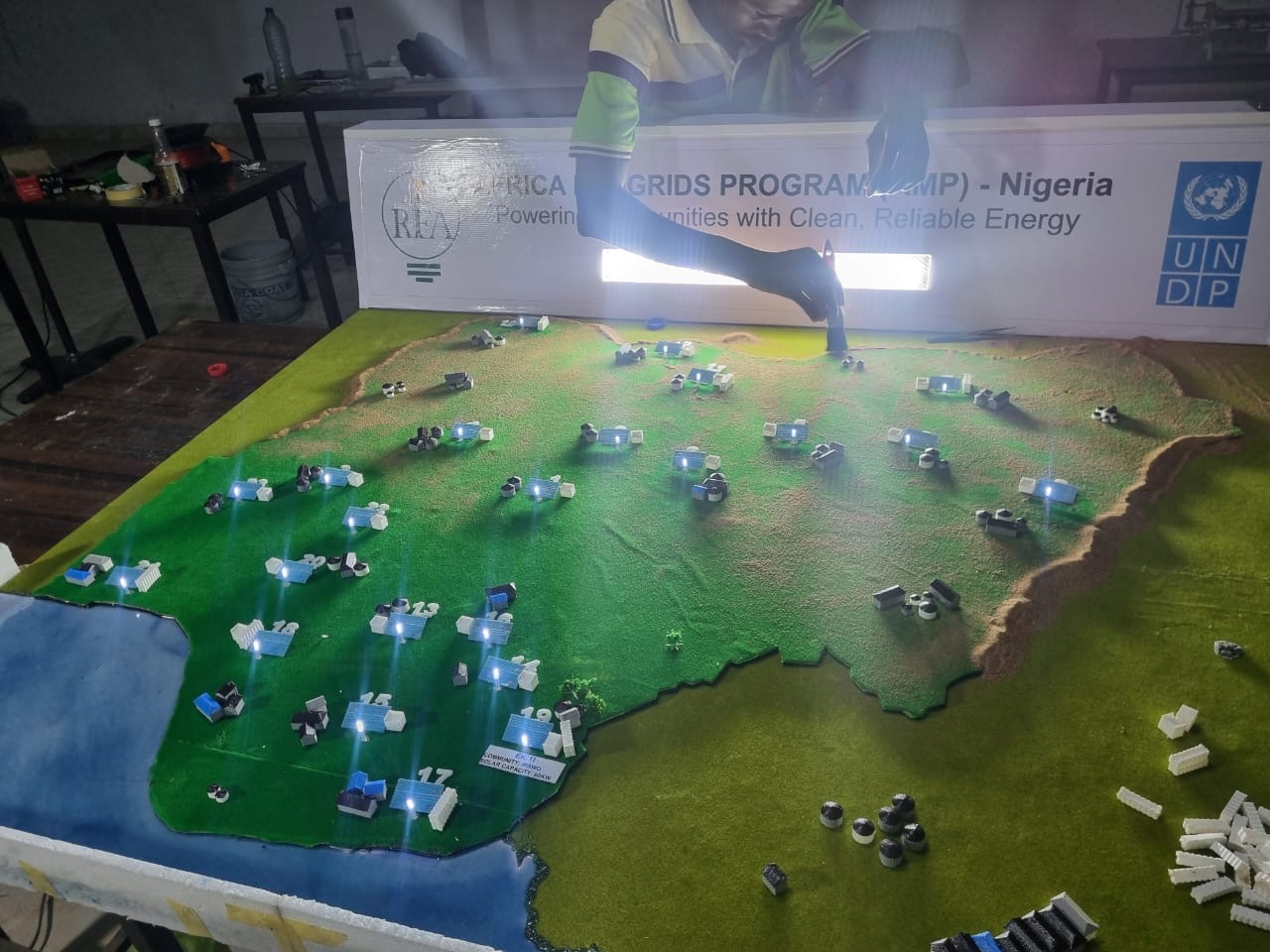
Dr. Aliyu frames the cap increase alongside two other pillars in Nigeria’s push from policy to implementation: the DARES funding itself, which he calls the largest renewable energy access commitment in the world, aimed at deploying 1,350 mini-grids; and the sheer volume of construction now underway, more than 1,000 isolated mini-grids and 48 interconnected mini-grids, according to Dr. Aliyu, deployed across states including Abuja, Kano, Yobe, Akwa Ibom, Port Harcourt and Delta. “Under this leadership, we had already moved from the rhetoric, from policy, talk talk, no action, to actual implementation of projects,” he said.
Of the three, the capacity increase may carry the most weight. Funding and construction volume matter little if the underlying rules still cap projects below the scale investors require to see returns. By lifting the interconnected mini-grid ceiling to 10 megawatts, the regulator widened the pool of projects large enough to be considered commercially viable rather than purely developmental, a threshold that shapes how distribution companies evaluate interconnected sites and how state governments structure partnerships on isolated ones.
That partnership structure is itself a product of a second piece of legislation: the Electricity Act, which decentralized Nigeria’s power sector and gave state governments legal authority to develop and regulate their own electricity markets. Dr. Aliyu described interconnected mini-grids as developed jointly with the country’s distribution companies, and isolated mini-grids as built in partnership with individual states, a model he said is now producing tangible groundbreakings and commissioning, including a planned ceremony in Adamawa State on July 6, where Nigeria’s Minister of Power is set to break ground on three interconnected mini-grids, and prior commissioning of tens of megawatts of interconnected capacity in Kogi State.
The capacity ceiling Dr. Aliyu points to, offers a concrete mechanism behind the sector’s momentum, a structural limit on bankability that has now been lifted. If the current pace holds, DARES, originally structured as a five-year program, could be substantially complete in three, according to Dr. Aliyu, with the regulatory foundation now in place expected to support projects built at the new, larger scale as the rollout continues through 2026 and beyond.