

…Rejects W/Bank Products Import Backing
Tunde Bakare
Nigeria’s fragile petroleum refining industry is now being strengthened as the
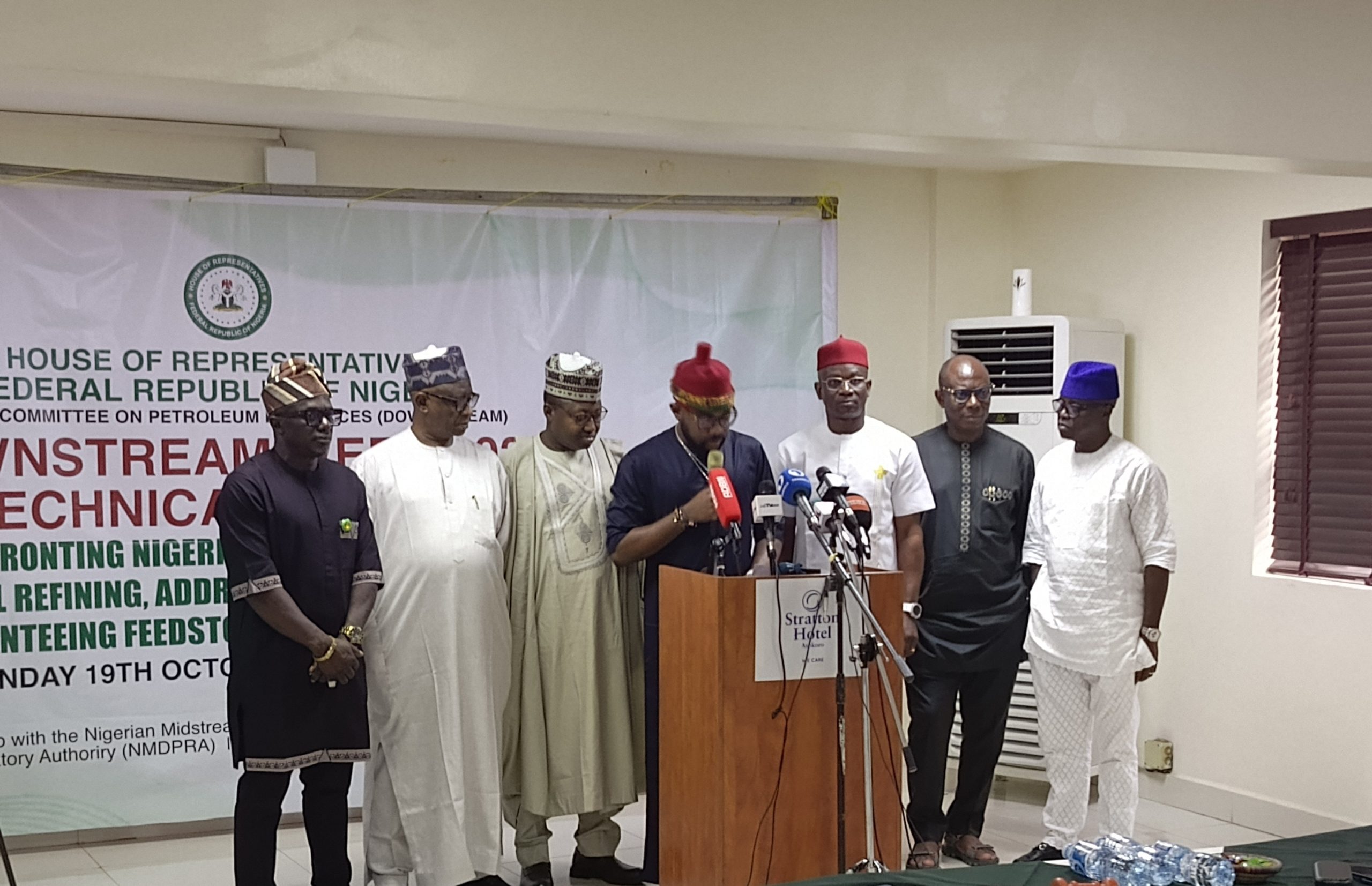
House of Representatives Committee on Petroleum Resources (Downstream), vows to champion legislation to strengthen local refineries and improve nation’s energy security.
The Committee also passed votes of confidence in President Bola Tinubu, the leadership of the Nigerian Midstream and Downstream Petroleum Regulatory Authority (NMDPRA) and Alhaji Aliko Dangote for their efforts to improve the Nigeria’s energy sector.
The Chairman of the Committee, Ikenga Ugochinyere, who made this known at a technical briefing in Abuja, said the National Assembly would continue to pursue amendments to the Petroleum Industry Act (PIA).
Mr. Ugochinyere said the Committee had rejected a World Bank recommendation on import licences, insisting that Nigeria must retain control over the formulation of its energy policies.“Nigeria’s energy policy must be written in Nigeria,”
The chairman also disclosed that the committee had opened an inquiry into allegations that some companies underpaid for crude oil.
He said lawmakers had questioned the Nigerian National Petroleum Company Limited (NNPC Ltd) over legacy transactions and the rehabilitation of refineries.
The committee further announced the establishment of two sub-committees to investigate petitions concerning gas distribution licences held by NIPCO Plc and allegations of money laundering and abuse of office against a senior NNPC Ltd executive.
Mr. Ugochinyere who called on the Federal Government to increase funding for pipeline surveillance, said improved security and operational support would help sustain the recent increase in crude oil production.
He expressed confidence that Nigeria could achieve its target of producing three million barrels of crude oil per day if the government provided adequate logistics and support.
The Committee said the country’s recent production gains demonstrated the potential to meet the target, provided that operational challenges were addressed and crude oil supplies were sustained.
The proposed legislative reforms and ongoing investigations are part of the committee’s efforts to strengthen domestic refining, improve transparency in the petroleum sector and enhance Nigeria’s energy security.