

Uche Cecil Izuora
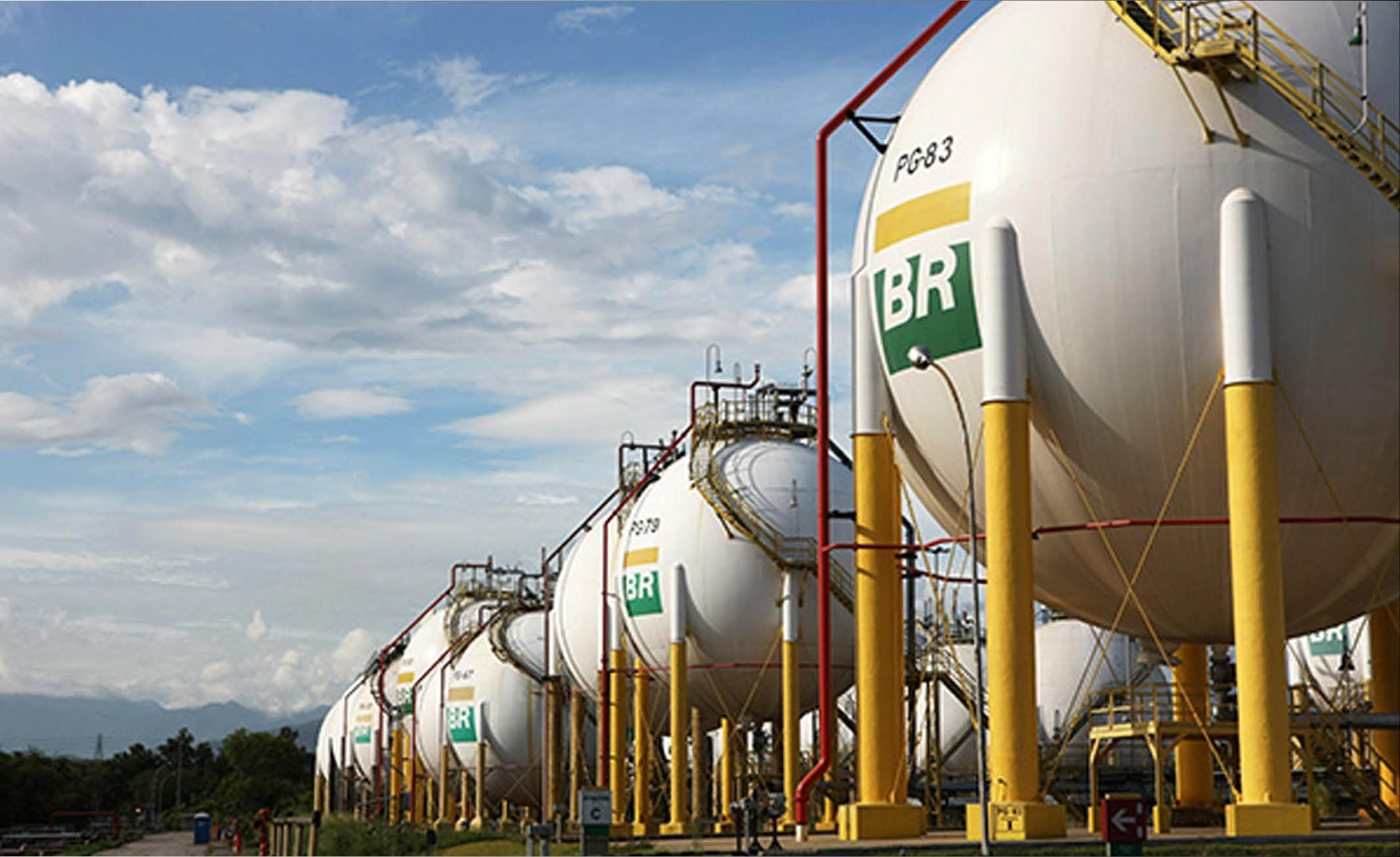
Brazilian oil major, Petrobras is considering returning to Nigeria as the company expresses interest in the country’s deepwater acreage.
Petrobras, expressed this intention during a meeting with Nigeria’s Foreign Minister Yusuf Tuggar
Nigeria opened exploration of its deep water oil acreage talks with Petrobras, years after the Brazilian oil giant exited country.
“Petrobras is no longer active in Nigeria, but they are very keen on coming back to Nigeria. They said they want frontier acreage in deep waters,” Tuggar was quoted in a statement from the vice president’s office as saying.
Brazil is due to host the BRICS summit and COP30 this year after hosting the G20 meeting last year.
Nigeria plans to promote investment at these summits as the African nation seeks to deepen ties with Brazil in areas such as energy, health, culture, and agriculture.
The Brazilian state energy firm said in February it was in talks with companies including existing partners ExxonMobil, Shell, and TotalEnergies to buy a share of their African assets.
Petrobras began operations in Nigeria in 1998 in the deep waters off the coast of the Niger Delta. But it sold off its stakes more than 10 years ago to raise cash for domestic projects.
Meanwhile, Nigeria has attracted over $8bn in investments for deepwater and gas projects within a year.
This represents an increase from a total of $6.7bn earlier announced as investment in the energy sector in 2024.
The Special Adviser to the President on Energy, Olu Verheijen, made this known during her address at the 2025 Africa CEO Forum held in Abidjan, Côte d’Ivoire.
She highlighted that the success resulted from government reforms, including better tax conditions, faster approval processes, clearer rules, and improvements in the power sector that make gas-to-power projects more attractive to investors.
Verheijen pointed to Nigeria as a recent success story as a study to attract capital into the continent.
“In under a year, Nigeria unlocked over $8bn in deepwater and gas Final Investment Decisions through decisive presidential action, focused on improved fiscal terms, streamlined contracting timelines, greater clarity to local content rules, and power sector reforms enabling gas-to-power commercial viability. We moved from gridlock to greenlight, and investors responded,” she said.
Nigeria has recently secured several significant FIDs in its oil and gas sector, reflecting renewed investor confidence and the impact of recent regulatory reforms.
They include the Bonga North Deepwater Project, the Ubeta Gas Field, among others.
Recently, the Executive Secretary and Chief Executive Officer of the Nigeria Extractive Industry Transparency Initiative, Dr Ogbonnaya Orji, stated that Nigeria needs $20bn annually for 10 years to invest in gas infrastructure.
To preserve investor confidence, the special adviser issued a stark warning to African policymakers, urging them to abandon sentimental notions of “African capital” and instead embrace investment discipline grounded in commercial logic and global competitiveness.
Verheijen declared that capital is neither African nor foreign, but rational.
“Let’s be clear: capital has no passport. Sentimental appeals to ‘African capital’ are a distraction,” she said. “Capital is opportunistic, not patriotic. It flows where risk-adjusted returns are competitive.”
Verheijen’s message comes amid concerns over Africa’s declining share of global upstream investment. She cited data showing that the continent attracted $340bn in upstream capital between 2011 and 2015, a figure projected to fall below $130bn between 2026 and 2030.
“That’s not a funding winter. That’s a structural decimation,” she warned.
She stressed that deepwater and LNG projects operate in fiercely competitive global capital markets. To stay relevant, African nations must pursue strategic partnerships based not on dependency but on mutual interest and value.
According to her, global capital is increasingly attracted to jurisdictions offering strong project economics, low carbon intensity, and predictable regulatory environments, characteristics that have driven investment into the Permian Basin, Guyana, and Brazil.
“If Africa wants a meaningful slice of the $500bn spent annually on upstream globally, we must offer clarity and competitiveness,” she said.
Verheijen also challenged Africa’s domestic investors, development finance institutions, banks, pension funds, and sovereign wealth vehicles to fill the vacuum left by retreating international oil companies.
“Our sweet spot is onshore, shelf, and domestic gas. That’s where African players must dominate, because we understand the terrain, the risk, and the reward,” she said.
She praised the emergence of African private sector champions, citing Renaissance Africa Energy Consortium’s acquisition of Shell’s onshore JV as a “symbolic transition from colonial-era concessions to indigenous control.” She also highlighted the operational scale of the 650,000 barrels-per-day Dangote Refinery, which she said was “not aspirational, it’s operational!”
Other milestones include Seplat’s recent 390 million standard cubic feet per day gas supply deal with the Nigerian National Petroleum Company Limited, which she described as “not just output, it’s energy security.” Indigenous equity in Nigeria’s gas sector, she added, has risen from 69 per cent to 83 per cent, marking “a seismic shift in ownership and control.”
Despite these gains, Verheijen emphasised that international capital remains critical. With IOCS still contributing over half of production and capital expenditure in sub-Saharan Africa, she said Africa must align with their evolving investment criteria.
“They’re no longer chasing barrels, they’re chasing value: low-cost, low-carbon, de-risked assets,” she said. “Let’s be realistic: Africa cannot negotiate terms on capital that hasn’t yet arrived. Investment must come first; returns and benefits will follow.”
Verheijen issued a call to action for the continent, stressing, “We must move beyond appeals for support. Africa must become an investment destination by design, anchored in policy clarity, commercial logic, and strategic intent,” she said.
“When we get that right, capital won’t hesitate; it will pursue us. The future will not be given to Africa. It must be built deliberately, unapologetically, and on our terms.