

Yemisi Izuora
Key petroleum products marketing associations have kicked against the move by
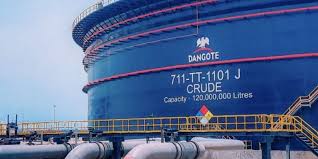
Dangote Petroleum Refinery seeking to void fuel import licences issued to marketers and the Nigerian National Petroleum Company (NNPC) Limited could destabilise Nigeria’s downstream petroleum sector.
On March 25, the Nigerian Midstream and Downstream Petroleum Regulatory Authority (NMDPRA), eased petrol import restrictions by granting a new batch of licences to local marketers.
However, two months later, Dangote refinery filed fresh suit before the federal high court in Lagos, challenging import licences issued or renewed by the NMDPRA to fuel marketers.
The refinery argued that the licences breached an earlier court order maintaining the status quo and contravening provisions of the Petroleum Industry Act (PIA), which it said permits fuel imports only when domestic supply is insufficient.
Reacting to the refiner’s suit in a statement issued, the Depot and Petroleum Products Marketing Association of Nigeria (DAPPMAN) and the Petroleum Products Retail Outlets Owners Association of Nigeria (PETROAN), in separate statements rejected the move.
DAPPMA, on its part said the import licences issued by the NMDPRA are critical to maintaining Nigeria’s fuel supply chain and ensuring energy security.
“The import licences at the centre of this lawsuit are not administrative courtesies. They are the legal instruments through which Nigeria’s fuel supply chain functions,” the association said.
DAPPMAN said the licences were issued under the framework of the PIA by a regulator empowered to make such determinations.
“The NMDPRA has consistently maintained, correctly, that these licences exist to protect supply security, not to disadvantage any single producer, however large,” the statement reads.
The association said its members had invested billions of naira in depot infrastructure, logistics, and compliance systems based on the validity of the licences.
“A legal action designed to retroactively void those licences does not just affect individual businesses, it introduces uncertainty into the entire downstream supply chain at a moment when Nigeria can least afford it,” DAPPMAN said.
The marketers added that while it respects the refinery’s right to seek legal remedies, no private refinery’s commercial interests should supersede the regulator’s responsibility to guarantee adequate fuel supply to Nigerians.
“What we do not accept is the premise that a private refinery’s commercial interests should override a regulatory authority’s mandate to ensure adequate supply to Nigerian consumers,” the association said.
“The downstream sector works because multiple players operate within it. A lawsuit that seeks to reduce that field of players is ultimately a lawsuit against Nigerian consumers.”
DAPPMAN added that Nigeria’s downstream market is designed to operate as a competitive system involving multiple participants rather than a monopoly structure.
The PETROAN, on its part expressed concern over the renewed legal action instituted by the Dangote Petroleum Refinery seeking to challenge the issuance of petrol import licences to marketers and the Nigerian National Petroleum Company Limited (NNPCL).
The National President of PETROAN, Dr. Billy Gillis-Harry, stated that while every corporate organisation has the constitutional right to seek legal redress, the downstream petroleum sector must continue to encourage healthy competition, market stability, and energy security in the overall interest of Nigerians.
According to him, competition remains a critical pillar for ensuring product availability, price moderation, efficiency, and sustainability within the petroleum distribution value chain. He emphasised that Nigeria’s energy market must not be allowed to tilt towards monopoly, regardless of the scale of investment or refining capacity of any single operator.
Dr. Billy Gillis-Harry further noted that PETROAN acknowledges the significant investment made by the Dangote Refinery and commends its contribution to local refining capacity, job creation, and reduction in fuel import dependence.
However, he stressed that a liberalised downstream market remains essential, where multiple operators can function fairly under the regulatory supervision of the Federal Government.
He reaffirmed that PETROAN will continue to advocate strongly for a competitive downstream petroleum sector, warning that any attempt to create monopoly structures could lead to exploitative pricing, reduced consumer choice, and instability in fuel supply and distribution.
The association highlighted the benefits of healthy competition in the downstream petroleum sector as follows: Reduction in fuel prices through competitive pricing;
Improved product availability and nationwide distribution; Better customer service and operational efficiency;Prevention of supply disruptions and artificial scarcity;
Encouragement of innovation and investment in the sector and Protection of consumers from exploitative market practices.
PETROAN also outlined the disadvantages of monopoly in the sector, including:
Arbitrary and exploitative pricing; Limited choices for consumers; Reduced efficiency due to lack of competition; Risk of supply manipulation; Market dominance capable of frustrating smaller operators and Possibility of economic abuse and unhealthy market control.
The association therefore frowns at any form of monopoly in the downstream petroleum sector, stating that monopoly tends to encourage exploitative pricing, while healthy competition naturally helps to bring down prices for the benefit of consumers and the Nigerian economy.
PETROAN further clarifies that the Petroleum Industry Act (PIA) 2021 provides a clear statutory framework empowering the regulatory authority to ensure energy security and uninterrupted petroleum product supply in Nigeria.
Specifically: Section 317 (Supply Shortfall and Importation Powers)
The Act provides that where there is a shortfall in domestic supply of petroleum products, the Authority shall take necessary measures to bridge the gap, including authorising importation.
The Nigerian Midstream and Downstream Petroleum Regulatory Authority (NMDPRA), under this section, is empowered to: Ensure adequate supply of petroleum products in Nigeria; Regulate and promote efficient operation of the midstream and downstream sector and Issue licences and permits for importation, distribution, and supply of petroleum products.
Section 33 (Regulatory Mandate for Market Stability) mandates the Authority to:
Ensure energy security and prevent disruption in supply; Promote competitive markets and safeguard consumer interest; Maintain continuity of petroleum product availability nationwide.
Also, Section 109 (Security of Supply), requires the Authority to take necessary measures to ensure uninterrupted supply of petroleum products for domestic consumption and economic stability.
From the above provisions, PETROAN maintains that the NMDPRA is legally empowered to issue import licences where domestic refining capacity is insufficient or where such action is required to safeguard energy security and market stability.
PETROAN therefore reaffirms that the issuance of import licences is not only lawful but a regulatory necessity provided by law to prevent scarcity and ensure continuous fuel availability across Nigeria.
PETROAN reiterates that Nigeria’s downstream petroleum sector must remain open, competitive, and balanced in order to prevent supply shocks and protect consumers from artificial scarcity or price exploitation.
The association further calls on all stakeholders in the oil and gas sector to prioritise collaboration over conflict and national interest over individual market dominance.
PETROAN assures Nigerians that it will continue to advocate policies that promote fair competition, product accessibility, price stability, and sustainable growth in the downstream petroleum sector.