

Why Africa’s advantage in the AI economy may lie in governance rather than computing power
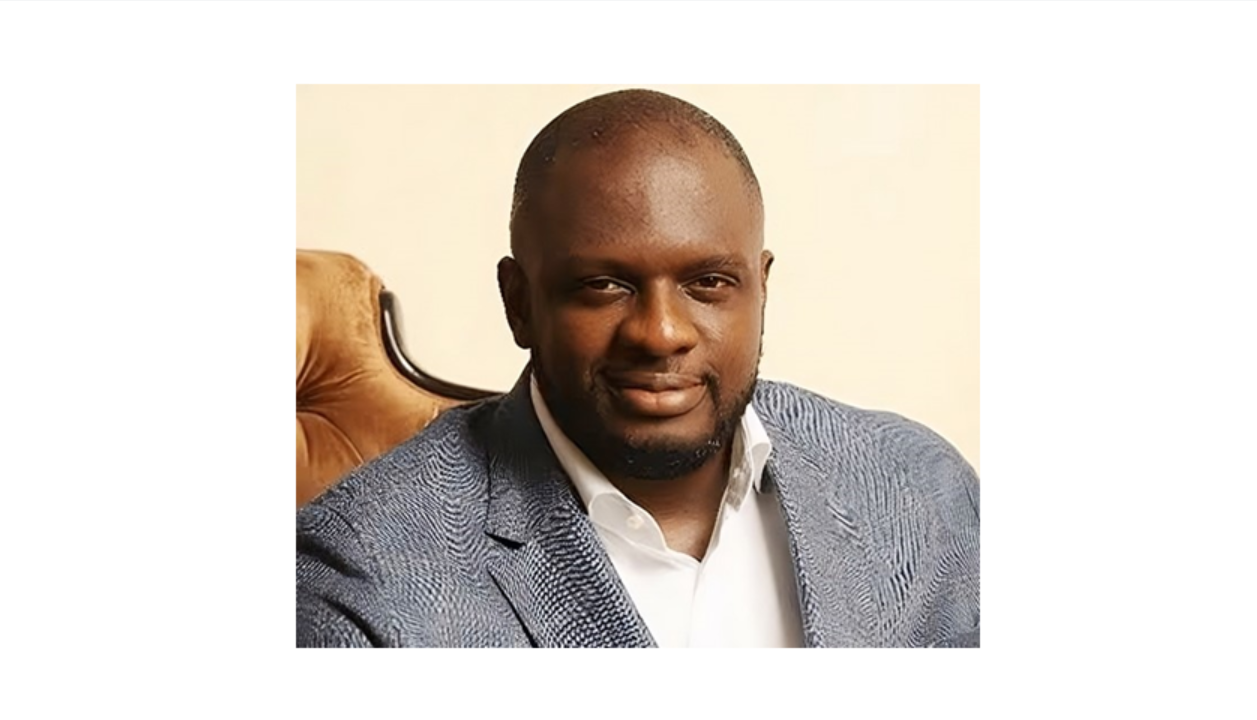
By Oluwole Asalu
For much of the past three years, the global conversation on artificial intelligence has centred on one question: who is winning the AI race? Every week brings another breakthrough. One country unveils a more powerful language model. Another announces billion-dollar infrastructure spending. Companies race to build faster systems and more capable autonomous agents. But that may be the wrong question.
Every major technological shift eventually reaches a point where raw innovation stops being the deciding factor. When electricity became commonplace, the advantage moved from generating power to distributing it reliably. When the internet matured, success depended less on connecting people and more on building platforms they could trust. Artificial intelligence is nearing the same point. Competitive advantage will not go only to those who build the most capable systems. It will go to those who deploy them responsibly, securely and with a straight face when regulators ask how the decisions were made.
For governments, banks and businesses across Africa, this shift matters. Attention remains fixed on building more capable models, while a quieter problem grows underneath: organisations are embedding AI into customer service, financial operations, cybersecurity and critical infrastructure faster than they are building the governance to supervise it. Capability is outrunning accountability.
Nigeria, in particular, has something to gain here. The continent does not have Silicon Valley’s compute or China’s research budgets. It can, however, become the benchmark for trusted AI deployment, and that may end up mattering more than owning the world’s largest model.
Traditional software follows fixed instructions. AI increasingly interprets information, makes recommendations, and in many cases acts without a human checking each step. Banks now use it for onboarding and fraud detection. Manufacturers use it to run production lines. Energy firms monitor infrastructure with it. Healthcare providers are folding it into diagnostics. Machines are moving from automation into decision-making, and that changes what security means.
For decades, organisations have poured money into protecting networks, applications and databases. Firewalls, identity management, cloud security: all standard now, all still needed. But they were built to protect systems, not to watch the intelligence running inside those systems. That is the blind spot most organisations have not yet clocked.
As Quomodo Systems Africa noted in its AI Security in Financial Services white paper, most security platforms are good at catching outside attacks and suspicious user behaviour. They were never built to monitor what an AI model itself is doing. They guard the network. They do not watch the thinking.
A model can drift from its intended behaviour without ever tripping a conventional alert. An autonomous agent can start making bad calls because the data feeding it has shifted. A generative assistant can leak confidential information through a badly governed prompt. None of that looks like a cyberattack. All of it can cost money, customers and reputation.
Which is why AI governance has stopped being a technology footnote and started being a board-level problem. The organisations that thrive over the next decade will not necessarily be the ones running the most AI systems. They will be the ones that can explain how those systems decide things, show they operate inside defined limits, and give regulators, customers and shareholders a reason to believe a human is still in the loop.
Many firms still treat AI governance as a compliance checklist: what is the minimum a regulator requires before we switch this on? That mindset made sense once. It is not enough now.
Autonomous systems raise questions boards have rarely had to answer before. How do you check that a model is deciding things consistently? Can you catch behavioural drift before it reaches a customer? Six months after an autonomous agent makes a call, can you actually audit why?
Forward-thinking organisations are starting to treat governance not as a brake on innovation but as the thing that makes innovation last. Skip it, and you can deploy AI fast, but you will struggle to scale it. Regulators hesitate. Customers lose confidence. Boards inherit risks they did not sign up for.
Quomodo’s framework treats this as a maturity path rather than a box-ticking exercise: AI observability, a model inventory, behavioural monitoring, audit trails that cannot be quietly edited, and controls over what autonomous agents are allowed to do. None of it is there to slow anyone down. It is there to make large-scale AI deployment trustworthy enough to survive scrutiny.
Think of aviation. Flying a sophisticated aircraft without a flight recorder or an emergency braking system would be reckless. Standard cybersecurity can spot a hijacker trying to seize the controls. It cannot tell you whether the autopilot itself is making a dangerous call. Observability supplies that missing visibility. Governance supplies the accountability that follows once AI is running the operation, not just assisting it.
Banks, telcos, hospitals and governments are all heading toward autonomous AI at scale. Governance is no longer the cost of compliance. It is becoming the infrastructure trust is built on.
While much of the developed world chases ever-larger models, Africa can differentiate itself another way: by becoming the most trusted place in the world to deploy AI responsibly.
That will not make headlines the way a new frontier model does. It may still outlast it. Investors are looking past raw capability toward governance maturity. Multinationals are choosing partners who can prove resilience and regulatory discipline. Customers are paying closer attention to how their data gets handled. Trust is turning into a competitive edge, quietly.
For Nigeria, this fits neatly with existing national priorities: digital identity, cybersecurity, financial inclusion. The foundations are being laid. What is missing is governance keeping pace with deployment.
That means investing in cybersecurity specialists and governance professionals alongside AI engineers. It means universities graduating people who understand both the technology and its ethical weight. It means regulators writing rules that protect citizens without freezing innovation. Above all, it means business leaders accepting that AI governance sits with the board, not the IT department.
At Quomodo Systems Africa, our argument has stayed consistent: digital transformation only works if organisations trust the systems they are leaning on. That has shaped our work across enterprise technology, cybersecurity and AI governance. The goal was never to deploy more technology for its own sake. It was to help organisations deploy it with confidence.
As autonomous AI spreads across banking, infrastructure, healthcare and government, that goal only gets more urgent.
The next generation of digital leaders will not be remembered for how fast they adopted AI. They will be remembered for how responsibly they governed it.
Every technological era rewards whoever understands its defining currency first. For Africa, this is a chance to lead somewhere maturity and institutional confidence count for as much as computing power.
The organisations that come out strongest will not necessarily have the fastest algorithms. They will have customers who trust their decisions, regulators who trust their governance, and investors willing to bet on their discipline.
AI may well power the next economy. Whoever governs it best gets to lead it.
Oluwole Asalu is a thought leader in the tech field in Nigeria, dedicated to advancing the nation’s tech ecosystem and fostering innovation and growth.