

Uche Cecil Izuora
Key players in Nigeria’s upstream oil and gas industry and promoters of local refining companies would be discussing growing influence of Nigeria in the petroleum sector refining space.
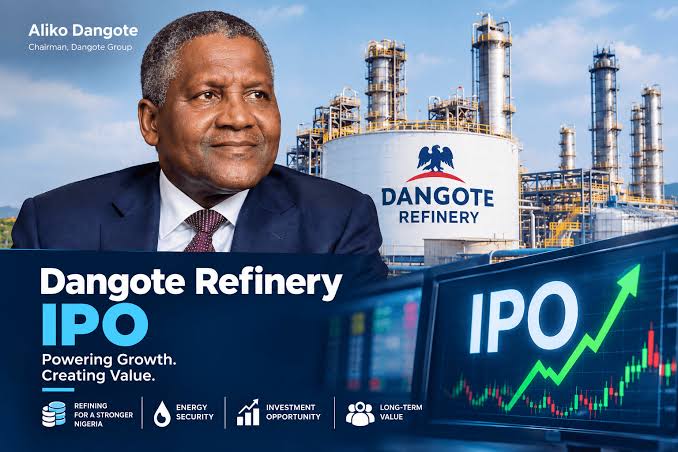
As Dangote Refinery initial public offerings (IPO) is putting Nigeria’s refining economy firmly on the investment map and raising a critical question stakeholders would focus their engagement on how Nigeria can turn growing refining capacity into sustained economic value.
That conversation will take centre stage at the Nigeria Oil Refining Summit (NORS) 2026, in Lagos, under the theme “Refining for Value: Linking Upstream Supply to Downstream Demand.”
Hosted by the Crude Oil Refinery-Owners Association of Nigeria (CORAN) and produced by The Legend & Legacy Company Ltd, NORS 2026 will bring together refiners, upstream producers, regulators, investors, banks, DFIs, traders and infrastructure and service providers to address the commercial foundations of a competitive refining industry.
“The Dangote IPO has brought capital markets squarely into the refining conversation. NORS 2026 will take that conversation further by examining how Nigeria can attract capital, strengthen commercial linkages and convert refining capacity into lasting economic value,” said Kunle Odusola-Stevenson, Event Director, NORS and CEO, The Legend & Legacy Company Ltd.
Refining capacity alone is not enough. Crude supply is the critical link. Nigeria’s expanding refining base requires reliable, commercially viable feedstock. Without supply certainty, installed capacity cannot consistently deliver production, energy security and greater value retention.
That is why crude supply will headline the NORS 2026 opening executive session: Guaranteeing Crude Supply for Domestic Refining: From Policy to Commercial Reality.”
The session will bring upstream producers, refiners and regulators together to tackle the issues that determine whether domestic refining can operate at scale from crude availability and pricing to commercial terms, supply security, regulation and investment.
Speakers include Adegbite Falade, Chairman, Independent Petroleum Producers Group (IPPG), and Matthew Bouyer, Chairman, Oil Producers Trade Section (OPTS), alongside senior representatives from NUPRC, Seplat Energy, Renaissance Africa Energy, Aradel Holdings, Dangote Refinery, Pillar Oil and NNPC Limited.
For NORS 2026, the message is straightforward: Nigeria has the refining capacity. Now it must build the commercial ecosystem to make that capacity work.
That means connecting crude to refineries, refineries to markets, capital to investable projects, and infrastructure to industrial growth.
NORS 2026 will focus on making those connections and on turning Nigeria’s refining capacity into a stronger, more integrated and investable refining economy.
Meanwhile Dangote refinery’s plan to double capacity to 1.4 million barrels per day is emerging as a key factor in the plant’s long-term valuation, as analysts weigh the benefits of structural cost advantages against the risk that refining margins normalize from recent highs.
The management has said it is working on an expansion from 700,000 barrels per day to 1.4 million barrels per day, while also targeting an increase in polypropylene capacity to approximately 2.4 million tonnes per annum. That second phase, according to Renaissance Capital Africa, could become one of the single biggest drivers of value for the business.
Speaking in a CNBC Africa interview, Divine Olumese, oil and gas analyst at Renaissance Capital Africa, stressed that the refinery’s recent margin strength was supported by stronger crack spreads and geopolitical tensions.
“The higher margins that we’ve seen recently is as a result of the higher crack spreads that we’ve seen and also relating to the tensions that we’ve seen in the U.S. and Iran,” Olumese said.
He said Dangote Refinery posted gross refining margins of about $24.5 per barrel in the first quarter, reflecting the stronger market backdrop during the period.
That matters for investors because current earnings support can boost sentiment in the near term, even as the more consequential valuation debate centers on what the refinery could earn once a second expansion phase is delivered.