

Uche Cecil Izuora
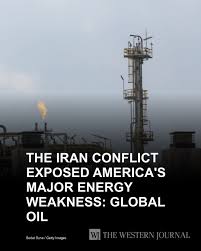
The U.S.–Iran and Russia–Ukraine wars have been described as more than regional or military conflicts as they have exposed weaknesses in the global energy and economic system and demonstrating that energy security can no longer be seen as independent of financial security, transportation, military security, strategic autonomy, and even ties with world power hegemonies.
Providing insight into the conflict and its consequences on global economy, an analyst Shahriar Sheikhlar, wrote on OilPrice platform stressing that the Russia–Ukraine war disrupted Europe’s long-standing dependence on Russian pipeline gas, while the U.S.–Iran conflict has exposed another vulnerability as the concentration of global oil and LNG flows around strategic maritime routes, particularly the Strait of Hormuz, and more recently, the Bab-el-Mandeb Strait.
The International Energy Agency (IEA) described the disruption by the US-Iran war through the Strait of Hormuz as the largest oil-supply disruption in its history, with roughly 20 million barrels per day of crude oil and refined products affected when the Strait was effectively closed.
Taken together, Sheikhlar, pointed out that these crises may mark the beginning of a new phase of globalization one in which countries become less willing to rely too heavily on any single source, route, technology, or global power.
Complete economic or energy independence is neither realistic nor necessarily desirable, he said, adding, “Instead, countries are likely to pursue greater strategic autonomy by diversifying their energy supplies, building alternative transport and supply routes, strengthening domestic capabilities, creating greater economic and technological resilience, and reassessing their strategic relationships with major global powers.”
He recalled that by 2018–21, Russian gas accounted for more than 40 per cent of EU gas demand but after Russia’s 2022 invasion of Ukraine, the loss of large volumes of Russian pipeline gas contributed to Europe’s energy crisis and demonstrated the risks of concentrated external supply.
Europe has substantially reduced its dependence on Russian pipeline gas, but this has not created complete energy independence.
He further analysed that the 2026 Middle East conflict adds another layer, showing how energy price pressures can affect European inflation, industrial production, transport, and household purchasing power.
The International Monetary Fund (IMF) analysis has also warned that prolonged interruptions to Russian gas supplies could cause severe shortages and significant economic losses in vulnerable Central and Eastern European economies.
Europe’s challenge is therefore to build strategic energy autonomy without abandoning international markets. That requires multiple suppliers, adequate storage, alternative infrastructure, domestic renewable and nuclear capacity where appropriate, and resilience against maritime and geopolitical disruptions.
According to the U.S. Energy Information Administration (EIA) about 89 per cent of crude oil and condensate passing through the Strait of Hormuz in the first half of 2025 was destined for Asian markets, with China, India, Japan, and South Korea accounting for about 74 per cent.
A large share of global LNG trade also passes through the Strait, with almost 90 per cent of LNG exports through Hormuz in 2025 destined for Asia.
He said that the Russia–Ukraine war demonstrated that concentrated pipeline dependence can become a strategic vulnerability as the U.S.–Iran conflict demonstrates that even diversified energy systems remain vulnerable when critical maritime chokepoints are disrupted.
“Then, neither pipelines, nor shipping lines are concrete solutions. China’s experience shows that reducing direct dependence on a major source, such as U.S. energy, does not eliminate exposure to global markets. The Gulf states demonstrate that energy wealth does not automatically provide complete strategic autonomy.” he added
Sheikhlar, further noted that the future of energy security will therefore be determined not only by who possesses oil and gas, but by who possesses different options to bring the product to the final consumer.
“Globalization is not necessarily ending. It is becoming more security-conscious. The energy system of the future may place greater value on resilience and strategic flexibility rather than simply pursuing the lowest-cost supply.
The central question for governments and businesses may therefore be changing: not just what energy costs, but what dependence costs when the political relationship underpinning it suddenly breaks down”. Sheikhlar said.