

By Sola Adebawo
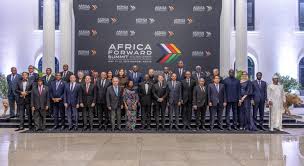
The most important outcome of the Africa Forward 2026 Summit in Nairobi may not be the declaration itself, but the deeper strategic philosophy quietly emerging beneath it.
Across energy, industrial policy, digital infrastructure, agriculture, climate negotiations, debt restructuring, and critical minerals, a new continental posture appears to be taking shape. It is not yet formal doctrine in the institutional sense. No treaty has codified it. No single African government articulates it in identical language. Yet, while implementation remains uneven across the continent, African states increasingly appear to be converging around a common strategic instinct: the belief that Africa must regain greater sovereign control over the developmental pathways that shape its economic future.
This is what may increasingly be described as Africa’s emerging doctrine of development sovereignty.
At its core, development sovereignty is not isolationism, economic nationalism, or rejection of global cooperation. Rather, it reflects a growing insistence that Africa’s participation in the global economy must occur on terms more consistent with long-term domestic transformation, industrial capability, strategic autonomy, and internal value creation.
For decades, African economies operated within a global system that largely positioned the continent as a supplier of raw materials and a consumer of finished products. According to the United Nations Conference on Trade and Development, many African economies remain heavily commodity-dependent, with raw materials accounting for the overwhelming majority of merchandise exports across several states.
This structure created persistent vulnerabilities. Commodity price shocks repeatedly destabilized fiscal systems. Manufacturing capacity remained limited. Industrial employment lagged demographic growth. Foreign exchange earnings fluctuated sharply. And despite decades of resource extraction, infrastructure and energy deficits remained severe across large portions of the continent.
The problem was never merely resource scarcity. Africa possesses roughly 30 percent of the world’s mineral reserves, significant hydrocarbon deposits, vast agricultural potential, and one of the world’s youngest populations. The deeper issue was structural positioning within global production systems.
What now appears to be changing is Africa’s willingness to challenge that positioning.
The Nairobi summit reflects this transition. The language emerging from the declaration reportedly emphasizes industrialization, local value addition, regional manufacturing, pharmaceutical production, digital sovereignty, climate financing reform, and strategic infrastructure development. These are not isolated policy themes. Together, they form the outline of a broader developmental philosophy.
Energy policy provides perhaps the clearest example.
For years, African governments faced growing international pressure to rapidly align with decarbonization frameworks largely designed around advanced industrial economies. Yet Africa accounts for less than 4 percent of historic global carbon emissions while simultaneously hosting nearly 600 million people without access to electricity, according to the International Energy Agency.
Increasingly, African policymakers are arguing that energy transition cannot become a mechanism that restricts industrialization itself.
This explains the continent’s evolving emphasis on what many leaders now describe as a “just and development-centered transition.” In practice, this means African states intend to pursue renewables while also preserving policy space for natural gas development, petrochemicals, refining capacity, fertilizer production, LNG infrastructure, regional electricity markets, and industrial energy expansion.
The underlying argument is strategic rather than ideological: no civilization has industrialized at scale without reliable and affordable energy density.
The same logic is now extending into critical minerals.
Africa holds major reserves of cobalt, lithium, manganese, graphite, rare earths, and copper, all central to global energy transition technologies. Yet many African governments increasingly resist models where raw minerals are exported while processing, battery manufacturing, advanced refining, and technology capture occur elsewhere.
Countries such as Zimbabwe, Namibia, and Democratic Republic of the Congo have all introduced various beneficiation or export-control measures in recent years aimed at retaining greater domestic value creation.
The same strategic repositioning is visible in digital infrastructure and artificial intelligence.
Increasing concerns about data extraction, foreign platform dominance, cloud dependency, and algorithmic asymmetry are driving conversations around African data centres, sovereign cloud systems, local AI models, digital taxation frameworks, and indigenous language datasets. The Nairobi discussions reportedly touched extensively on digital sovereignty and African participation in the future AI economy.
Even sovereign finance is increasingly being reframed through this lens.
Africa’s debt burden has become not merely a fiscal issue but a developmental constraint. The African Development Bank estimates Africa faces an annual infrastructure financing gap exceeding $100 billion. Meanwhile, borrowing costs for many African economies remain disproportionately high relative to actual default risk.
As a result, calls for reform of the international financial architecture are no longer framed purely as appeals for fairness. They are increasingly framed as strategic prerequisites for developmental autonomy itself.
Yet development sovereignty cannot succeed through rhetoric alone.
Strategic autonomy without institutional competence risks reproducing the very vulnerabilities it seeks to escape. Industrial policy requires disciplined execution. Resource sovereignty requires transparent governance. And developmental ambition requires states capable of sustaining policy continuity beyond electoral cycles and political transitions.
This broader doctrinal shift also helps explain the changing tone of Africa’s geopolitical engagements.
The old post-Cold War framework, in which African states often aligned primarily around aid dependency and donor conditionality, is gradually giving way to a more transactional and multipolar diplomacy. African governments now simultaneously engage the European Union, China, United States, Turkey, India, Gulf states, and emerging middle powers while seeking to maximize strategic leverage across competing interests.
Within this context, the Africa Forward 2026 Summit may ultimately represent something larger than an Africa-France diplomatic reset. It may represent part of Africa’s gradual transition from developmental dependence toward developmental sovereignty.
Whether the continent can successfully execute this transition remains uncertain. Institutional weakness, governance deficits, corruption, infrastructure limitations, policy inconsistency, debt vulnerability, and political instability remain serious structural obstacles.
Yet the strategic direction itself is becoming increasingly visible.
The central African question is no longer whether the continent will participate in the global economy, but whether it will finally participate on terms aligned with its own long-term developmental interests.
Sola Adebawo is an energy executive, institutional strategy and public affairs leader with deep experience at the intersection of energy, governance, policy, and strategic communication. His writing explores reform, political economy, leadership, culture, and the relationship between institutions and public life. He is an author, scholar, and ordained minister.