

Joyce Onwuka
There are strong indications that climate change could shift childhood malaria hotspots across sub-Saharan Africa by the end of the century.
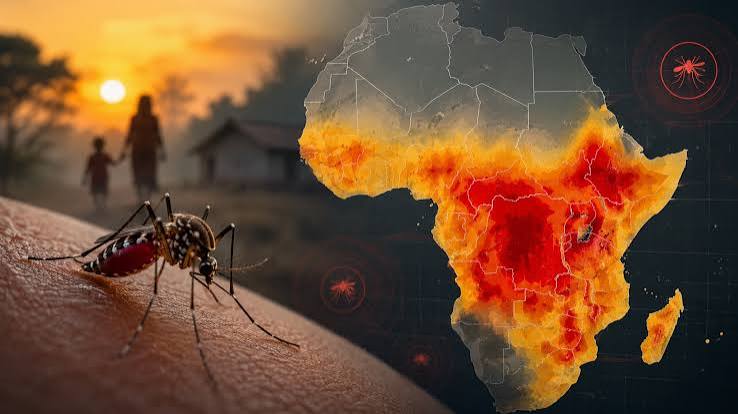
This shift could increase the prevalence of the parasitic disease in normally cool highland areas while reducing transmission in some of the region’s hottest zones, according to a research paper published by U.S. and African researchers in the scientific journal Nature.
The paper, titled “The past and future impact of climate change on childhood malaria in Africa,”quantifies the historical and projected effects of climate change on childhood malaria south of the Sahara, where most cases and deaths occur.
The disease, transmitted through the bite of an infected female Anopheles mosquito, killed about 579,000 people in Africa in 2024, around 75 per cent of them children under the age of 5, according to the World Health Organization (WHO).
By analyzing clinical data alongside records of temperature and rainfall changes linked to human-caused climate change, researchers affiliated with the Yale School of Public Health and the University of California in the United States, and the University of Cape Town in South Africa, found that climate change likely contributed to a slight overall increase in malaria prevalence in sub-Saharan Africa over the past century while also shifting the geographic distribution of the disease.
They found that transmission of the parasite that causes malaria peaks at temperatures of about 25 degrees Celsius and declines when temperatures fall below 16 degrees Celsius or rise above 34 degrees Celsius.
The research also found that episodes of very heavy rainfall were associated with higher malaria prevalence two to three months later. This suggests that mosquito populations may increase following periods of intense rainfall, although the authors stressed that the relationship is complex and remains highly uncertain.
These temperature thresholds help explain why warming is making formerly cool regions more suitable for malaria transmission, particularly in southern Africa and the highlands of East Africa.
Malaria cases have increased in East Africa, particularly in mountainous regions. The data show that climate change caused an average increase of 0.32 percentage point in malaria prevalence across the subregion, with increases of 1 to 2 percentage points in parts of the Ethiopian highlands and the Great Rift Valley.
In areas more than 1,000 meters above sea level, malaria prevalence increased by an average of 0.81 percentage point.
At the same time, some low-lying areas of Ethiopia, Sudan, South Sudan, Eritrea and Djibouti experienced small declines, highlighting the contrasting effects of warming across different landscapes.
By 2050, rising temperatures are expected to further expand the range of malaria-carrying mosquitoes into cooler parts of southern and eastern Africa. In the highlands of East Africa, including parts of Kenya and Ethiopia, as well as in Angola, Zambia and northeastern South Africa, cases are projected to increase by about 5 per cent on average compared with current levels.
In some coastal areas of southern Africa, cases could rise by as much as 20 per cent by 2100.
The research found that the opposite trend is expected in some of the continent’s hottest regions.
Parts of West and Central Africa, which currently bear the heaviest burden of the disease, could see transmission decline as temperatures rise above the optimal range for malaria transmission.
By 2100, transmission is projected to fall by 4.5 per cent in countries such as Nigeria, Burkina Faso and Mali.
In some parts of the Sahel, conditions could even become too hot for malaria-carrying mosquitoes to survive, potentially making sustained transmission impossible in some areas. The researchers stressed that the projected increase in malaria prevalence in parts of sub-Saharan Africa is not inevitable.
Limiting global warming to two degrees Celsius could avert about five additional malaria cases per 1,000 children in southern Africa, with even greater benefits in high-altitude areas of East Africa, they conclude.
Efforts to reduce greenhouse gas emissions must also be accompanied by stronger malaria surveillance and control measures, particularly in southern and eastern Africa, where malaria-control capacity is weaker, they write.