

Moses Ofodeme
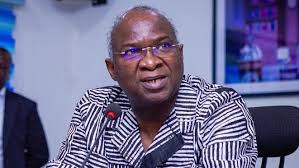
Former Lagos State Governor and Minister of Power, Babatunde Raji Fashola, has called for review of training of lawyers to make them become proficient advocates.
Speaking at the Body of Benchers Annual Lecture (BOBAL 2025), Fashola, who is also a Senior Advocate of Nigeria (SAN) took time to reflect on the theme of the lecture, “HALF A CENTURY OF THE BODY OF BENCHERS, THE PAST, THE PRESENT, AND THE FUTURE OF MAINTAINING THE ETHICS OF THE LEGAL PROFESSION IN NIGERIA.”
Though he touched on various issues affecting the legal system in Nigeria, he
recommended that post university training of solicitors and advocates be left now and in the future to law firms to be accredited nationwide for that purpose, while the Law School under the aegis of the Council of Legal Education remain an examining and certification body, separating Solicitors examinations from that of Barristers.
In the latter case that is where the scrutiny of the Body of Benchers should be focused – those Barristers to be admitted to the Bar.
He said he suggestions may not be perfect, but he argued that the time for change and reform was yesterday, if the there is need to remake the system of administration of justice it must start with the people who get to operate the system.
He went on to say, “Competence is key and it is from competence that we can set standards; when we set standards, non-compliance is easily detectable and sanctionable.
“I regret to say that today one is hard put to see the “wood from the trees” in the difference between incompetence and misconduct in some judicial outcomes.
“The skill of Barristers and those of them who become Judges and their level of competence must account in part for why cases based largely on documents still takes several years to try and decide in spite of many fast-track efforts.”
He said that apart from those its recommendation of persons to be called to the bar, the Body of Benchers also has responsibility for discipline of legal practitioners who are not judges.
This is a very important responsibility and the future of the profession and by extension the Body of Benchers depends on how this responsibility is discharged.
Presenting a poser, he said, “Put differently, when quality control fails and a bad product enters society, what is the power of recall or remediation that the Body of Benchers exercises to remedy the situation?
I am aware that the Committee that discharges this responsibility on behalf of the Body – the Legal Practitioners Disciplinary Committee – has tried and dispensed with some high-profile cases. “
Fashola, made reference to several cases in Court, saying, the public space is full of reports of multiplicity of suits and suggestions of forum/fora shopping aided by legal practitioners in manifest abuse of the judicial process.
He asked, “What does it take to bring these lawyers to book and what kind of consequences are they subject to?
He narrated how a Nigerian colleague who had a multi-jurisdictional practice once told him that he was presenting a case in the UK when the presiding judge asked if he was not aware of the recent decision of the UK Appeal Court on a similar point.
Needless to state, the judge stood the case down for him to go to the library to update his knowledge and he returned to withdraw and abandon the argument.
According to him, the judge would have referred him to the UK disciplinary Tribunal and he could lose his licence to practice if found culpable of wasting judicial time.
Is the standard that high here and what are the steps that must be taken to raise the standards, he asked,
When can a judge unilaterally refer a petition for unethical conduct in the course of trial against a lawyer? And what are the expanding frontiers that lawyers and clients have for holding judicial officers accountable without being in contempt of them?
As the Regulator, does the Body of Benchers issue a written Code of Conduct for Barristers (and Solicitors), or are we still guided by what was taught in the professional ethics class in the Law School?
Are there laymen, such as non- lawyers or non- Benchers assisting or contributing to the work of the Body by her various committees?
If there are none, is there something to be gained from involving some of the most vocal critics of the justice system into committees of the Body of Benchers if only on an adhoc basis.
To the extent that public confidence is critical to the reputation of the system of administration of justice, l think these are matters that require serious consideration.
He shared a few examples at the forum giving instance that the Geometric Power Project in Aba, was held up in Court for years before his assumption of office in 2015 as Minister of Power during which the Ministry worked with the office of the Vice President to successfully broker an out-of-Court settlement.
Similarly, the recently completed 700 MW Zungeru hydro-power plant in Niger State, was held up by a court injunction obtained by a legal practitioner suing for his commission with local partners, but the injunction was against the lender, China Exim Bank and lasted for 3 years before I took office and led the negotiation of an out-of-court settlement to unfreeze the deployment of millions of dollars meant for the project.
Another real-life example will help to explain the point. For many years, Lagos had only one major mall of repute at the Lekki mall developed in Oniru Estate.
In the course of his public service tenure, the Lagos State Government was looking to the same investor to build and open the Ikeja Mall. The land which hitherto was used as bailiff’s warehouse has been acquired and an alternative provided.
Reluctantly, the Investor agreed to build the Ikeja Mall and nobody challenged them until opening day when some persons with lawyers behind them sought an exparte injunction to stop the mall from opening, claiming to be the owners of the land on which it was built.
He noted that for many years, these people never challenged the judiciary for using the land as a bailiff’s warehouse, when the development and construction of the mall took place over 2 years they made no challenge. They waited until the opening day when goods had been supplied, people employed, and when customers were due to arrive before coming to assert their nebulous “right”.
To the immense and eternal credit of the Lagos judiciary under the leadership of Hon. Justice Ayo Phillips, Chief Judge, which had a clear understanding of the investment drive of the executive, no injunction was granted; in lieu thereof accelerated hearing of the claim was ordered and the mall has continued to thrive perhaps because there was never any right to land in the surreptitious injunction seekers.
But for that judicial outlook it may well be that the opening and operation of the mall and the livelihoods it supports today will be a mirage trapped in unending litigation.
“I know of an investor who for eleven (11) years has been waiting for a Court dispute to end so he can build a multi-storey office complex.
“Our judicial system which is one of the most reverred judicial systems in the commonwealth, is facing scrutiny under a large microscope.
The reasons for scrutiny are not far-fetched. Some of the outcomes from the legal system raise more than an eyebrow.
If the outcomes raise concern, certainly we must interrogate the input, which is the quality of persons admitted to the Bar by the Body of Benchers.
This meeting is our golden moment to start a new journey for the Nigerian Legal system by demonstrating that there are internal self-correcting mechanisms that ensure that the dispensation of justice is speedy, credible and reliable.
By reforming the training process of persons called to the Bar (as distinct from Solicitors whose work is not so much public facing) we can secure a prosperous future for the legal profession that is anchored on sound ethical foundations of competence, character and integrity, he said.