

Agency Report
Nigeria’s power sector has undergone a quiet but meaningful shift in recent years, driven largely by the wider adoption of prepaid meters and the introduction of the band-based tariff system. For decades, electricity consumers endured estimated billing, arbitrary disconnections, and the all-too-familiar sight of distribution company officials moving from street to street with ladders, cutting off supply to homes and businesses. Today, that reality is gradually fading as reforms begin to reshape accountability and service delivery.
The rollout of prepaid meters has been central to this transformation, it was first introduced into Nigeria’s electricity sector in the early 2006, gaining wider traction after the sector reforms and unbundling of the former Power Holding Company of Nigeria in 2013.
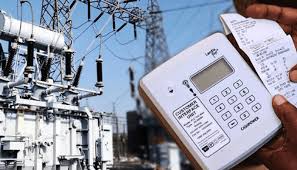
By allowing customers to pay for electricity before consumption, the system has reduced disputes over billing and improved transparency. Consumers now have direct control over their usage, while distribution companies benefit from better revenue assurance. One of the most visible impacts has been the decline in physical disconnection exercises. The era when officials climbed poles with ladders to disconnect defaulting customers is becoming less common, largely because prepaid systems automatically cut supply once credit is exhausted. This has not only reduced operational stress for distribution companies but has also minimized confrontations between staff and consumers.
Government interventions through initiatives such as the National Massive Metering Programme spearheaded by the Federal Government of Nigeria, millions of Nigerians have received prepaid meters at no direct cost. The programme has attracted investments estimated in the range of hundreds of billions of naira, underscoring the scale of effort to close the metering gap and eliminate estimated billing.
Alongside metering reforms, the band-based tariff policy introduced by the Nigerian Electricity Regulatory Commission (NERC) has further redefined the sector. Under this system, customers are grouped into bands based on the number of hours of electricity they receive daily. Band A customers, who enjoy a minimum of about 20 hours of supply, currently pay around ₦225 per kilowatt-hour. Band B customers, with roughly 16–18 hours of supply, pay about ₦63 per kilowatt-hour, while Band C customers, who receive around 12 hours, pay approximately ₦57 per kilowatt-hour. Band D customers, with about 8 hours of supply, pay roughly ₦45 per kilowatt-hour, and Band E customers, who receive the least supply of about 4 hours, pay close to ₦35 per kilowatt-hour. Although these figures may vary slightly across distribution companies, they reflect the general structure of tariffs tied to service levels.
This pricing framework has created a clearer link for customers to understand what they are paying for, and distribution companies are under greater pressure to deliver the promised hours of electricity. While affordability remains a concern for some households, the transparency introduced by the system marks a significant improvement over the previous regime.
A resident in Ikeja, Mr. Adewale Johnson, expressed satisfaction with the changes, particularly the Band A policy. He noted that improved electricity supply in his area has enhanced business activities and reduced reliance on generators. According to him, paying a higher tariff feels justified when power is available for most of the day. He also commended the prepaid meter system for eliminating estimated billing and giving households better control over their electricity spending.
Also, the incidence of customers confronting or attacking distribution company officials during disconnection exercises has also reduced significantly. With prepaid meters in place, households now manage their electricity consumption independently. As a result, the practice of bribing officials to avoid disconnection has declined, since power supply is automatically regulated based on credit availability.
Despite these gains, metering coverage is not yet universal, and some consumers still rely on estimated billing. In addition, not all areas consistently receive the level of supply promised under their designated bands, leading to occasional concerns. Nevertheless, the combined effect of prepaid metering and the band tariff system represents a significant step toward a more efficient and accountable electricity market.
Overall, the gradual disappearance of ladder-carrying disconnection teams symbolizes a broader transformation in Nigeria’s power sector.
With continued investment, regulatory oversight, and technological adoption, the country is steadily laying the foundation for a more reliable and transparent electricity supply system