

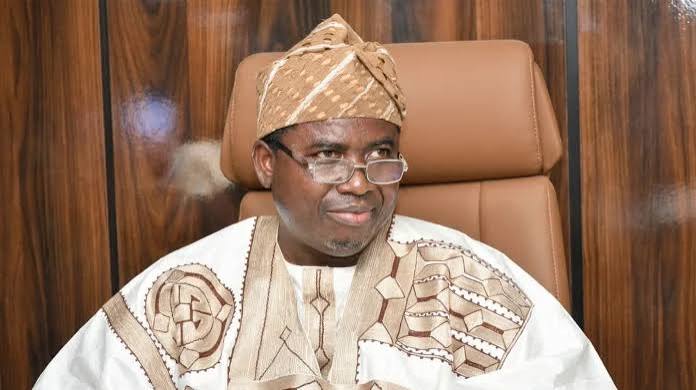
The Chairman of the Independent National Electoral Commission (INEC), Prof. Joash Amupitan, SAN, described the conduct of the Osun State governorship election as a benchmark for future polls and announced a nationwide mock accreditation exercise for November 2026 to test readiness ahead of the 2027 general elections.
Prof. Amupitan made the remarks on Friday, 21 August 2026 in Abuja while receiving visits from Mr. David Sproule, Chargé d’Affaires of the Canadian High Commission to Nigeria, and Mr. Moritz Sprenker, Country Representative of the Konrad Adenauer Stiftung (KAS).
Highlighting operational successes from the 15 August Osun election, he said 3,556 of the state’s 3,763 polling units, which represent 94.5 percent were open for accreditation and voting by 8:30 a.m.
He credited the outcome to strong field performance of the Bimodal Voter Accreditation System (BVAS), uninterrupted transmission of results to the INEC Result Viewing (IReV) portal, and effective crisis management by field officials.
“We view the success in Osun not as a final destination, but as the gold standard that will guide our preparations for 2027,” Prof. Amupitan said.
As part of preparations for next year’s polls, the Commission will carry out a nationwide mock accreditation in November 2026 to stress-test BVAS and reinforce the integrity of the accreditation process. He thanked Canada for its continued partnership in supporting the exercise.
Prof. Amupitan also raised the need for a voter revalidation exercise to update records, noting many older voters registered as far back as 2011 will require validation. He said there is insufficient time to complete this before the 2027 general election but stressed it remains necessary to avoid future delays.
He noted the election calendar: Presidential and National Assembly elections on 16 January 2027, and Governorship and House of Assembly elections on 6 February 2027. He also recalled that public campaigning officially began on 19 August 2026, and that INEC recently joined presidential candidates and party chairmen in signing the National Peace Accord on issue-based campaigning.
During his meeting with the Canadian delegation, Prof. Amupitan framed the visit as reaffirming long-standing Nigeria–Canada ties rooted in democratic values, the rule of law, and good governance. He thanked Canada for sustained support in electoral governance, civic education, institutional strengthening, and gender inclusion.
He outlined five shared priorities with Canada, consolidating Osun’s technological gains; expanding electoral inclusivity for persons with disabilities, women, youth, and other underrepresented groups across INEC’s roughly 176,000 polling units; boosting institutional capacity through technical assistance and training; countering election-related misinformation; and conducting the planned mock accreditation.
The chairman also said INEC has established an Artificial Intelligence Unit to improve data management, voter registration, and results transmission while guarding against misuse of the technology.Mr. Sproule praised INEC’s commitment to credible elections and reaffirmed Canada’s readiness to support the commission, including election observation. He emphasized Canada’s interest in increased participation by women and other groups.
Prof. Amupitan also welcomed Mr. Moritz Sprenker, congratulating him on his new role at KAS and describing the foundation as a long-standing partner. He cited past collaborations, such as technical retreats in Uyo and Lagos and a procurement workshop in Lagos in March 2026, listing priorities for continued cooperation: civic education and democratic culture, electoral technology, capacity building, countering misinformation, inclusivity for marginalized groups, and interagency dialogue for peaceful elections.
Mr. Sprenker said KAS has worked in over 100 countries and in Nigeria for more than 25 years and reaffirmed the foundation’s commitment to strengthening its partnership with INEC.
Prof. Amupitan used both meetings to reaffirm INEC’s independence, neutrality, and dedication to democratic integrity as the commission scales up logistics to deploy about 1.4 million ad-hoc staff across more than 176,000 polling units for the 2027 general election.