

Yemisi Izuora
The Nigerian Airspace Management Agency, NAMA, has said that the Nigeria aviation industry is presently hit by a number of devastating economic factors that has limited its growth.
According to the Agency’s Managing Director and Chief Executive Officer, Farouk Ahmed Umar Nigeria has about 241,000 supported jobs contributing $1.7 billion to the economy.
The Nigeria’s figures Umar, said are nowhere comparable to South Africa with 472,000 supported jobs and $9.4 billion contribution to the economy or Kenya with 410,000 supported jobs and $3.2 billion GDP contribution.
On the other hand aviation industry supports over $3.5 trillion or 4.1 per cent of the world’s GDP and supports about 87.7 million jobs the world over.
In Africa, aviation supported 7.7 million jobs and $63 million in economic activities in the pre-COVID period.
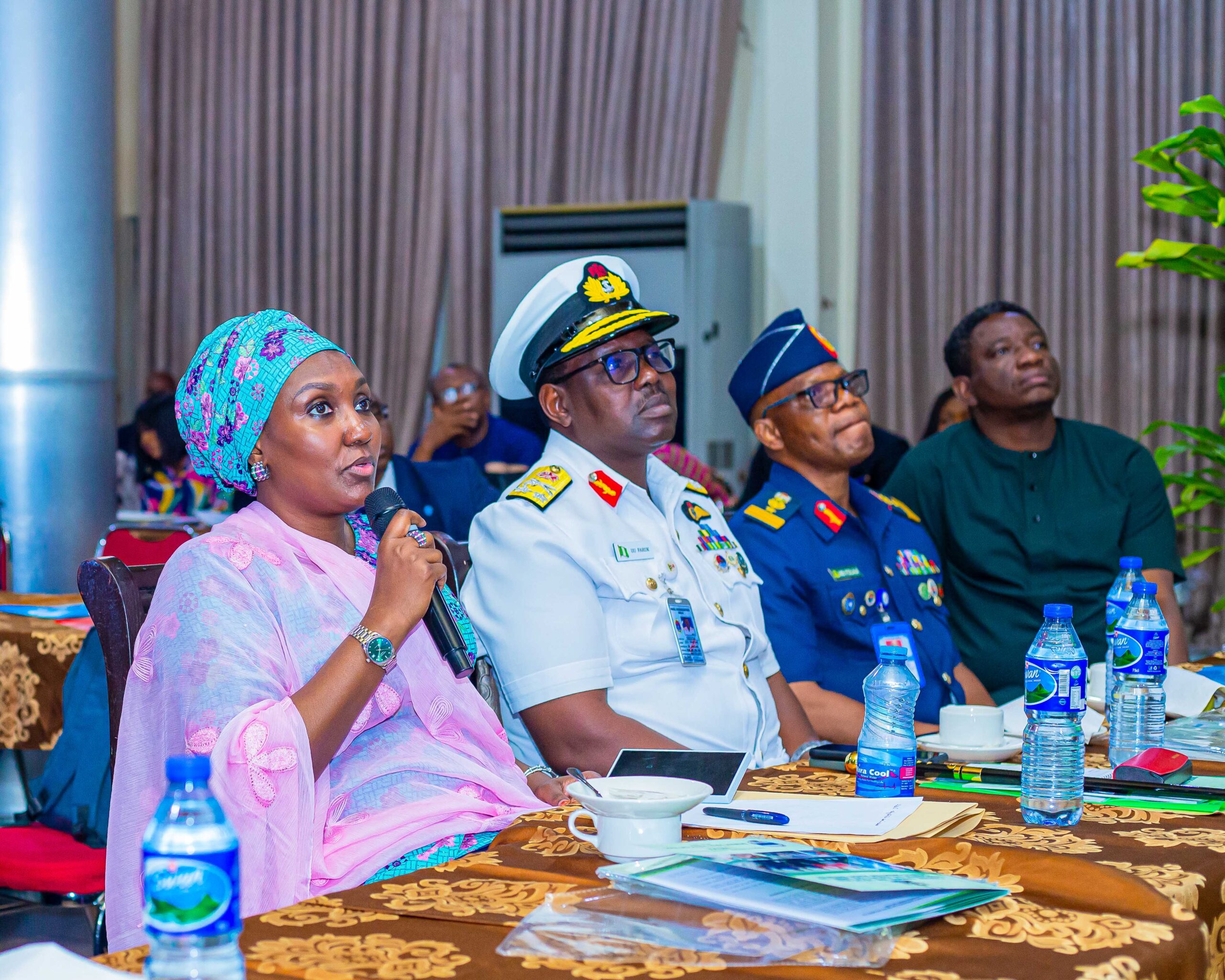
Umar spoke at a conference hosted by the League of Airports and Aviation Correspondents conference, with theme, “Aviation Survivability amidst a Challenging Macro-Economic Environment,”
“Our industry has always been a barometer for the global economy, and recent times have tested our resilience in unprecedented ways. The COVID-19 pandemic brought unparalleled disruptions, grounding flights and emptying airspaces and airports worldwide. Though recovery is underway, the path is uneven and fraught with challenges.”
In Nigeria, he said the situation is further compounded by economic volatility, unprecedented hike in fuel prices, and currency instability.
These factors, combined with high operating costs, have put significant pressure on the aviation sector he stressed but noted that “As we navigate these turbulent times, it is imperative that we adopt innovative and sustainable strategies to ensure the survivability and growth of our industry.”
To survive in this challenging environment, Umar, said the industry must prioritize operational efficiency and cost management.
This involves streamlining existing processes, optimizing resource allocation, and embracing technologies that enhance efficiency.
According to him, The aviation industry requires collaborative approach to operational efficiency and cost management. At the Nigerian Airspace Management Agency (NAMA), we are committed to continuously improving our air traffic management systems to ensure safe, efficient, and cost-effective operations.
He spoke about innovation and technological approach which is key to improving the survivability of the industry.
They are the cornerstone of our survival and the digital transformation of aviation is not just a trend but a necessity. Implementing advanced technologies, leveraging artificial intelligence for predictive maintenance, and enhancing cybersecurity measures are critical steps.
By embracing these technologies, Umar said the industry can improve safety, reduce delays, and enhance the overall economic performance of Nigeria’s aviation. At NAMA, we are implementing advanced surveillance systems, communication and navigation systems that will enhance cost effective flight procedures.
He also talked about robust and modern infrastructure which he said is essential for the growth of our aviation sector.
“Our airports need more modern infrastructure to accommodate the present and future demands of airport terminals that support more efficient flight operations. NAMA is dedicated to upgrading our airspace infrastructure to accommodate future demands. This includes modernizing navigational aids, enhancing radar coverage, and implementing satellite-based systems. These upgrades will improve safety, efficiency, and capacity, positioning Nigeria as a key player in global aviation.” he said.
He further added that the challenges facing the industry are too great for any single entity to tackle alone and thus collaboration should be encouraged.
“We must foster partnerships amongst airlines, air navigation service providers, airports, regulatory bodies, and other stakeholders. By working together, we can share best practices, pool resources, and develop strategies that benefit the entire industry. International cooperation is also vital, as global connectivity is the backbone of our aviation.”
The MD, also pointed out that the industry requires a very efficient pricing of products and services, adding, “It is a critical lever for enhancing affordability, driving competition, supporting infrastructural development, promoting sustainability, and improving operational efficiency. Price for services MUST reflect the value of these services.”
The MD mentioned that the Agency relies on statutory fees and charges for the management of the airspace (remember that aviation takes place only in the air).
These funds are generated from services it provides to the flying community, and without these fund NAMA can’t discharge its responsibility of ensuring the safety of the airspace effectively.
The Agency majorly generate these funds through the airline companies.
The largest percentage of NAMA’s revenue comes from en-route navigation charges (domestic and international flights) and terminal navigation charges (domestic and international flights).While international flights pay in US dollar, domestic flights pay in the Nigerian currency.
As a service provider and in accordance with ICAO best practices, NAMA does not make profit but ICAO Doc 9082 recommends cost recovery for service provision to cater for the cost of equipment, personnel, trainings and other ancillary costs.
He recalled that in 2023, NAMA has an expenditure of about N21 billion in personnel costs alone and spent over N12 billion in capital costs and over N10 billion in overhead costs. All these were to be (and were) funded from fees and charges (no FGN budgetary allocation).
The NAMA he went further to say has been charging as low 11,000 Naira per flight when a one-way domestic ticket cost only 16,000 Naira.
While ticket prices today have gone up astronomically to as high as between 150,000 to 200,000 Naira for a one way economy ticket owing to the prevailing economic circumstances, the Agency’s navigational charges have remained the same since June 2008.
Also, NAMA charges 50,000 Naira for every hour that it has extend services beyond the stipulated hours of service at aerodromes that do not have 24 hours service.
In 2008 a litre of diesel was sold at around 113 Naira, today it is well over 1,400 Naira per litre which represents over 1,000 per cent increase which makes the current charges unsustainable. Same goes with personnel costs and other costs.
Currently, its unit rate for international flights charge for service provision is about $70, domestic flights are charged 6,000 Naira.
He said that while, NAMA recognizes the difficult economic environment aviation operates in Nigeria, it is equally a part of the ecosystem.
“It goes to the same market to procure equipment and other services like trainings. If NAMA is to survive and continue to guarantee safety and efficiency in the airspace, IT MUST BREATHE! IT MUST BREATHEEE!!”
It is in the light of this, and in the spirit of this conference’s theme of survivability that NAMA announces the review of its fees and charges.
He said even though most costs in the economy have increased by more than 1,000 per cent, NAMA has proposed to increase its fees and charges by 800 per cent, the new rates for en-route and terminal navigation charges are to be reviewed from 2,000 and 6,000 Naira to 18,000 and 54,000 Naira per flight.
Also, the extension of hours of service is also to be reviewed from 50,000 to 450,000 Naira per extension to enable the Agency recover the cost of diesel and other logistics during the period of extension.
Umar used the occasional to say that NAMA has invested heavily in training programs to equip its personnel with the latest skills and knowledge and its training initiatives have ensured that our workforce remains proficient and adaptable to technological advancements.
“We have strengthened our relationships with airlines, regulatory bodies, and international partners. Collaborative efforts have led to improved air traffic management and better service delivery.
“Recently, an investigative journalist erroneously reported that our primary radars have not been operational since 2021. Such misinformation has the potential to undermine public confidence in our aviation infrastructure. However, thanks to the vigilance, diligence and dedication of LAAC members—the core aviation reporters who stand for truth and integrity—this misinformation was swiftly debunked.” he added.