

Uche Cecil Izuora
The Jetties and Petroleum Tank Farm Owners of Nigeria (JEFON), has backed Dangote Refinery’s rejection of continued importation of refined petroleum products into the country, saying it is not in the interest of the country.
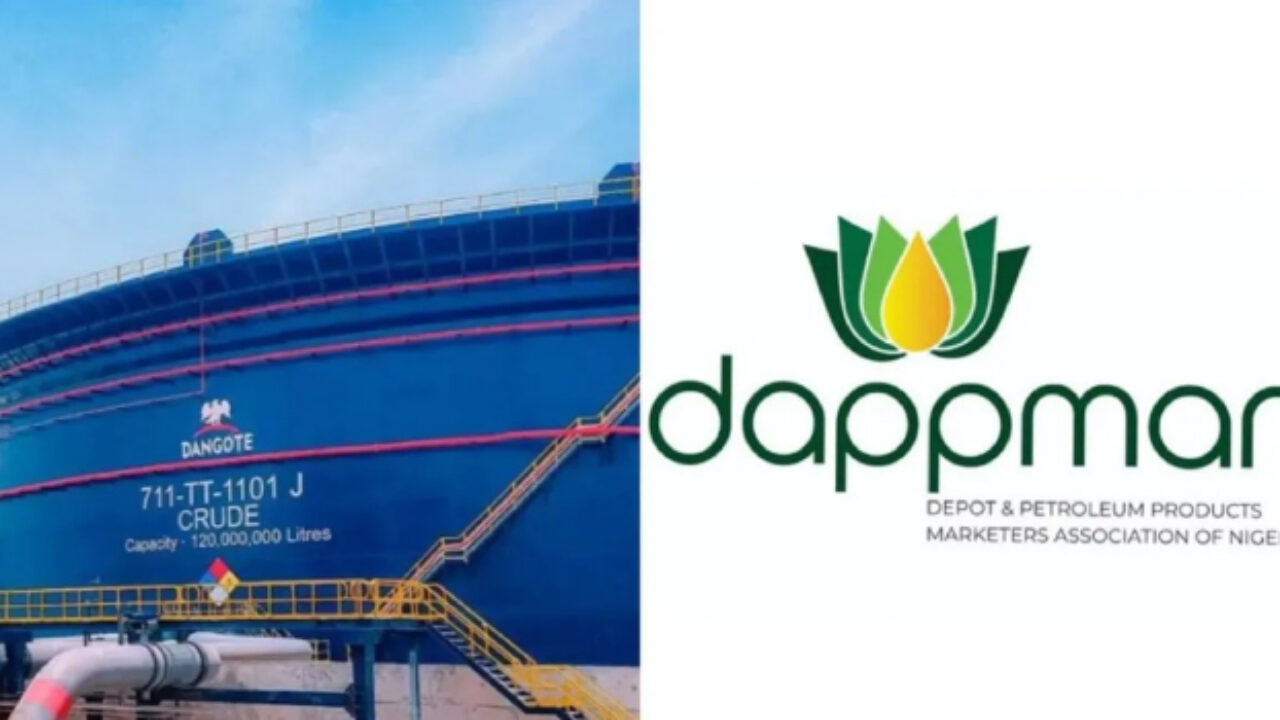
The Tank Farm operators therefore dismissed argument presented by the Depot and Petroleum Products Marketers Association of Nigeria (DAPPMAN) on fuel importation.
They also called on the Federal Government and the Nigerian Midstream and Downstream Petroleum Regulatory Authority (NMDPRA) to cancel existing import licences for Premium Motor Spirit (petrol), insisting that local refining capacity can now meet domestic demand.
The position was contained in a communiqué issued by the Association through its Executive Secretary, Mr Olayiwola Temitope.
It would be recalled that on March 25, the NMDPRA, eased petrol import restrictions by granting a new batch of licences to local marketers.
However, two months later, Dangote refinery filed fresh suit before the federal high court in Lagos, challenging import licences issued or renewed by the NMDPRA to fuel marketers.
The refinery argued that the licences breached an earlier Court order maintaining the status quo and contravening provisions of the Petroleum Industry Act (PIA), which it said permits fuel imports only when domestic supply is insufficient.
Reacting to the refiner’s suit in a statement, the DAPPMAN and the Petroleum Products Retail Outlets Owners Association of Nigeria (PETROAN), in separate statements rejected the move.
DAPPMA, on its part said the import licences issued by the NMDPRA are critical to maintaining Nigeria’s fuel supply chain and ensuring energy security.
“The import licences at the centre of this lawsuit are not administrative courtesies. They are the legal instruments through which Nigeria’s fuel supply chain functions,” the association said.
DAPPMAN had faulted the refinery’s legal action and argued that import licences were necessary to guarantee energy security and sustain competition in the deregulated market. It also vowed to join the suit in defence of its members who are fuel importers, saying the billions spent on depot infrastructure should not be allowed to go to waste because of Dangote.
Also, the National President of PETROAN, Dr. Billy Gillis-Harry, stated that while every corporate organisation has the constitutional right to seek legal redress, the downstream petroleum sector must continue to encourage healthy competition, market stability, and energy security in the overall interest of Nigerians.
According to him, competition remains a critical pillar for ensuring product availability, price moderation, efficiency, and sustainability within the petroleum distribution value chain. He emphasised that Nigeria’s energy market must not be allowed to tilt towards monopoly, regardless of the scale of investment or refining capacity of any single operator.
However, JETFON said that continued fuel importation is no longer economically justifiable given the growing refining capacity within the country.
The tank farm owners argued that the Dangote refinery and other local refineries have significantly reduced Nigeria’s dependence on imported fuel and should be protected rather than undermined. They warned that granting fresh import permits would weaken local investments and frustrate efforts aimed at achieving energy independence.
“Relying on foreign refined products leaves the local economy vulnerable to external supply chain shocks, international logistics disruptions, and continuous foreign exchange pressures that weaken the naira,” the statement said. “By prioritising local refineries, Nigeria can build a self-sustaining and secure domestic fuel supply ecosystem.”
The Association maintained that Nigeria’s long-term economic stability depends on strengthening domestic refining rather than encouraging import dependence. JETFON also cited recent data released by the NMDPRA, which showed a sharp decline in fuel imports and an increased contribution from local refining.
According to the regulator’s April 2026 factsheet referenced by the association, Nigeria’s daily petrol consumption rose to 51.1 million litres in April from 47.3 million litres recorded in March.
At the same time, daily fuel imports reportedly dropped by 37.3 per cent, from 5.9 million litres in March to 3.7 million litres in April. The association noted that local refineries, led mainly by the Dangote refinery, supplied about 40.7 million litres daily during the period, significantly replacing imported products.
JETFON argued that the figures demonstrate that domestic refining is already taking over the market and reducing pressure on foreign exchange demand. It added that supporting local refining would help stabilise the naira, conserve external reserves, and create jobs across the petroleum value chain.
“With the Federal Government backing local refineries, Nigeria stands to drastically reduce its heavy reliance on foreign exchange for fuel imports, thereby easing the persistent pressure on the naira and conserving vital external reserves.
“Beyond forex stability, a thriving local refining sector serves as a massive catalyst for economic growth, generating direct and indirect employment for thousands of skilled Nigerian youths,” the statement added.
The Association urged the Federal Government and the NMDPRA to stop issuing fresh import licences and review existing approvals to protect local investments and industrial growth.