

Uche Cecil Izuora
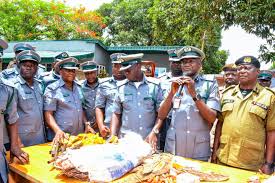
Acting Customs Area Controller of the Nigeria Customs Service, Ogun I Area Command, Deputy Comptroller OO Afeni, cracked down on cannabis sativa and other smuggled prohibited items at Idiroko.
This was disclosed during media briefing, held alongside the Commander of the National Drug Law Enforcement Agency (NDLEA), Idiroko Special Command, and heads of sister security Agencies.
The Controller at the event highlighted the Command’s intensified efforts to secure land borders, protect the national economy, and dismantle illicit trade networks.
Afeni disclosed that since 16 March 2026, the command has handed over 2,543 parcels of cannabis sativa to NDLEA and has maintained continuous pressure on smuggling networks, leading to 73 seizures in just 41 days. Items intercepted include 1,759 fifty‑kilogram bags of foreign parboiled rice, 10,126 parcels of cannabis indica (Ghana Loud) weighing about 4,627 kilograms with an estimated street value above 5 billion naira, 2,685 kegs of Oki vegetable oil, over 14,550 litres of Premium Motor Spirit in jerricans, other vegetable oils, basmati rice, footwear, sugar, used vehicles, second‑hand clothing, spice products, expired Maggi cubes, macaroni, spaghetti, and even 6 live pangolins, which have been turned over to the relevant wildlife agency. The combined Duty Paid Value (DPV) of seized goods is approximately 6.78 billion naira.
The briefing emphasised the social and economic impact of these seizures. Afeni warned that cannabis sativa/indica, locally known as Indian hemp, fuels drug‑related crime and strains Nigeria’s already overstretched healthcare and rehabilitation systems. From January to 12 May 2026, the command has removed 26,002 parcels of cannabis from circulation, framing the operation as preventive rather than purely punitive. On food items, Afeni reiterated that the federal government’s ban on rice imports through land borders is intended to boost local production; continued smuggling of foreign rice, he said, frustrates this agenda, undermines Nigerian farmers, and sustains an unsustainable reliance on imports.
He also highlighted customs’ aggressive stance against vegetable‑oil smuggling, including the interception of a DAF truck loaded with 2,185 kegs of Oki vegetable oil along the Shagamu‑Interchange/Ogere road on 5 May 2026. Afeni noted that heavy dependence on imported oils has squeezed domestic producers, led to job losses, and introduced health risks from unregulated or adulterated products. Since his assumption of office, the command has seized 12,271 kegs of 25‑litre vegetable oil, underscoring its commitment to protecting local industry and public health.
Another notable seizure involved a Volvo truck on 7 May 2026 carrying 77 cartons of Analgin injection without NAFDAC registration, 50 cartons of expired Maggi cubes, 226 sacks of basmati rice, assorted bags, footwear, vegetable oil, organic honey, and used clothes, underscoring the health and safety risks associated with unregulated imports.
Afeni also reported that between 16 March and 12 May 2026, Ogun I Area Command generated and remitted 125,430,757 naira into the Federation Account through baggage assessments and the auction of seized petroleum products, while facilitating the export of 95 metric tonnes of goods with an FOB value of about 1.004 billion naira. He encouraged compliant traders to remain steadfast, noting that multiple‑checkpoint concerns have eased as customs shifts to a more streamlined, intelligence‑led corridor system.
The briefing concluded with Afeni announcing the introduction of a new era of digital enforcement at Ogun I Command, in line with the Comptroller‑General’s modernization agenda. The command is deploying advanced geospatial technology to monitor smuggling hotspots, moving away from traditional patrolling toward intelligence‑led operations that align with the WCO SAFE Framework of Standards. Afeni thanked the Comptroller‑General, Bashir Adewale Adeniyi, sister security agencies, and customs personnel for their collaboration and reaffirmed the command’s resolve to secure the border, support honest trade, and safeguard Nigeria’s economic and social wellbeing.