

By Oluwajomiloju Tooki, Afiyinfoluwa Akinmade and Oluwatosin Lawrence
Nigeria, a country abundant in oil and natural resources, is home to over 230 million people overmaking it the world’s most populous Black nation. While celebrated for its diversity, vibrant cultures, and fertile lands, many Nigerians grapple with daily challenges because of the nation’s rapid stagflation — an economy with high inflation, high unemployment, and low economic growth — with inflation reaching an all-time high of 33.88 percent as of October 2024.
One of the key drivers of high inflation in this West African nation is the removal of fuel subsidies in recent years, which has led to soaring fuel prices, triggering a domino effect that has significantly increased transportation costs and the prices of commodities. This shift has prompted many to explore alternative fuels for vehicles, as petrol remains the predominant option in the country.
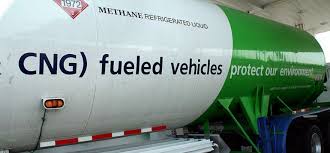
Compressed natural gas (CNG) has emerged as a popular alternative for many Nigerians because of its affordability and local production, which reduces the country’s reliance on imported petrol.
The production of CNG is relatively simple and cost-effective, involving the compression of natural gas to less than 1 percent of its volume at standard atmospheric pressure.
CNG offers several advantages over traditional fuels, making it a popular alternative for many Nigerians. Beyond its lower cost, it contributes to reduced air pollution, addressing a significant public health concern. Moreover, CNG presents a viable solution for Nigeria, not only due to its ecological benefits but also because it mitigates the impact of the often volatile global energy market.
Overview of CNG infrastructure in Nigeria
While the adoption of CNG is growing, its full potential remains largely untapped. Nigeria, one of Africa’s largest producers of natural gas, boast a proven gas reserves of 206.53 trillion cubic feet as of 2021.
However, the infrastructure for CNG remains limited, with only a few filling stations located in major urban centers such as Lagos, Abuja and Port Harcourt.
The geographical distribution of CNG infrastructure in Nigeria is uneven, with access to CNG stations being more readily available in the southern and western regions of the country where the major oil and gas companies are located.
For instance, Lagos State regarded as Nigeria’s economic hub, has a higher concentration of CNG filling stations. Companies such as Nigerian Independent Petroleum Company Plc (NIPCO Plc) and Nigerian National Petroleum Company Limited (NNPC) have been at the forefront of developing CNG facilities in these areas.
Government policies and support
Nigeria’s government recognizes the potential of natural gas as an alternative fuel and has introduced several policies and programs to support its adoption. Among these initiatives is the National Gas Expansion (NGEP), which aims to promote the use of natural gas as an alternative to petrol and diesel.
The program seeks to deepen domestic consumption of natural gas in various forms, including CNG, Liquefied Petroleum Gas (LPG), and Liquefied Natural Gas (LNG), as part of the country’s energy mix.
The government, through this program, aims to make CNG one of the preferred fuels, especially for the transport sector. Incentives that could be proposed under this National Gas Expansion Program include subsidies for conversion to CNG and the setting up of filling stations.
Similarly, the Nigerian government has begun partnering with Private companies to offer CNG conversion at a subsidized rate.
President Bola Tinubu also recently commissioned three new upstream gas facilities. This move aims to boost the country’s gas production while simultaneously providing the foundation for expanding CNG infrastructure.
The government has also exempted import duties on CNG conversion kits and parts, which means the entire process of conversion would not only be feasible for businesses but also for individuals. Some states have also started pilot projects whereby public transportation vehicles are converted to work on CNG. The present situation is such that notwithstanding such efforts, national policies are needed in this area, with better incentives to accelerate the use of CNG throughout the country.
Challenges hindering widespread adoption
While there is evident interest in CNG because of its many advantages, a number of obstacles prevent it from gaining wider use in Nigeria.
The most crucial barrier is the minuscule number of CNG filling stations.
Besides big cities like Lagos, Abuja, and Port Harcourt, there are very few CNG stations in the country, and this limited nature tends to scare away potential users.
The other massive factor is the cost of the conversion to CNG. Conversion kits range between NGN 700,000 (USD 452) to about NGN 1.8 million ( USD 1,162 as of the time of writing) on the popular e-commerce site, jiji.ng, which is not affordable for most vehicle owners in Nigeria. Such a sizeable upfront cost may be out of the comfort zone for individual drivers or small entrepreneurs who don’t have access to such capital.
The third most pertinent factor is low awareness and poor education: Most Nigerians are unaware of CNG and the numerous advantages it poses compared to coal and traditional gas.
There’s a popular misconception that CNG is very dangerous; however, it is actually safer than traditional petrol.
The public needs to be made aware of CNG so that most of these concerns can be addressed through education.
Despite Nigeria’s progress, the country could draw valuable lessons from countries that have successfully adopted CNG.
For example, India has the largest fleet of CNG vehicles on the road, with about 1.8 million vehicles running on this fuel. The Indian government also implemented effective policies, such as mandating CNG for public transportation, to ensure wider distribution. Similarly, Brazil has succeeded in converting a significant portion of its vehicles to natural gas through incentives and a well-developed CNG infrastructure.
In both countries, government investment in CNG infrastructure and substantial financial incentives for vehicle conversion played a key role in driving adoption. Strong government support, along with awareness campaigns, helped overcome initial barriers. Nigeria could emulate these strategies by scaling up infrastructure development, offering more attractive financial incentives, and launching campaigns to educate the public about the benefits of CNG.
As Nigeria continues to navigate through its financial challenges, embracing CNG as a primary energy source could be a key step towards debt alleviation and also creating a brighter and more sustainable future. Culled From GlobalVoices.Org